UPDATE. 2nd September 2026. See end of blog.
Returning back to spring 2020, when we were all unable to live our normal lives, I started buying interesting old photos from eBay to add to my collection as I wasn’t able to go to any fairs or fleamarkets.
I spent a bit of time every couple of days going through new listings; this continued into 2021.
I always looked at each photo the seller had put on and read the description carefully. I didn’t want to make a mistake and end up with a copy or print.
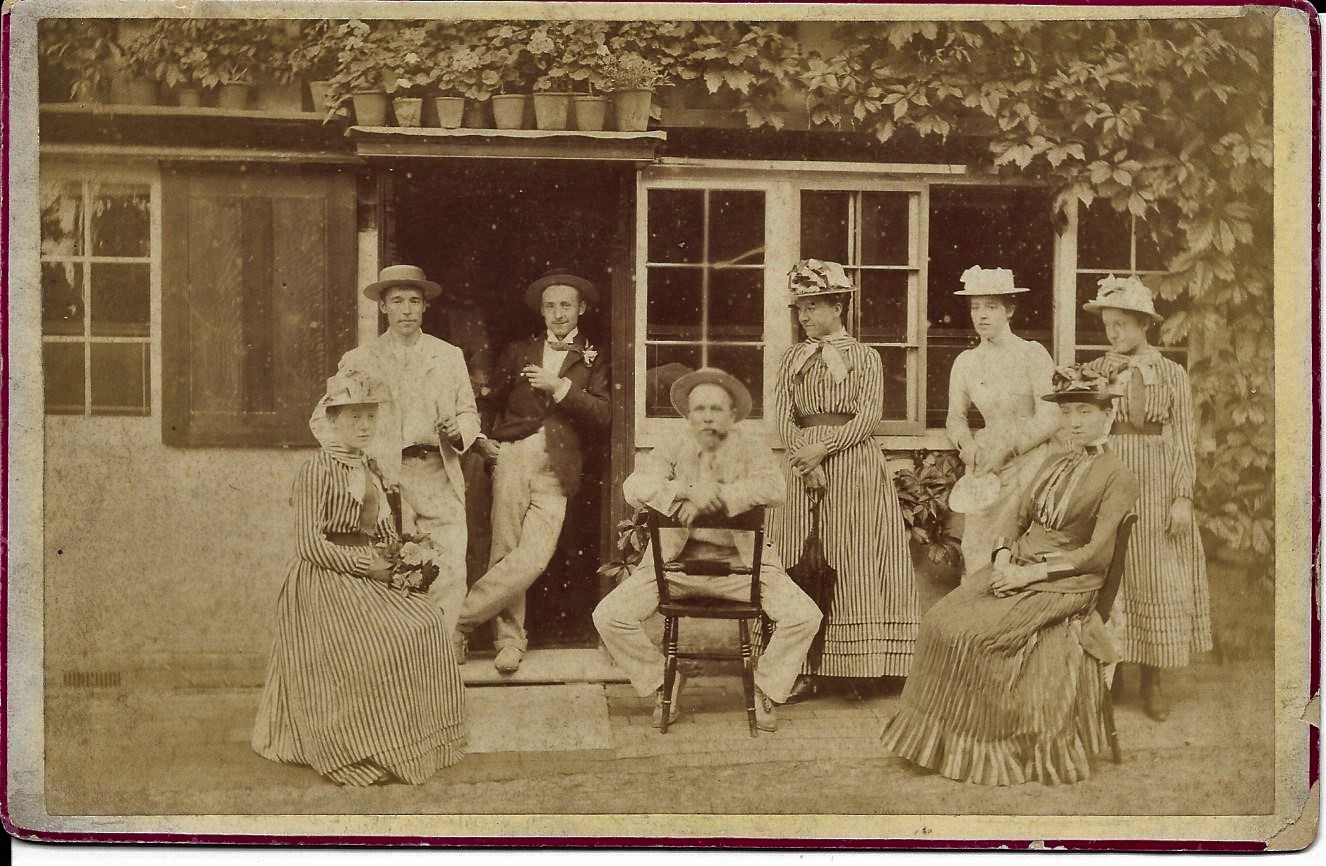
One evening in March 2021, two old photos caught my eye. Both had the same eight people beautifully dressed and certainly looked like a well-to-do family. The description was really interesting as they were described as coming from a large family collection named the Lampard Family.
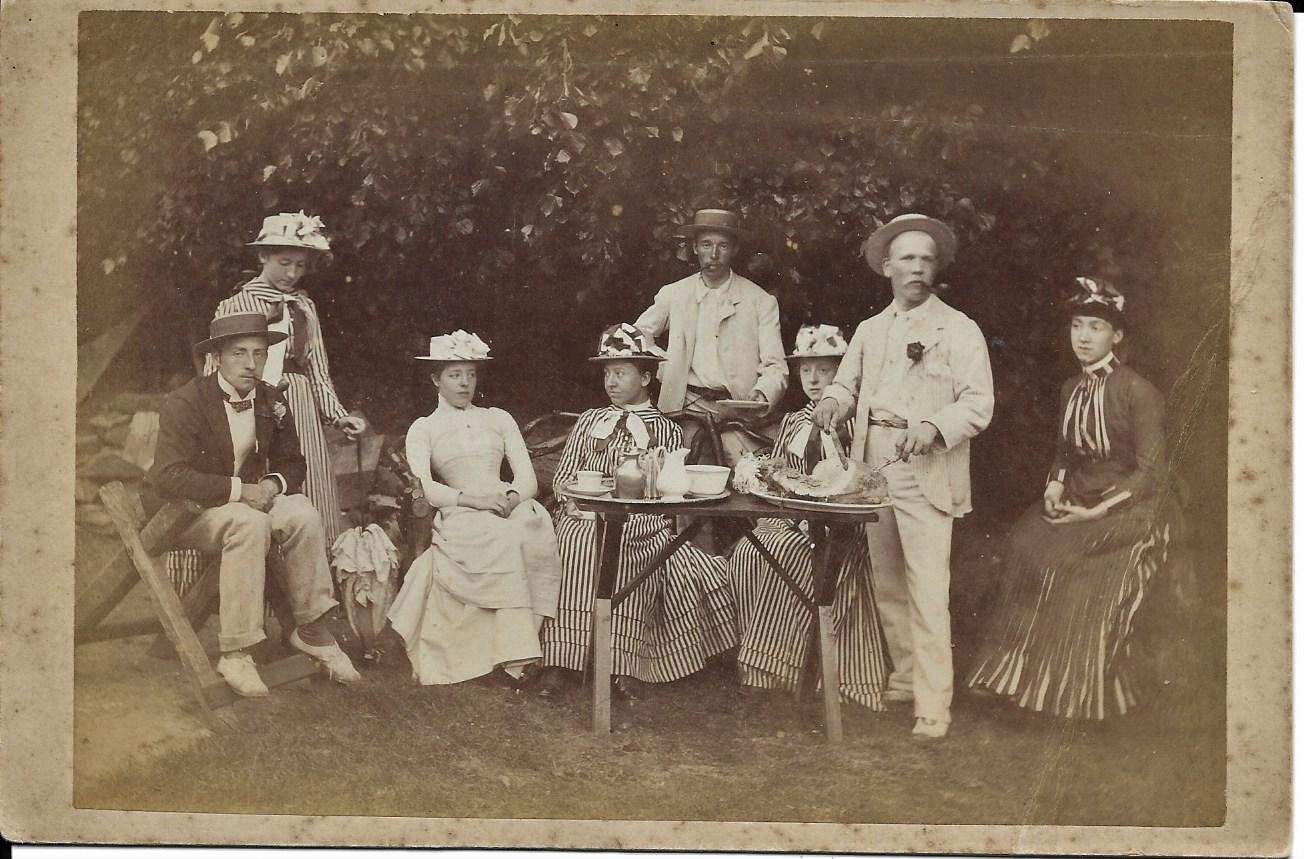
The seller had lots of old photos for sale from this family and I realised very quickly that it would cost me an absolute fortune to buy them all and keep them together.
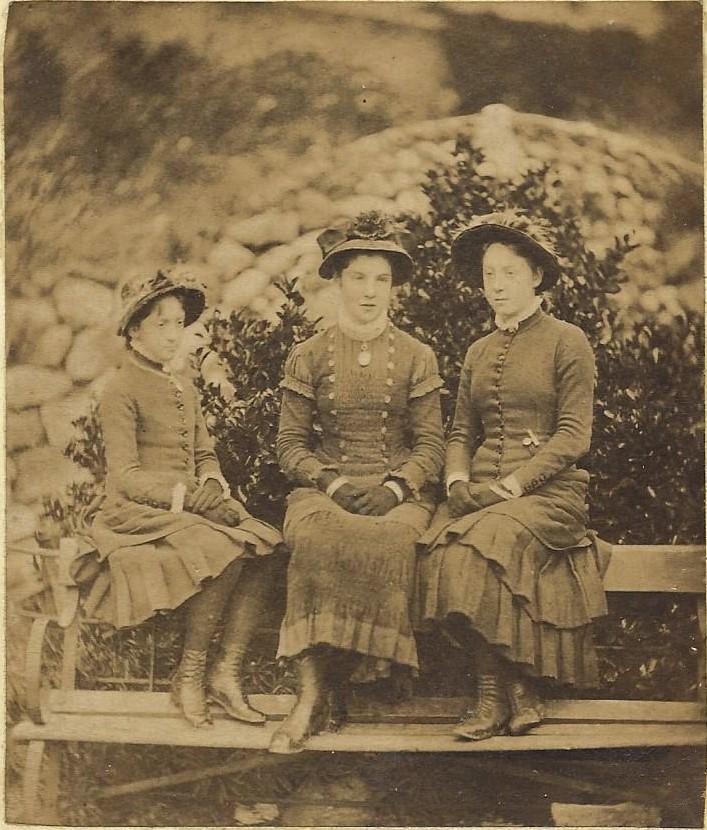
Most CDVs started at £5 each and prices went up depending on how commercial the photo was.
So I had to be choosy if I wanted to save some to keep together. But first I put a watch on every single photo for sale. Then I bid on the few I wanted.
That way I still had the information from each photo to help me piece together the family history even if I didn’t own the photos.
Later I did screenshots of the ones I didn’t buy to enable me to look at the faces and information that hopefully would help me identify the correct family.
I was lucky enough to win three of them (numbers 1, 2 & 3) and they arrived the last week in March.
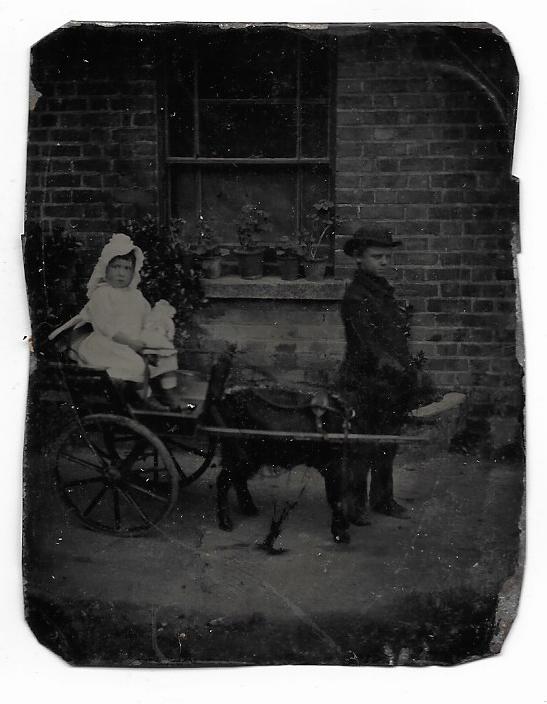
Then strangely, the evening after they arrived I saw a lovely group wedding photo (number 5) had been listed by a different seller, and looking at the photos and description this too had been part of the Lampard Family collection!
I went through all the photos this seller had and did the same as before, put a watch on them all so I could check each one out carefully.
I also sent the seller a message asking about where the photos had come from. He replied that he had bought them from an auction in Nottingham and as far as he knew they were a London family.
Confirming exactly what I thought, that these may have been all part of a house clearance that ended up at auction and was split into lots, a treasured family collection gone forever.
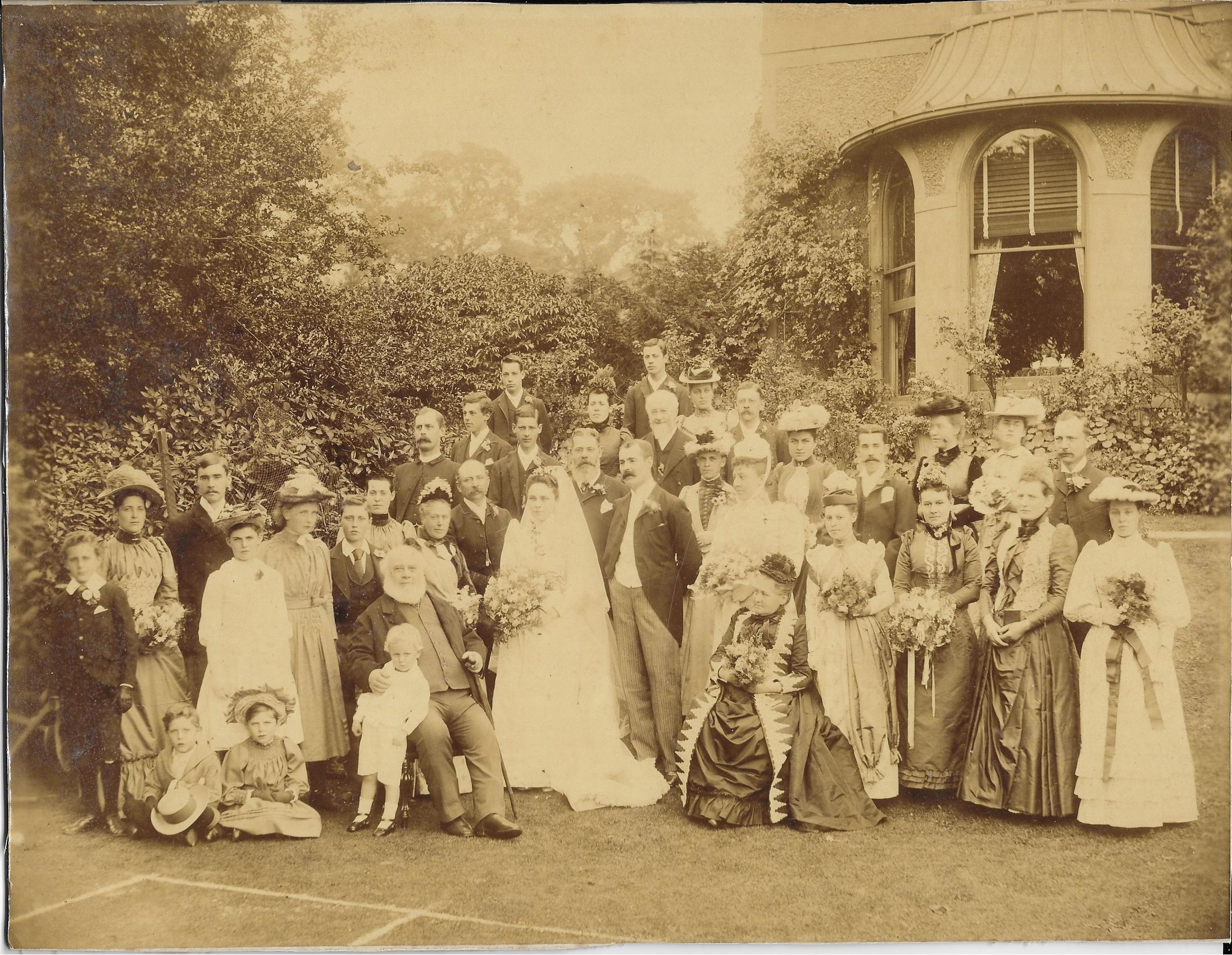
The bridesmaid at this Wedding above was Harriett Mary Lampard. Assuming she was unmarried at the time, I had my clue to get started.
Looking on FreeBMD for a Harriett Mary Lampard, I was surprised to see only one come up, I hadn’t put a date in.
Born in 1854. Lampard. Harriett Mary. Aston. 6d 297.
The registration district of Aston is in Birmingham, so I also had an area. Now I turned to the GRO to see what the mothers maiden name was, it was Turner.
Next I put in the FreeBMD a marriage between a Lampard and a Turner before 1854. Only 3 results, and one man, Jacob in the June quarter if 1851. So now I reversed the search to find out Harriett’s mother’s name. It was Ellen Jane Turner.
Jacob and Ellen married on 21 May 1851, in the Church of Saint Thomas, Birmingham, Warwickshire, England.

As you can see this gives me their fathers and could the witness Sarah Anne Turner be a sister to Ellen. The other witness is interesting it says George Ashmall. You’ll see where he fits in later in this blog.
So I started a family tree with this couple and their daughter Harriett Mary.
In total I found the couple had six daughters and two sons, Harriett Mary was the eldest.
I shall start with her because she was quite an amazing lady.
Harriet Mary Lampard.
A Life of Service in England and Canada.
Harriet Mary Lampard was born on 27 March 1854 at Handsworth, Staffordshire, the eldest child of Jacob Lampard and Ellen Jane Turner. Her father was 28 years old and her mother just 21 when Harriet was born. She was baptised a few weeks later, on 14 April 1854 at St Thomas, Birmingham, Warwickshire.
Harriet would eventually become the eldest of a large family of eight children, six daughters and two sons, and hers was to be a particularly interesting and independent life.
She never married and had no known children, instead devoting a considerable part of her long life to her vocation as a Deaconess in the Church of England, serving both in England and Canada.
By the time of the 1861 Census, seven-year-old Harriet was living with her family in the Aston area of Warwickshire.
In the 1871 Census, seventeen-year-old Harriet was still living with her parents in Staffordshire. During the following decade the Lampards moved south, and by 1881, when Harriet was 27, she was living with her family in Richmond, Surrey.
There were seventeen years between Harriet, the eldest child, and Effie, the youngest.
The family subsequently settled at Rutland Lodge, Petersham, Richmond, Surrey.
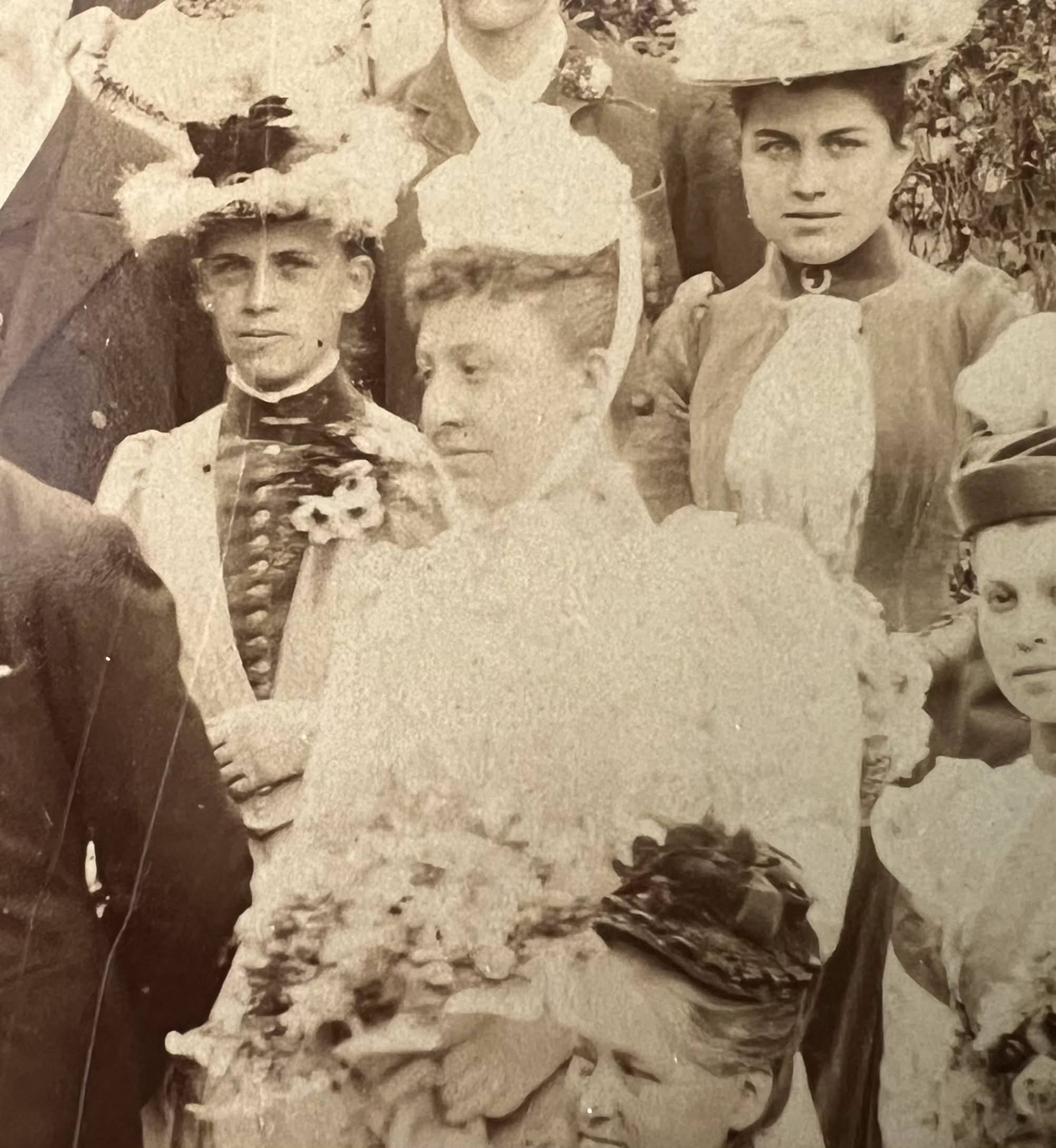
By 1901, Harriet, then 47 and still unmarried, was living with members of her family at Warrington House, Kings Road, Richmond, Surrey.
Her father Jacob died in 1891 and her mother Ellen Jane survived Jacob by twelve years, dying at Petersham on 7 December 1904, aged 71.
Harriet was now 50 years old, and it was at almost exactly this point in her life that she embarked upon an extraordinary new chapter.
Becoming a Deaconess.
On 9 February 1905, only two months after her mother’s death, Harriet Mary Lampard was formally set apart as a Deaconess in the Diocese of Rochester.
Her entry survives in the register of Anglican deaconesses held by Lambeth Palace Library. It records:
Lampard | Harriet Mary | 09/02/1905 | Rochester | 13/11/1945
The date is significant. Harriet did not enter the deaconess movement as a young woman; she was 50 years old when formally admitted to her vocation.
The Diocese of Rochester had played an important part in the revival of the Anglican deaconess movement.
In 1887, Isabella Gilmore, sister of the artist and designer William Morris, became head of the Rochester and Southwark Deaconess Institution. She developed a system in which women were trained for practical parish ministry rather than enclosed religious life.
Training included theology and preparation for parish duties as well as elementary nursing. Some women also received further nursing experience at Guy’s Hospital.
Deaconesses subsequently worked among poor families, visited the sick, taught religion and basic sanitation, distributed clothing and food, and undertook the many forms of welfare work that were desperately needed in poorer communities.
The Rochester and Southwark institution was based in Clapham, eventually occupying a house on the north side of Clapham Common that became known as Gilmore House.
Harriet’s formal admission in the Diocese of Rochester makes a connection with this institution very likely, particularly given her later association with Clapham.
However, until a surviving training or student record naming Harriet is found, it’s only very likely but not confirmed.
What is certain is that by 1905 Harriet had chosen a vocation that would dominate the remainder of her working life.
Canada. A New Life at 54.
Only a few years later Harriet crossed the Atlantic.
One of her later travel documents records that she had previously lived in Canada from 1908 until 1918, indicating that she first settled there at about the age of 54.
Western Canada was experiencing enormous population growth at this time, and the Anglican Church needed experienced women as well as clergy to minister to rapidly expanding communities.
Deaconesses could undertake practical welfare and missionary work that was particularly important among women, children, the sick and poorer families.
Harriet was working in Calgary, Alberta, and we have a fascinating contemporary glimpse of her activities there in November 1909.
A report published in The Canadian Nurse described a meeting of Calgary citizens held at the YMCA to discuss the establishment of a district nursing service in the city.
The proposal was to divide Calgary into districts and appoint nurses to care for people in their own homes.
Among those taking a leading part was:
“Deaconess Harriett Lampard, of the English Church.”
Harriet did not simply attend the meeting. She acted as its secretary.
Then when a committee was appointed to consult with the nurses and investigate the proposed scheme in greater detail, Harriet was one of only four people chosen. Her fellow committee members included Dr W. A. Lincoln, Dr G. A. Anderson and J. E. Bull.
This is valuable evidence of Harriet’s position within Calgary society. She was evidently sufficiently respected and trusted to work alongside doctors and representatives of local charitable organisations on a matter of public health.
District nursing was particularly important before the development of modern state health and welfare services. Nurses visited people in their own homes, frequently providing care to families who otherwise had little access to medical assistance.
Harriet’s involvement therefore gives us a glimpse of what her work as a deaconess actually meant. Her ministry was not confined to attending church services. It involved practical social welfare and concern for the health and living conditions of ordinary people.
Between Canada and England.
Although Harriet stated that Canada was her home from 1908 to 1918, she clearly travelled during this period.
On 27 August 1910 she was recorded in Sutton Coldfield, Warwickshire, and another travel record places her arriving in the United States in 1910. These records suggest that her Canadian years included journeys back across the Atlantic rather than one uninterrupted residence abroad.
By 1918 Harriet’s decade of residence in Canada appears to have ended and she returned to England.
Deaconess of St John’s, Clapham.
On 19 June 1921, the Census provides one of the clearest descriptions we have of Harriet’s occupation.
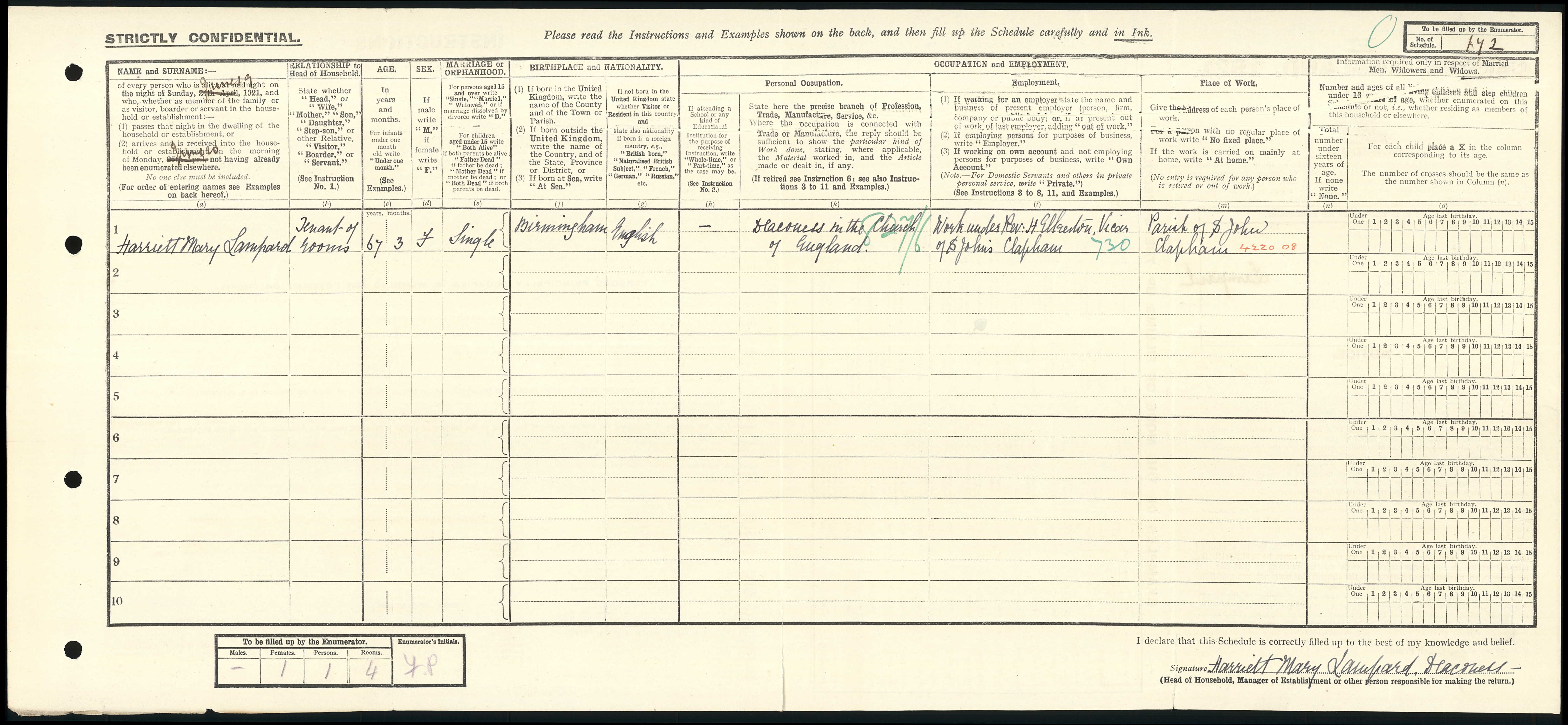
At the age of 67, she was living as a tenant at:
26 Atherfold Road, Lambeth, London
She remained single and gave her occupation quite specifically as:
“Deaconess in the Church of England.”
Her employer was recorded as work under the Vicar of St John’s, Clapham, and her place of work as the Parish of St John, Clapham.
This is really interesting because Atherfold Road lies close to St John the Evangelist on Clapham Road, while the Rochester and Southwark deaconess movement with which Harriet had been associated also had deep roots in Clapham.
Atherfold Road itself was relatively new when Harriet lived there. Its attractive red-brick terraced houses were built during the Edwardian development of the neighbourhood in the early twentieth century.
At 67, Harriet was therefore still actively employed in parish ministry.
Although we cannot know every duty she performed, the established work of Church of England deaconesses gives us an idea of her likely daily life.
Parish deaconesses visited sick and elderly people, helped poorer families, worked with women and children, organised mothers’ meetings and women’s groups, taught religious classes and assisted clergy with the pastoral care of their parishioners.
Harriet’s census entry makes clear that this was not merely an honorary title. She was still working professionally as a Church of England deaconess under the parish vicar.
Back across the Atlantic at 72.
Remarkably, Harriet’s travelling days were not over.
On 23 April 1926, aged 72, she departed Liverpool for Canada. She arrived at Montreal, Quebec, on 3 May 1926.
Whether this journey represented a return to active church work or a visit to the friends and communities she had known during her earlier Canadian ministry remains to be established. Whatever the reason, it demonstrates the strength of the connection Harriet retained with Canada.
As far as I can see she stayed there until April 1929, at the age of 75, Harriet departed Montreal for Britain and arrived at Glasgow on 26 May 1929.
She had therefore crossed the Atlantic yet again at an age when international travel was still a considerable undertaking.
By the time of the 1939 Register, Harriet was 85 and had finally retired from her life’s work.
She was living at Locks Farm in the Williton district of Somerset, together with her youngest sister Effie Alice Lampard, and her niece Hope Denny, and a servant.
Harriet’s occupation was recorded simply and appropriately as: “Deaconess – Retired.”
Her retirement in rural Somerset must have been very different from the years spent working in the rapidly growing city of Calgary or ministering among the people of a busy London parish.
The Death of Harriet Mary Lampard.
Harriet lived through the remainder of the Second World War and reached the remarkable age of 91.
She died at Bicknoller, Somerset, on 13 November 1945, her death being registered in the Taunton area.
Her death date also appears beside her name in the Anglican deaconess register: Lambeth Palace Library P20
9 February 1905 – 13 November 1945.
Closing a record that had begun with her formal admission forty years earlier.
Harriet Mary Lampard had lived an extraordinary life spanning more than nine decades.
Born in Handsworth in 1854, she grew up in a large Victorian family, moved with them from Staffordshire to Surrey and remained unmarried. Then, at an age when the expected course of many Victorian women’s lives had already been established, Harriet chose an entirely new direction.
In Calgary she became involved in practical social welfare and was among those working towards improved district nursing provision for the city’s inhabitants. She travelled repeatedly across the Atlantic, returned to England and, at 67, was still serving as a deaconess in the parish of St John the Evangelist, Clapham.
Even in her seventies she returned to Canada.
Harriet had no husband or children to leave descendants of her own, but the records reveal something equally valuable: a woman who spent much of the second half of her life in service to others.
Her life connected Handsworth, Richmond, Petersham, Clapham, Calgary and finally rural Somerset.
For someone born in 1854, it was quite a journey.

I bought the following photo from the second seller, just because it was so lovely.
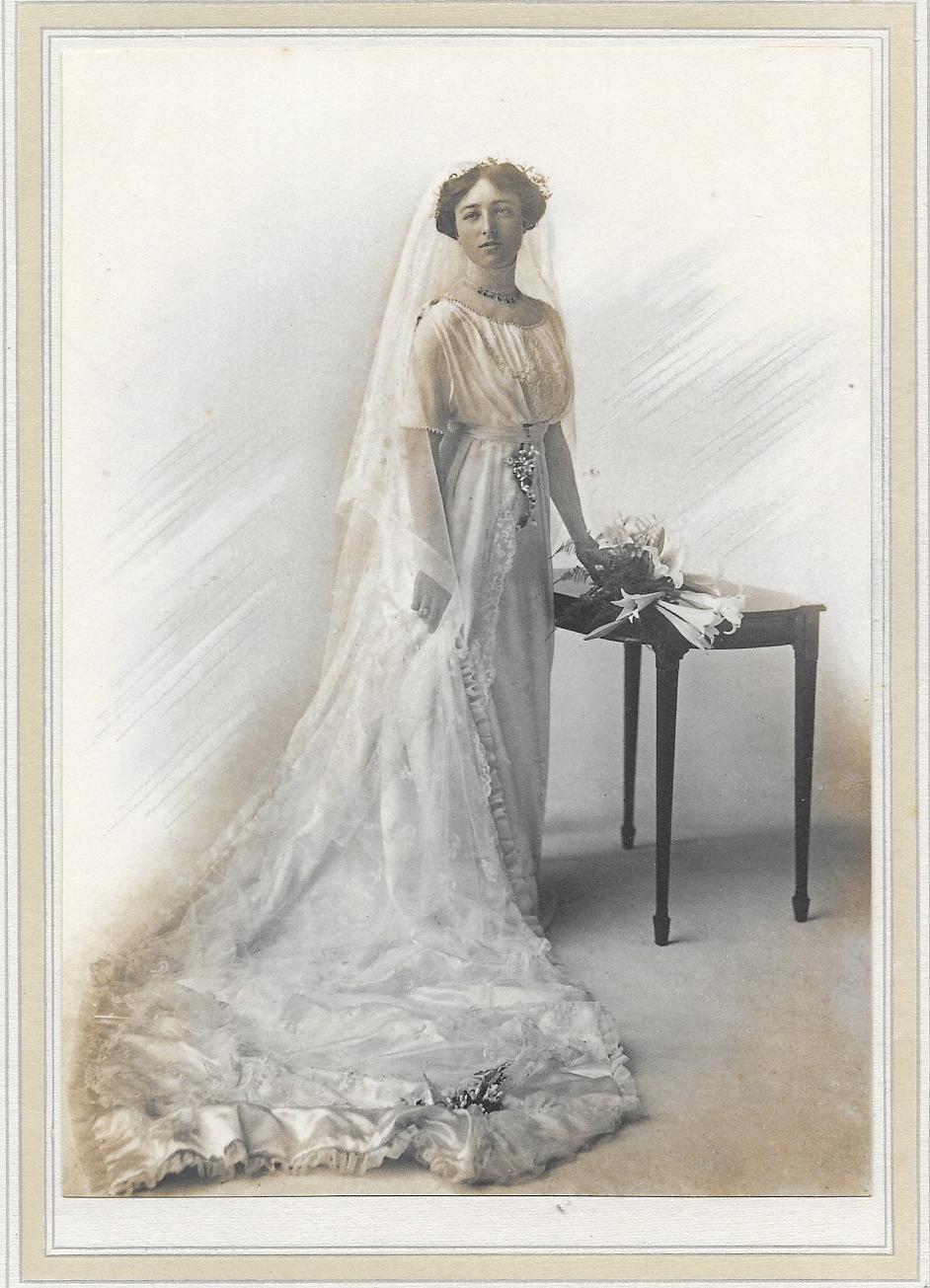
The outer card frame of this photo above gives us the photographer: William Slade Stuart, who was an Edwardian portrait photographer based in Richmond, Surrey, with a West London branch address at 162 Sloane Street. He was well-known for capturing high-society figures, royalty, and theatrical portraits during the late Victorian and Edwardian eras.
The Story of Jacob and Ellen Lampard and Their Family
The story of the Lampard family begins in rural Wiltshire in the early nineteenth century and, over the course of several generations, moves through Birmingham and Handsworth to Richmond and Petersham in Surrey, and eventually to London, Devon, Dorset, Somerset, Sussex, Derbyshire and even the south of France and Australia.
At its centre were Jacob Lampard and Ellen Jane Turner, a Victorian couple who raised eight children and whose descendants and extended family experienced remarkable prosperity, great longevity, overseas commerce and, inevitably, their share of tragedy.
Their later home, Rutland Lodge at Petersham, Richmond, Surrey, became an important focal point in the family’s story.
Jacob Lampard, From Wiltshire to the Tea Trade.
Jacob Lampard was born in 1826 at Heytesbury, Wiltshire, the son of George Lampard, a Farmer, then aged 28, and Arabella Randall, aged 31. He was baptised in Wiltshire on 26 September 1827.
Jacob suffered an early loss when his mother Arabella died at Fonthill Bishop, Wiltshire, on 5 March 1836, aged only 41. Jacob was about ten years old. In 1841, aged around 15, he was living at Longbridge Deverill, Wiltshire.
During the following decade Jacob left his native Wiltshire and made his way to Birmingham. It was there that he met the young woman who would become his wife.
Ellen Jane Turner.
Ellen Jane Turner was born in Birmingham, Warwickshire, on 30 January 1833, the daughter of Edwin Turner, aged 27, and Mary Ashmall, aged 21.
Mary Ashmall’s father was William Ashmall, who I thought at first may have been the witness on Jacob and Ellen’s marriage record, but I found he had died in 1850, the year before.
So his eldest son was the witness, he was Mary’s eldest brother, William Henry Ashmall, a Merchant.
As to the other witness at Jacob and Ellen’s marriage, I was correct, Ellen had a sister Sarah Anne.
Ellen Jane was baptised at St Martin, Birmingham, on 20 August 1833. At that time her father Edwin was working as a plumber and glazier.
Ellen was living in Birmingham in 1841, aged eight, and was still there in 1851, when she was recorded as the daughter of the head of the household. She was only 18 when she married Jacob.
Marriage and a Growing Family.
The marriage of Jacob Lampard and Ellen Jane Turner was registered in Birmingham during the April quarter of 1851, and the ceremony took place at St Thomas, Birmingham, on 21 May 1851.
Jacob was 25 and Ellen was 18.
I found he was also in business with Henry Walton, before his marriage, a Tea Dealers & Grocers Business called ‘Walton & Lampard’ that was dissolved by mutual consent on 2 November 1850.
Their marriage would last for more than forty years and produce eight children over seventeen years:
Harriet Mary, born 27 March 1854
Ada Ellen, born 8 October 1856
Gratian, born July 1859
Frank Ashmall, born 3 December 1860
Charles Arthur, born 1 September 1862
Edith Marion, born July 1865
Mabel, born 10 May 1867
Effie Alice, born 2 May 1871.
By 1852, Jacob was living in Birmingham and was described as a tea dealer. He was again recorded in Birmingham in 1853.
Tea and imported produce were to become important threads running through the Lampard family for decades.
Ellen’s father, Edwin Turner, died in Birmingham in December 1852, aged 46.
The couple’s first child, Harriet Mary Lampard, was born at Handsworth on 27 March 1854, followed by Ada Ellen Lampard on 8 October 1856.
Their third daughter, Gratian, arrived in July 1859 and was baptised on 3 August 1859.
The first Lampard son, Frank Ashmall, was born on 3 December 1860.
In 1861, Jacob and Ellen were living in Aston, Warwickshire, with their growing family.
A second son, Charles Arthur, was born at Handsworth on 1 September 1862. Frank and Charles were baptised together at St Matthias, Birmingham, on 9 May 1864.
Edith Marion followed in July 1865 at Aston.
Mabel was born at Handsworth on 10 May 1867, and Jacob was again recorded in Birmingham on 25 February 1868.
Finally came Effie Alice, born at Handsworth on 2 May 1871.
Mabel and Effie were both baptised on 20 June 1871.
At the 1871 census, the family was living in the Holy Trinity area of Staffordshire.
The following year brought bereavement on both sides of the family. Jacob’s sister Arabella Lampard died at Kensington on 24 October 1872, while Ellen’s mother, Mary Ashmall, died at Rugby in December 1872, aged 61.
A New Life in Surrey.
By 1880, Jacob had moved his family south and was living at Clinton House, Weybridge, Surrey.
The 1881 census found the Lampards at Elliker House, Richmond, Surrey.
Jacob, aged 55, was now described as a Tea Merchant.
The children were growing up. Frank, aged 21, was already a tea merchant, while Charles, aged 19, was a clerk to a merchant.
Mabel, aged 14, and Effie, aged ten, were scholars.
The Lampards appear to have enjoyed an active social life in Richmond.
In 1885, when she was only about 14, Effie belonged to a local swimming club, an appearance preserved in the newspaper archives.
Music was also part of family life. A newspaper report from 1890 records Effie singing at a concert while her sister Mabel played the violin.
These small glimpses are particularly valuable, revealing something of the personalities and interests of the young Lampard sisters beyond the information recorded in census returns.
Gratian Lampard.
The third Lampard daughter, Gratian, was to have the shortest life of the eight siblings.
On 28 April 1886, aged 26, she married Frederick William Denny in Surrey; their marriage was registered at Richmond during the April quarter of 1886.
Frederick had been born at Wandsworth on 4 July 1858, the son of Charles Denny, aged 36, and Mary Harvey, aged 30. He was baptised on 1 August 1858.
His younger brother Harvey was born on 23 June 1860 but died on 16 August 1862.
Frederick was living in Wandsworth in 1861, was a boarder in Kent in 1871, and by 1878 was living at 66 Coldharbour Lane, Surrey, with his occupation recorded as “Plough”. In 1885 he was in St Mary, Islington.
Gratian and Frederick’s only child, Hope Denny, was born at Richmond on 28 February 1887.
Frederick William Lampard was operating his Auction rooms at 1,2,3, & 4 Finsbury Park Road after the couple married.
Then came a remarkable and rather darker episode in Frederick’s life.
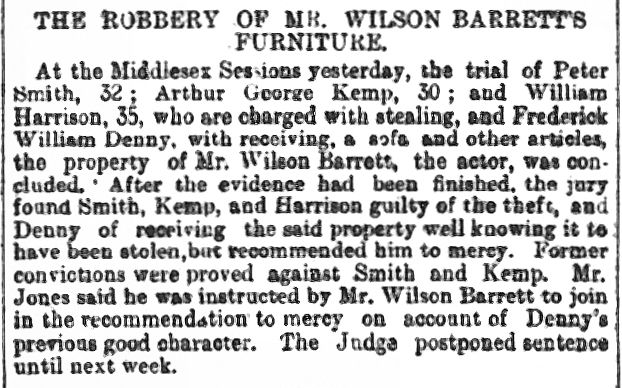
On 11 April 1888, at the Middlesex Sessions, he was convicted of receiving stolen goods. The property included furniture belonging to the actor Wilson Barrett of the Globe Theatre, stolen from Barrett’s home in Hampstead.
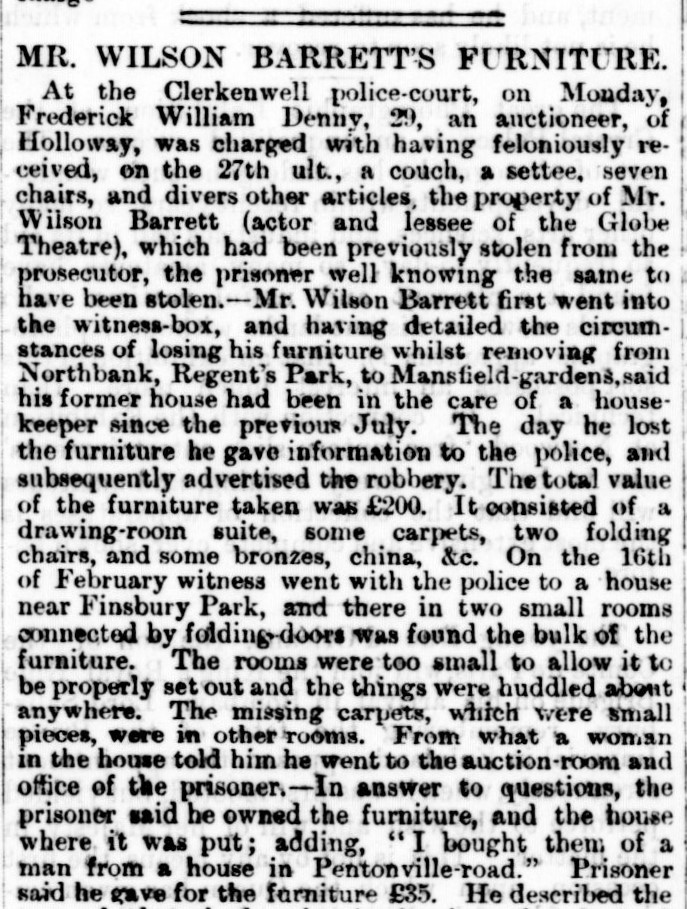
This is just a very small selection of the very many newspaper reports in newspapers from all around the country that covered this court case of Frederick’s. It can’t have been easy for his wife Gratian or his family to see everything broadcast far and wide.
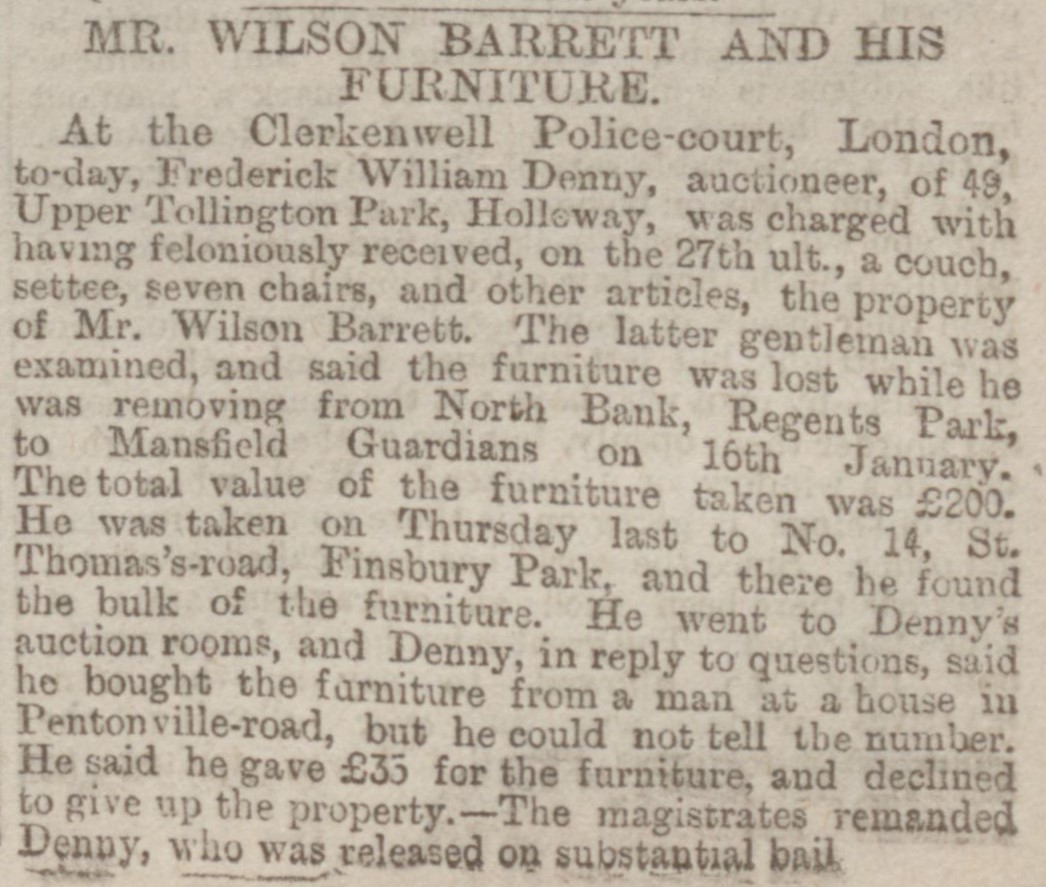
A £1,000 bail was a huge sum then, about £168,714.70 today!
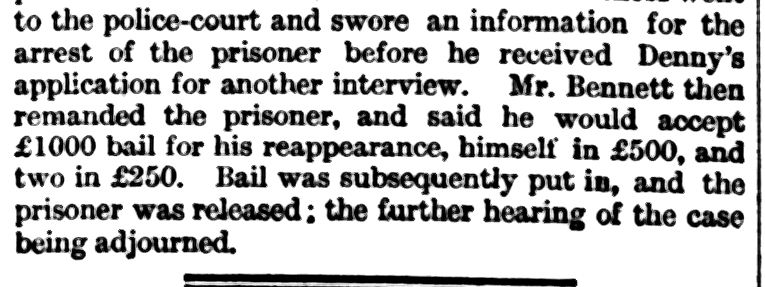
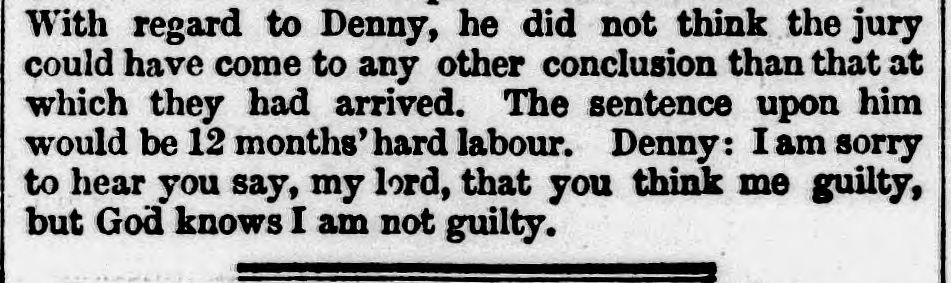
He was sentenced to 12 months hard labour.
By 1891, Frederick, a Widower, was living at Cobham Stud Farm, Ockham, Surrey, and was recorded as a Farmer and Head of his household. He had a Housekeeper and a General Servant, plus a Boarder who was a ‘Farmers Apprentice/Ag Lab’.
Did he get this Farming job at Cobham Stud Farm/Pound Stud Farm, after he came out of prison?

Gratian, however, was at Rutland Lodge, Petersham, Richmond, with her family, where she died on 2 April 1891, aged only 31, just 3 days before the 1891 census.
This is a PDF copy from the GRO, not very clear, of her death, as a digital copy wasn’t available. Her cause of death was I think ‘Hydrothorax’?
She left four-year-old Hope without her mother.
Possible causes: Since Gratian was a 31-year-old woman, the “20 months” notation on the historical record indicates the duration of her illness. She suffered from a chronic, debilitating condition, most likely tuberculosis, kidney disease, or failing heart valves, for nearly two years before the resulting fluid buildup in her chest became fatal.
Gratian’s place of death in Richmond, Surrey, and the timing of her illness suggest a possible link to the 1889–1892 Russian Influenza pandemic. Her death certificate records that she suffered from hydrothorax (fluid in the chest) for 20 months, indicating that her illness began around August or September 1889, shortly before the first major wave of Russian Flu swept through London and Surrey in the winter of 1889–90.
Influenza at that time was often a severe and sometimes fatal disease. One recognised complication was chronic pleurisy, which could lead to a gradual build-up of fluid around the lungs, eventually resulting in hydrothorax. Gratian may therefore have contracted influenza during the early stages of the pandemic, with complications slowly worsening over the following 20 months.
By the winter of 1890–91, England was experiencing both a harsh, prolonged winter and a second wave of the Russian Flu. Either the cold conditions or a secondary respiratory infection may have further weakened her already damaged lungs, contributing to her death on 2 April 1891.
Gratian was buried at St Peter and All Saints, Petersham, on 9 April 1891.
Probate relating to her estate was not recorded until 4 April 1905.
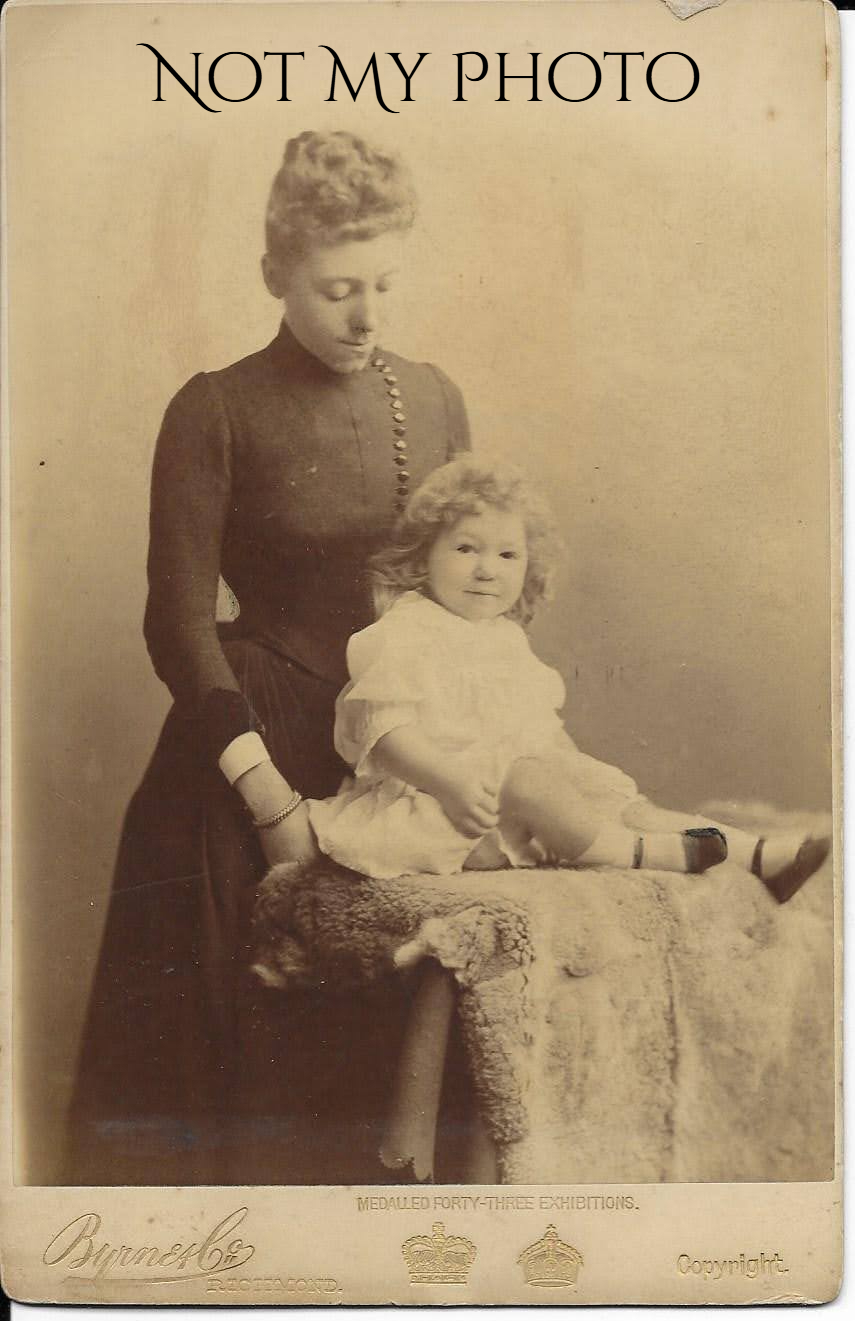
But this was not the end of Frederick William Denny’s story and sadly it’s not good.
Frederick Denny’s Second Family.
After Gratian’s death, her widower Frederick William Denny eventually remarried. In July 1895, he married Annie Laura Kempe Polkinghorne at Wandsworth. Frederick called his second wife “Nancy.”
Their daughter Ethel Mary Denny was born at St Pancras, London on 16 January 1896.
By 1901, Frederick was living at Hampreston, Dorset, and in 1903 was recorded at Ringwood Road, Dorset.
His father Charles Denny died at The Avenue, Branksome, on 9 January 1905, aged 82, and his mother Mary Harvey Denny died at Branksome on 14 January 1907, aged 78.
Frederick was living at Ferndown in 1909 and at Hampreston in 1911, when he was described as an employer.
Life was not easy at all for his second wife Annie, he seemed to be tumbling into a dreadful downward spiral.
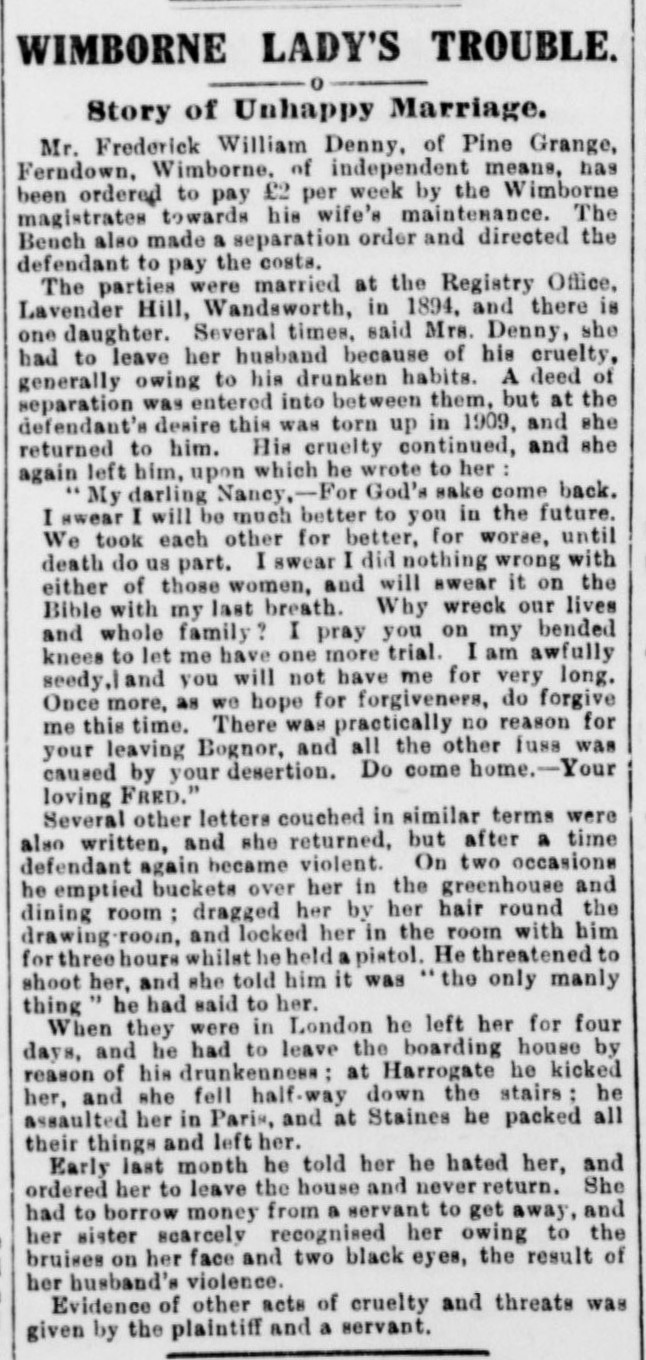
Frederick died at Pine Grange, Ferndown, on 13 July 1914, aged 56, less than three months after this court case. He was buried at Hampreston, Dorset, on 16 July 1914.
Once again even at his life’s end everything was reported in the newspapers of the day.
His inquest is a very sorry tale, this newspaper report is from the Western Gazette on 17 July 1914. It’s rather long and detailed but it’s difficult to just show you small parts of it.
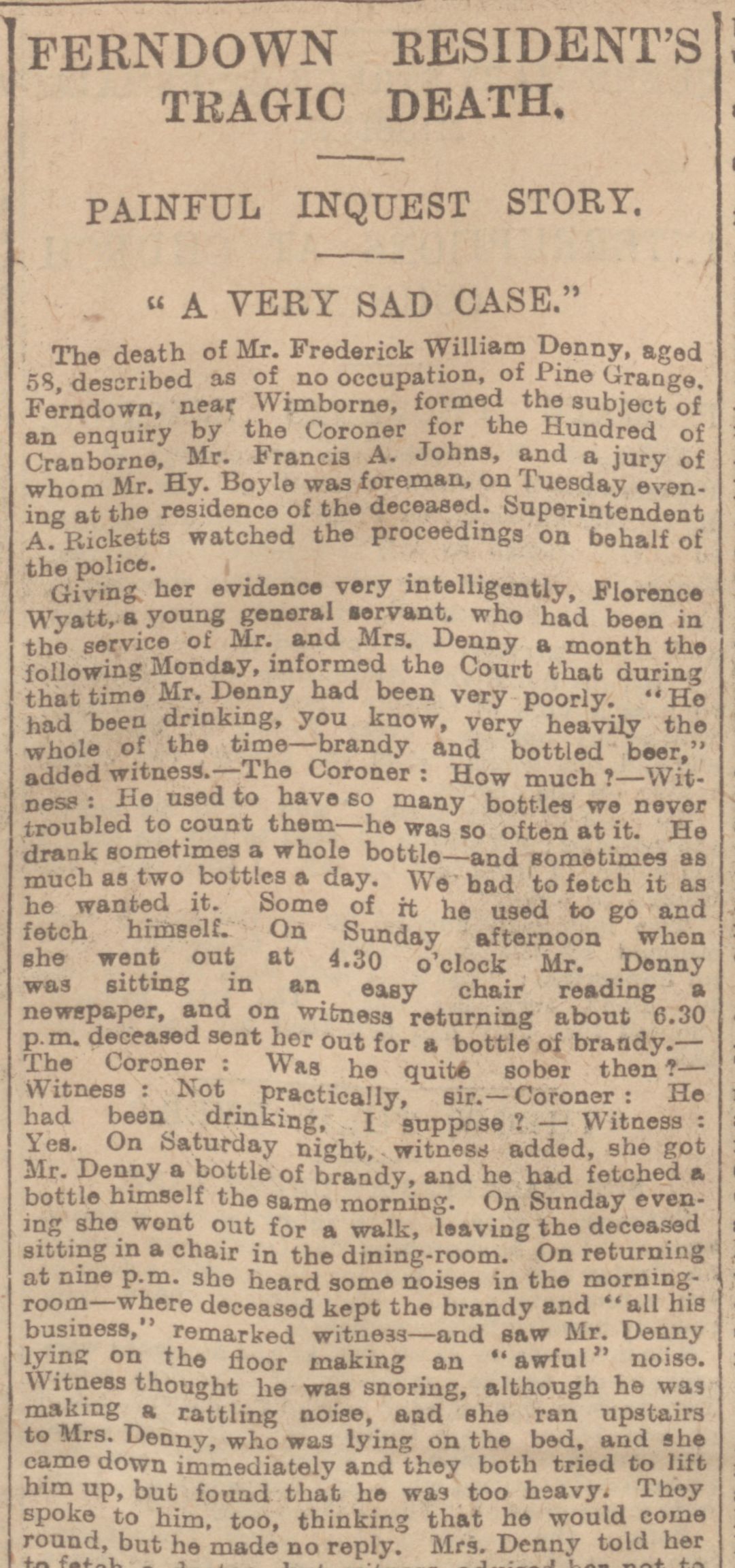
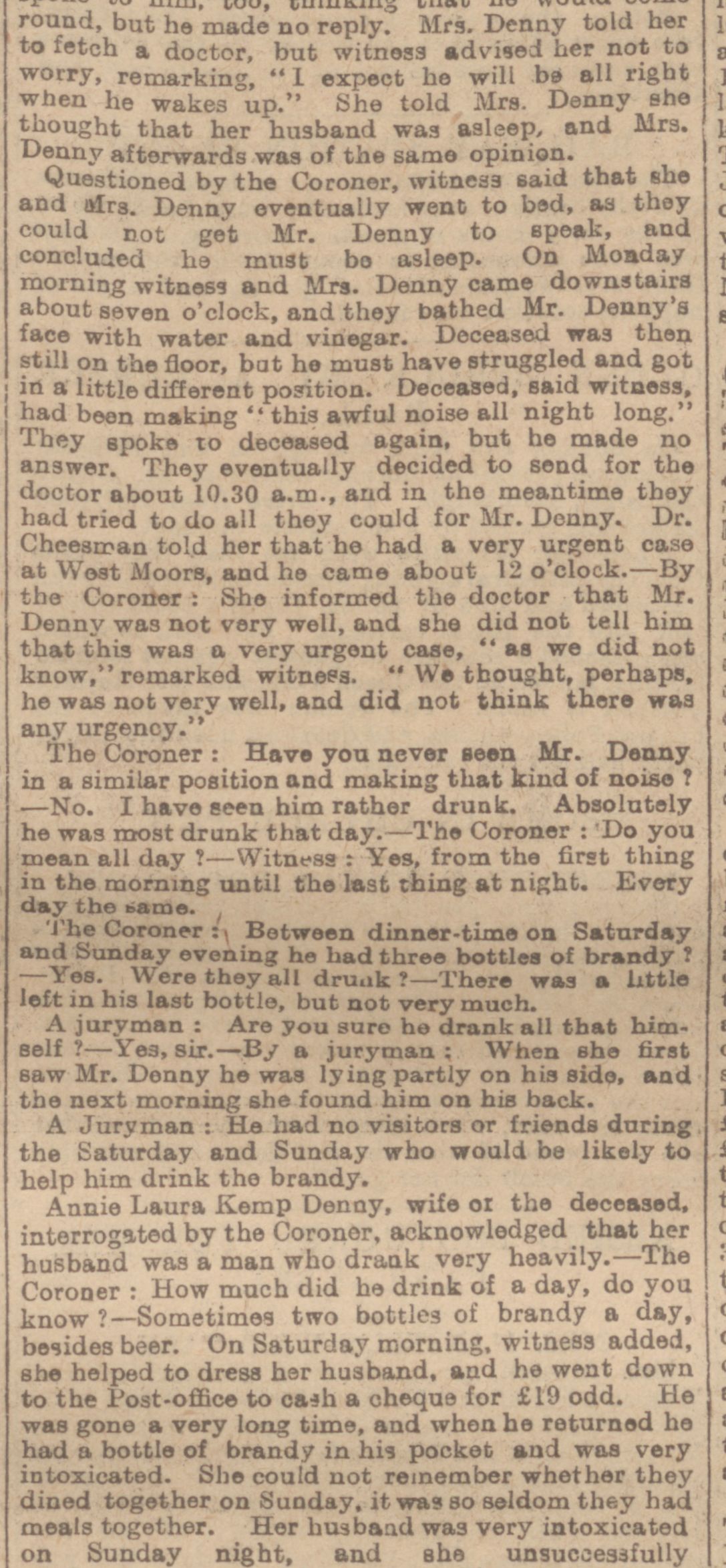
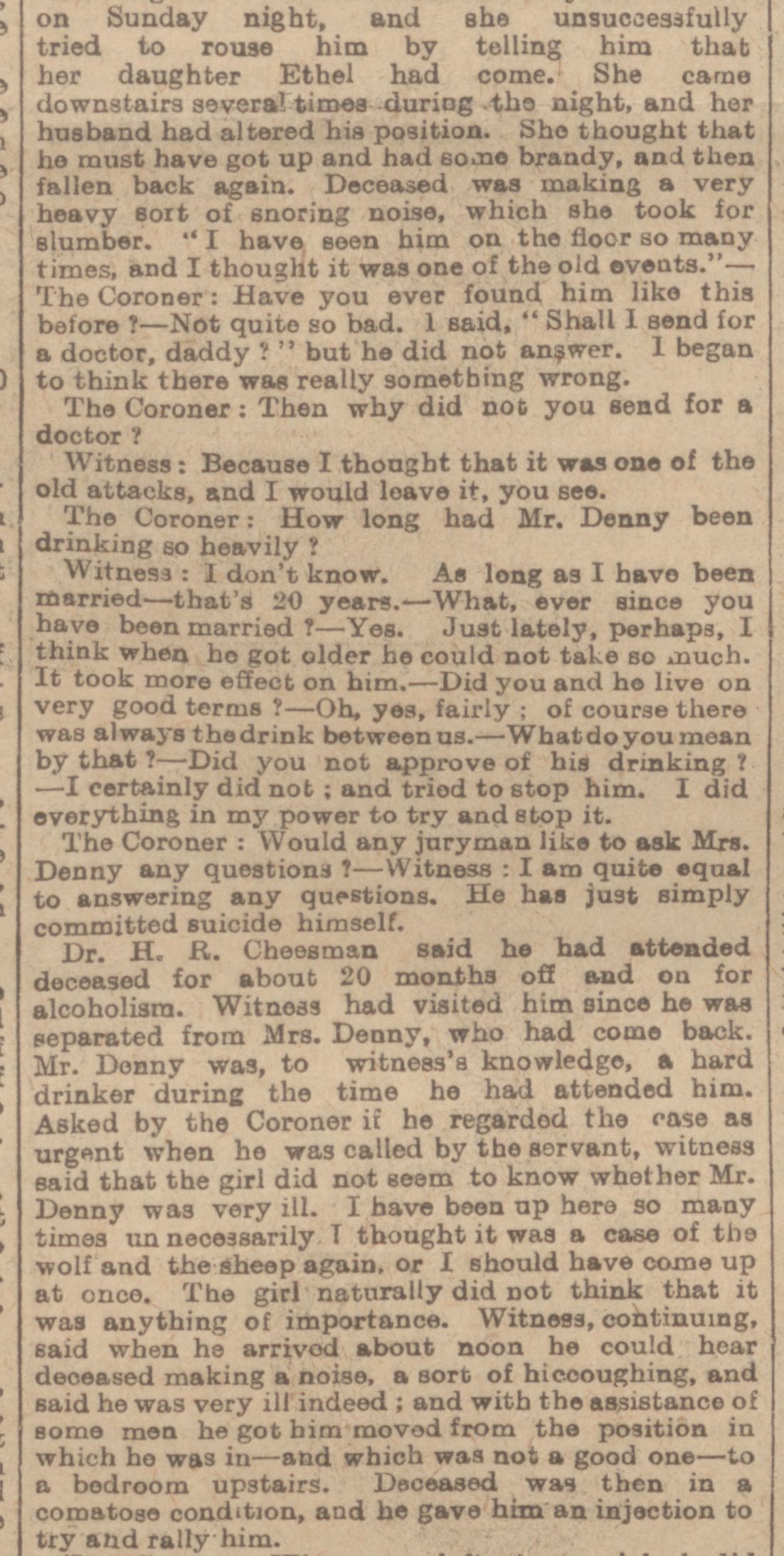
His wife says that he had been drinking heavily ever since their marriage of 20 years. Was he the same when he was married to Grecian or was it her death that caused him to be like this, and he just couldn’t get to grips with it?
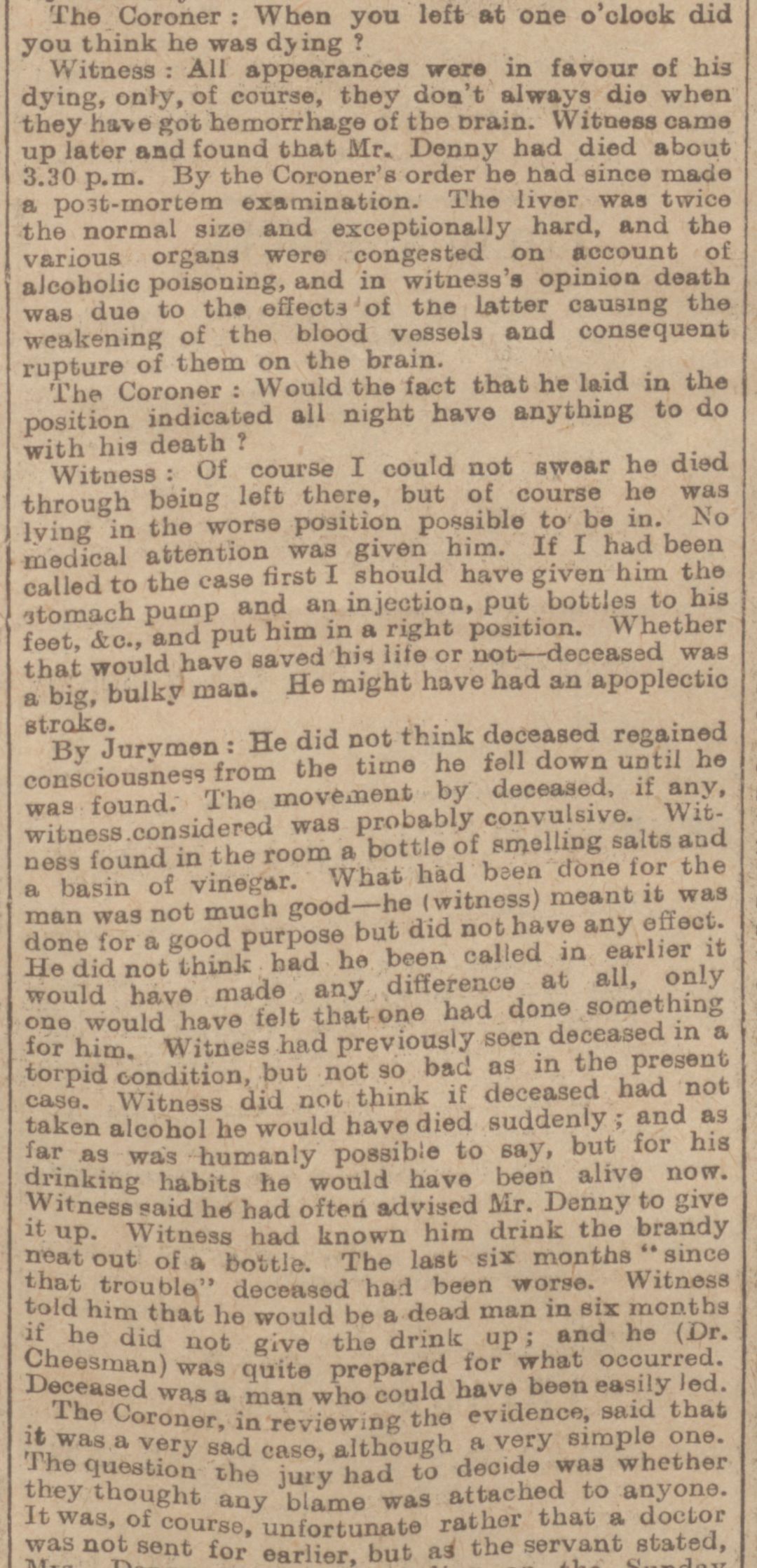
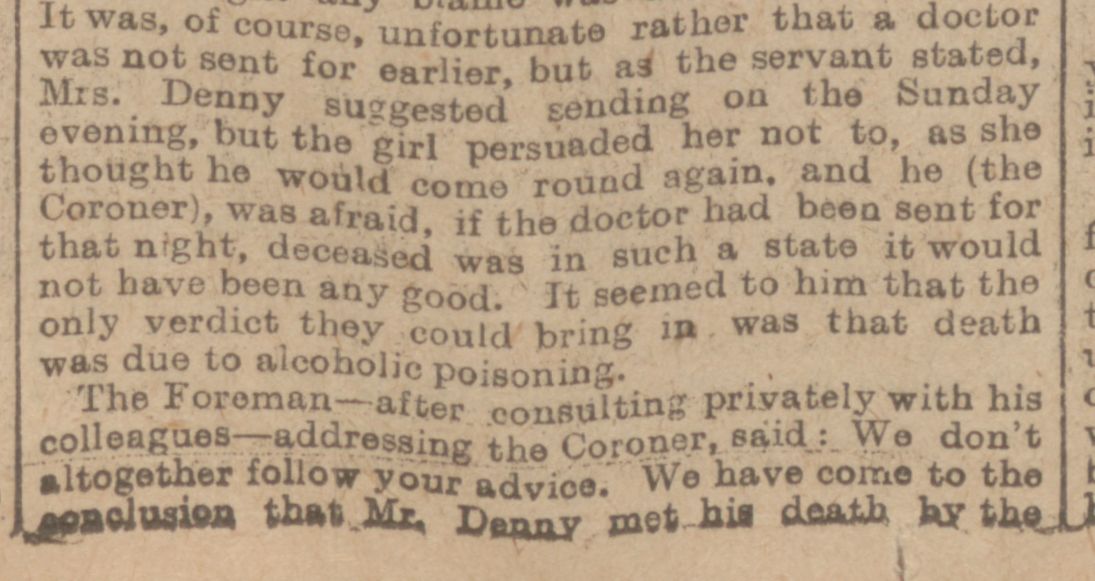
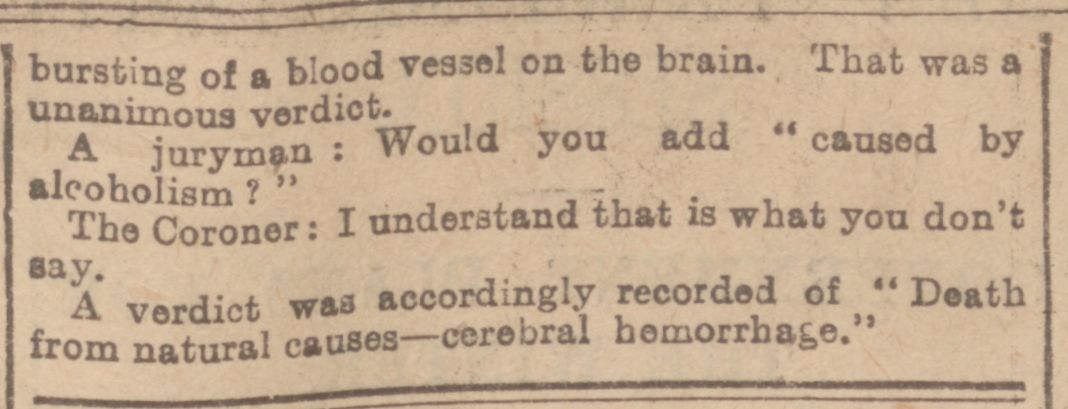
Probate was granted in London to his brother Charles on 19 October 1914, his estate being valued at £10,441 12s 8d.
The Lampards at Rutland Lodge.
In 1891, Jacob Lampard was living at Rutland Lodge, Petersham, where he was described as a tea merchant and grocer.
Several of his unmarried daughters were there too, including Edith, Mabel and Effie.
Ellen’s census entry that year places her at Hersham, Walton, Surrey, as a mother-in-law, suggesting that she may simply have been staying with married family members when the census was taken.
Jacob’s father George Lampard had died in Wiltshire on 12 January 1888, aged 90.
Then, in April 1891, came the devastating death of Gratian.
Only eleven months later the family suffered another loss.
Jacob Lampard died at Rutland Lodge on 14 March 1892, aged 66.
He was buried in Petersham Parish on 17 March 1892, and probate was granted in London on 25 March 1892.
Frank Ashmall Lampard. From Plymouth to Nice.
Frank Ashmall Lampard, born on 3 December 1860, followed his father into commerce.
On 9 May 1864 he was baptised at St Matthias, Birmingham, and by 1881 was working as a tea merchant while living with his parents in Richmond.
In July 1889, aged 28, Frank married Mary Philcox Beviss in Lambeth.
By 1891, he was head of his own household in St Paul’s, Lambeth.
Their son Leonard Ashmall Lampard was born at Plymouth on 9 October 1891.
Their daughter Dora Gratian Lampard followed on 1 December 1892 at St Andrew’s, Plymouth. Her middle name seems particularly poignant, as Frank’s sister Gratian had died the previous year.
A second daughter, Kathleen, was born at Plymouth on 29 March 1894.
In 1901, Frank was recorded as a lodger in Plymouth.
By 1911, he was living at 10 Queen Anne Terrace, Plymouth, where his occupation was Foreign & Colonial Produce Agent, working on his own account and on commission.
His career therefore continued the family’s long association with tea, groceries and imported produce.
Frank’s wife Mary died in Devonshire in September 1912, aged 51, after 23 years of marriage.
Frank subsequently married a woman named Amelie in 1913.
Who exactly Amelie was remains an intriguing mystery. Frank’s later life in France raises the possibility that she may have been French, although I have no evidence of this.
Frank eventually made his home at 18 Rue de Paris, Nice, France. Yet he died in England.
Frank Ashmall Lampard died on 18 July 1931 at 91 Finchley Road, Hampstead, London, aged 70.
Whether he had returned from Nice for a visit, because of illness or for another reason remains unknown.
He was buried in Surrey on 21 July 1931, and probate was granted in London on 26 November 1931.
Charles Arthur Lampard, East Indian Merchant.
Frank’s younger brother Charles Arthur Lampard, born 1 September 1862, also followed the commercial path established by their father.
In 1881, Charles was working as a merchant’s clerk.
On 19 January 1888, aged 25, he married Frances Beatrice Smith at Richmond. A contemporary marriage report survives.
They went on to have six children over approximately fourteen years.
Their son Anthony Smith Lampard was born at Richmond in 1889, followed by Paul Scheltema Lampard about 1893, and Austin Hugo Lampard on 21 November 1894.
Their daughter Elizabeth Augusta Lampard was born on 21 November 1898, associated with St Mary Magdalene, Richmond, and another daughter, Elenor, was born at Richmond in 1903.
By 1901, Charles was a tea and produce merchant and grocer in Richmond.
In 1911, he and Frances were living at Dunnottar, Kings Road, Richmond, and Charles was described as an East Indian Merchant.
His career had clearly become highly successful.
Charles died at Rotherfield, Sussex, on 21 September 1916, aged only 54. His addresses were given as 3 Great Tower Street, London, and Holme Park, Rotherfield, Sussex.
Probate was granted to Frances on 4 November 1916.
Charles left the extraordinary sum of £128,623 13s 5d, demonstrating the considerable wealth he had accumulated through his commercial career.
Edith Marion Lampard.
Edith Marion Lampard, born at Aston in July 1865, never married and there are no known children.
She was living with her family in Staffordshire in 1871, and by 1881, aged 16, was with them in Richmond.
In 1891, Edith was living with her family at Petersham. She endured the death of her sister Gratian on 2 April 1891 and her father Jacob on 14 March 1892.
By 1901, aged 36, Edith was still living in Richmond and was recorded as the daughter of the head of the household, with Harriett and Hope Denny, her widowed mother Ellen was head of the household. Ellen died on 7 December 1904.
By 1911, Edith was living at Twickenham with her younger sister Effie Alice, who was head of the household. Also present were members of the younger generation, including their niece Hope Denny.
The household illustrates something that becomes increasingly apparent in the later Lampard story: the unmarried sisters, nieces and other relatives remained closely connected and frequently lived with or visited one another.
Edith’s brother Charles died on 21 September 1916.
Just over a year later, Edith Marion Lampard died in Brentford, Middlesex, in October 1917, aged 52.
Mabel Lampard.
Mabel Lampard, born at Handsworth on 10 May 1867, would have by far the longest life of Jacob and Ellen’s children.
As a young woman she was musically talented enough to appear in the local press. In 1890, while Effie sang at a concert, Mabel played the violin.
The following year brought enormous changes.
Her sister Gratian died on 2 April 1891.
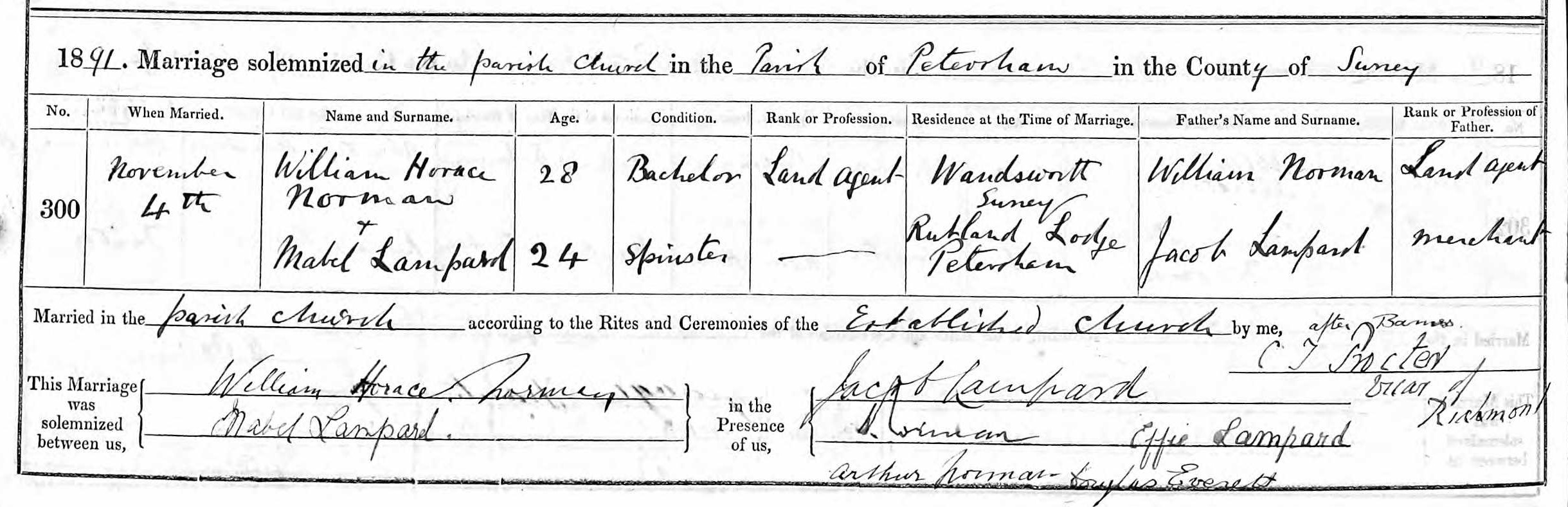
On 4 November 1891, young Mabel married William Horace Norman at Richmond, the marriage having been registered during the October quarter of 1891.
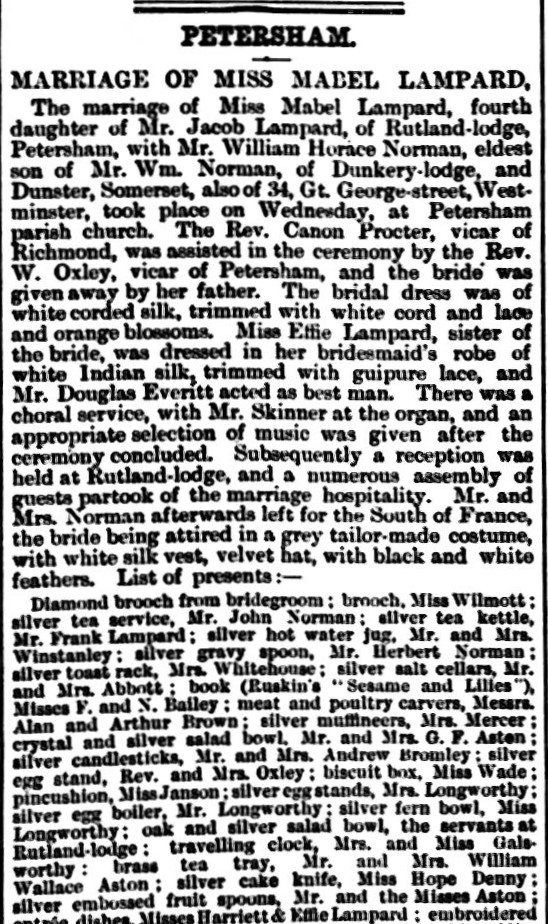
At the time Mabel was living Rutland Lodge and William worked as a land agent and surveyor.
This following photo I have, says on the back ‘Granny N. Marjorie. Bill and Geoff’
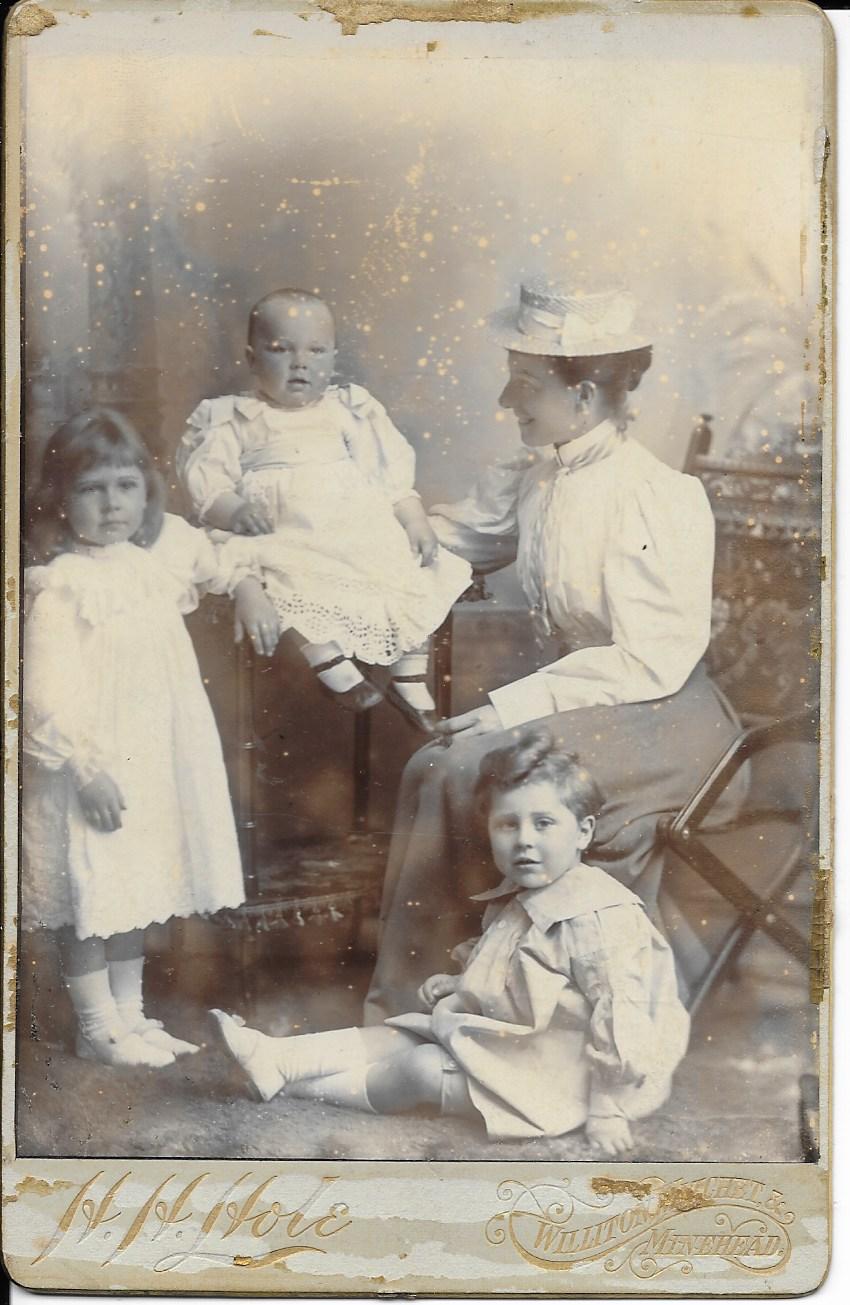
It’s all starting to fit into place. But I wasn’t there yet.
I found that they had four children. As you can see from my research below, the first three were Marjorie, Bill for William and Geoff for Horace Geoffrey.
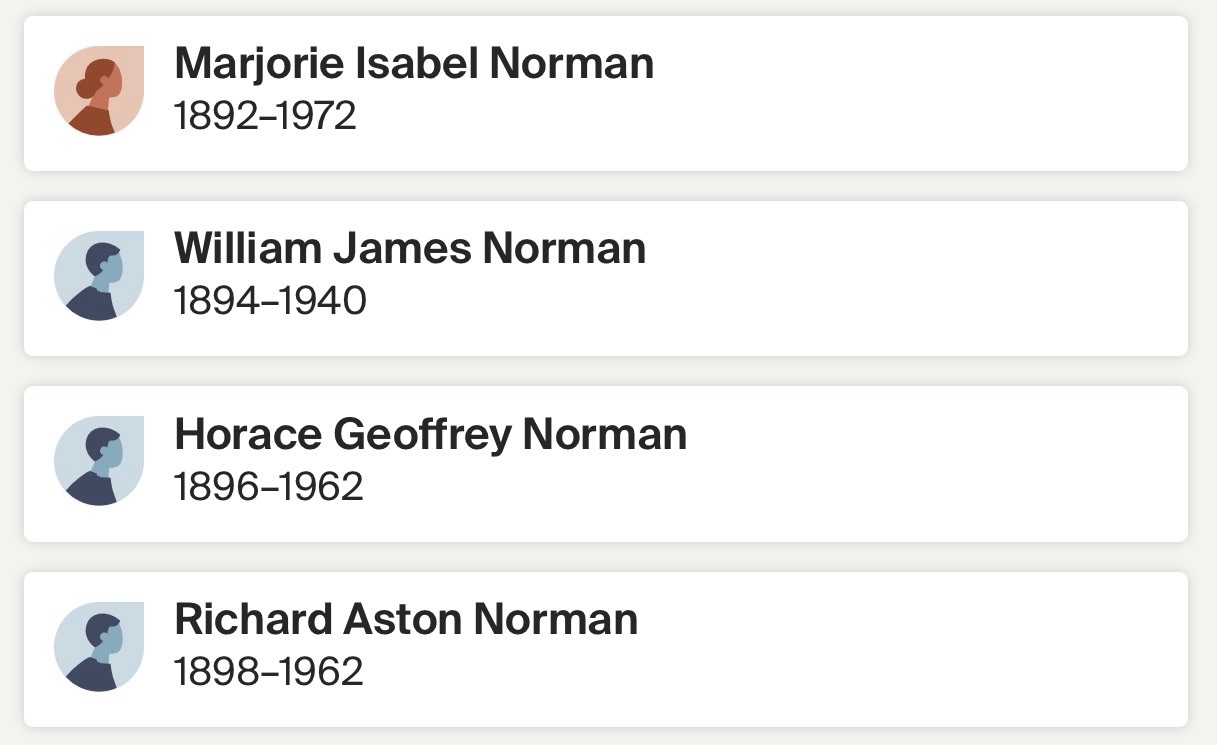
Perfect!I believe the photo above was taken at the beginning of 1898, as Richard was born in October 1898.
Marjorie Isabel Aston Norman, born 11 October 1892
William James Norman, born 1894
Horace Geoffrey Norman, born 1896
Richard Aston Norman, born in London on 3 October 1898.
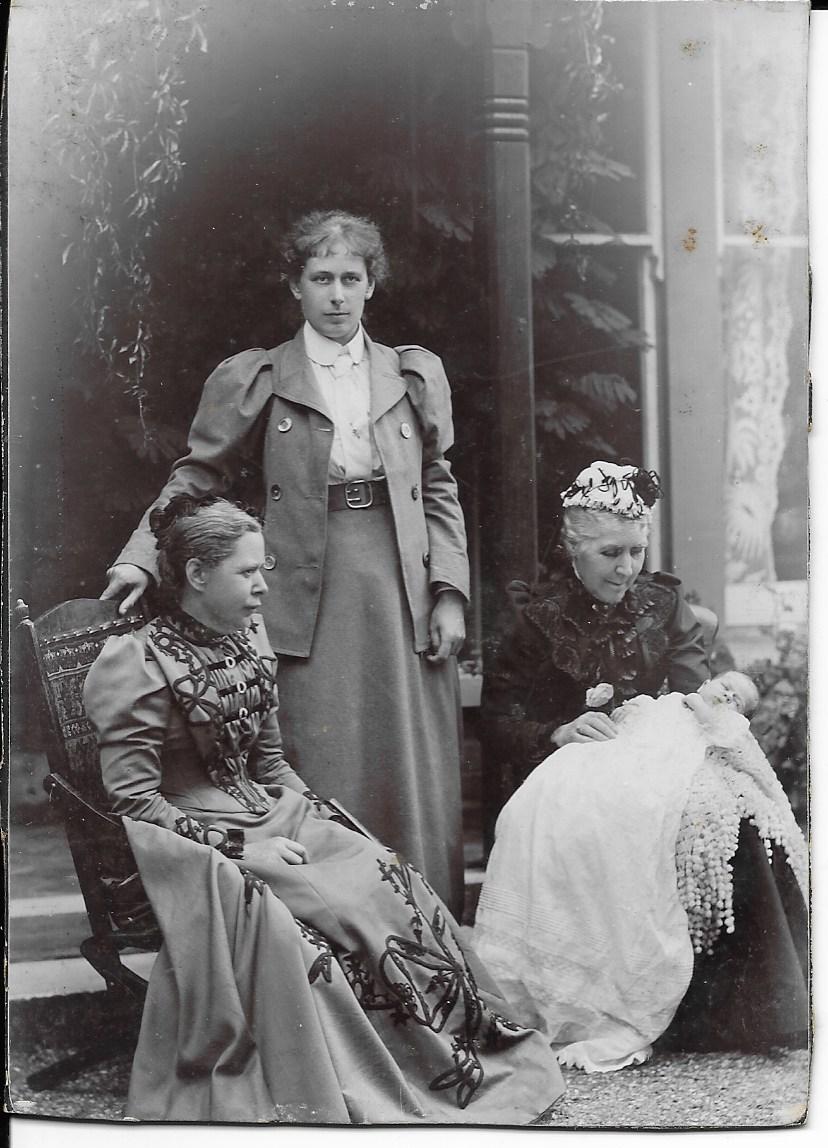
I am thinking this beautiful photo that I have above is of four generations of the women in the family.
Could it be after the baptism of Richard Aston Norman, Mabel’s youngest child?
Mabel’s father Jacob died only a few months after her marriage, on 14 March 1892. Her mother Ellen died on 7 December 1904.
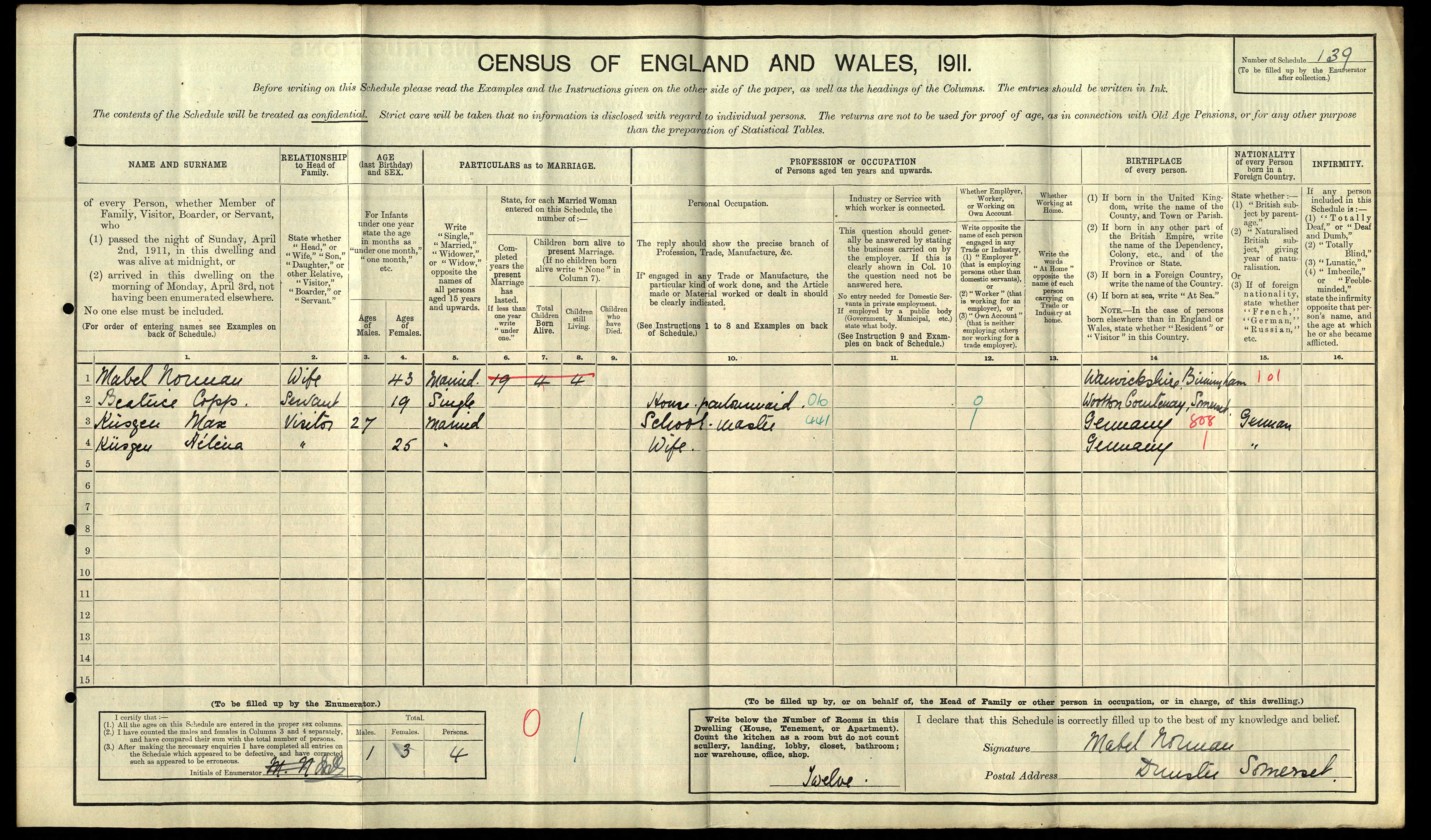
By 1911, Mabel was living at Dunster, Somerset, and was recorded as married and head of the household. While William was visiting his brother James Noel Norman, in Wrotham, Kent.
William Horace Norman was a professional land agent, surveyor and valuer. One of the earliest references to him is in London, where he was in partnership with George James Brown and George Turville Brown as:
Brown, Norman & Brown Land Agents, Surveyors and Valuers. 34 Great George Street, Westminster.
The partnership was dissolved in May 1902, suggesting William then moved into estate management.
Mabel and her husband, William Horace Norman, made their home at The Gables, Dunster, where William served as land agent to Lord Radnor, Jacob Pleydell Bouverie, 6th Earl of Radnor (1868–1930) who had succeeded the title in June 1900.
I have found that William’s father, William Norman, 1827-1892, was for 33 years the land agent for the 3rd, William Pleydell Bouverie, 4th, Jacob Pleydell Bouverie and the 5th, William Pleydell Bouverie, Earls of Radnor (2nd creation).
As agent, he was responsible for the day-to-day management of the Earl’s Somerset estates, overseeing tenant farms and cottages, collecting rents, arranging leases, supervising repairs and improvements, managing woodland, and advising on land values and estate finances.
It was a position of considerable responsibility, requiring both practical knowledge of agriculture and sound business judgement, and reflected the trust placed in him by one of Somerset’s leading landowners.
She remained at The Gables, Dunster, Somerset in 1921, again as head of the household.
An especially interesting member of Mabel’s household in 1921 was her niece Hope Denny, the daughter of her late sister Gratian.
Hope’s presence in Dunster demonstrates the continuing closeness of the Lampard sisters and the support surrounding Gratian’s daughter long after her mother’s early death.
It is also significant geographically. Dunster is not far from Williton, where other members of the Lampard family would later live.
In 1939, Mabel was still living in Somerset, described as married and of independent means.
She experienced the loss of several siblings during her lifetime: Charles on 21 September 1916, Edith in October 1917, Frank on 18 July 1931, and Ada Ellen on 26 June 1939 at Darenth, Woodlands Road, West Byfleet, Surrey.
Then came the loss of her eldest son.
William James Norman died in 1940, aged 46.
Mabel’s husband William Horace Norman died at Honiton, Devon, on 10 October 1945, aged 82. They had been married for 53 years.
Only weeks later, Mabel’s eldest sister Harriet Mary died at Taunton on 13 November 1945.
Mabel lived on for another quarter of a century.
In 1962, she lost two more sons. Richard Aston Norman died at Fakenham, Norfolk, on 26 March 1962, aged 63, and Horace Geoffrey Norman died later in 1962, aged 66.
Her youngest sister Effie died in July 1963.
Remarkably, Mabel survived them all.
Mabel Lampard Norman died at Derby on 10 May 1970 – her 103rd birthday.
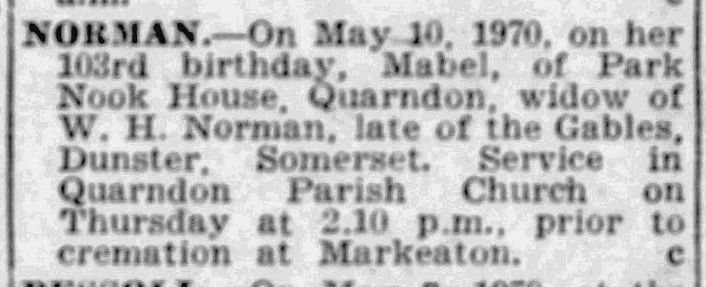

Probate was granted at Nottingham on 5 October 1970.
Born during Queen Victoria’s reign in 1867, Mabel had lived through the Franco-Prussian War, the height of the British Empire, two World Wars, the arrival of motor cars, aeroplanes, radio and television, and into the modern age.
Her life alone spanned more than a century of extraordinary change.
Effie Alice Lampard.
The youngest of Jacob and Ellen’s eight children was Effie Alice Lampard, born at Handsworth on 2 May 1871 and baptised on 20 June 1871.
She never married and had no known children.
In 1881, aged ten, Effie was a scholar living with her family in Richmond.
The newspaper archives provide two delightful glimpses of her youth.
In 1885, aged about 14, she belonged to a swimming club in Richmond.
Then in 1890, she appeared at a concert as a singer, accompanied by her sister Mabel on the violin.
Effie was living with her family at Rutland Lodge, Petersham in 1891.
She was only 19 when Gratian died at Rutland Lodge on 2 April 1891, and 20 when her father died on 14 March 1892.
In 1901, Effie was recorded as a visitor in Hampstead, London.
Following her mother’s death on 7 December 1904, Effie continued to move between Surrey and Middlesex.
She was recorded in Surrey in 1907, and by 1911 was head of her own household at Twickenham.
Her sister Edith was living with her, together with their niece Hope Denny and another nephew.
Effie was recorded in Brentford in 1912.
Her brother Charles died on 21 September 1916, followed by Edith in October 1917.
By 1921, Effie was living at 23 Waldegrave Gardens, Twickenham, where she was single, head of the household and described simply as a householder.
Her brother Frank died on 18 July 1931, and her sister Ada Ellen died at West Byfleet on 26 June 1939.
By the time the 1939 Register was compiled, Effie’s life had brought her westwards to Somerset.
She was living at Locks Farm, Williton, aged 68, single and of private means.
And she was not alone. Living at Locks Farm with her were her elder sister Harriet Mary Lampard, by then a retired Deaconess, and their niece Hope Denny, also described as being of private means.
The arrangement provides a lovely connection with the earlier record from 1921, when Hope had been staying with her aunt Mabel at nearby Dunster.
Hope, who had lost her mother Gratian when she was only four, clearly remained very close to her mother’s sisters throughout her adult life.
Harriet Mary died at Taunton on 13 November 1945, aged 91.
Effie survived for almost another eighteen years.
Effie Alice Lampard died at Ashbourne, Derbyshire, in July 1963, aged 92.
Ada Ellen Lampard.
Ada Ellen Lampard was born on 8 October 1856 at Handsworth, Staffordshire, the eldest child of Jacob Lampard and Ellen Jane Turner.
Baptised at St Thomas’ Church, Birmingham, in May 1857, she spent her early years in a growing family, welcoming siblings Gratian, Frank Ashmall, Charles Arthur, Edith Marion, Mabel and Effie Alice.
By 1861 the family were living in Aston, Warwickshire, before returning to Staffordshire, where Ada was recorded with her parents in the 1871 census.
Sometime before 1881 the Lampard family settled in Richmond, Surrey. It was there that Ada met Charles Denny, whom she married at St Matthias Church, Richmond, on 30 January 1883.
In case yiou are wondering about Charles Denny, yes he was one of Frederick’s brother. So two sisters married two brothers, but thankfully it looks like Charles was very different from his brother.
Together they built their family in Surrey, welcoming four children: Nora, Ruth, Charles Keith and Malcolm.
Sadly, little Malcolm died at Chertsey in January 1890 before reaching his first birthday, a heartbreaking loss for the young family.
Ada spent most of her married life in Surrey, living at Hersham by 1891 and later at Long Ditton, where Charles had retired from his career as a corn merchant by 1911.
During these years she also experienced the loss of several close family members, including her sister Gratian in 1891, her father Jacob in 1892, her mother Ellen in 1904, and later her siblings Charles Arthur, Edith Marion and Frank Ashmall.
After more than forty-three years of marriage, Ada was widowed when Charles died in 1926.
Despite being in her seventies, she remained remarkably active, making two long sea voyages to Australia. She returned from Brisbane to England in 1932 and travelled again to Melbourne in 1933, this time accompanied by a maid.
These journeys strongly suggest she was visiting one of her children or other close family members who had settled there.
Ada Ellen Denny died at West Byfleet, Surrey, on 26 June 1939, aged 82, and was buried three days later. Probate was granted in London the following month.
She had witnessed enormous changes during her lifetime, from Victorian England to the eve of the Second World War, leaving behind a family that continued the Lampard and Denny stories into the twentieth century.
To answer the question, yes indeed she was visiting family, her son Charles Keith Denny.
The following information is from The Australian Dictionary of Biography:
Charles Keith Denny. A Lavender Farmer.
Charles Keith Denny was born on 23 February 1888 at Kingston, Surrey, the son of Charles Denny, a corn merchant, and Ada Ellen Lampard. Educated at Charterhouse, he qualified as a chartered accountant in 1911.
On 8 April 1913, he married Blanche Ellen Francis at Bridestowe Parish Church, Devon.

During the First World War, Charles was seconded to work in munitions production.
From 1919 he managed F. S. Cleaver & Sons Ltd of Twickenham, a soap and perfumery business partly owned by his family.
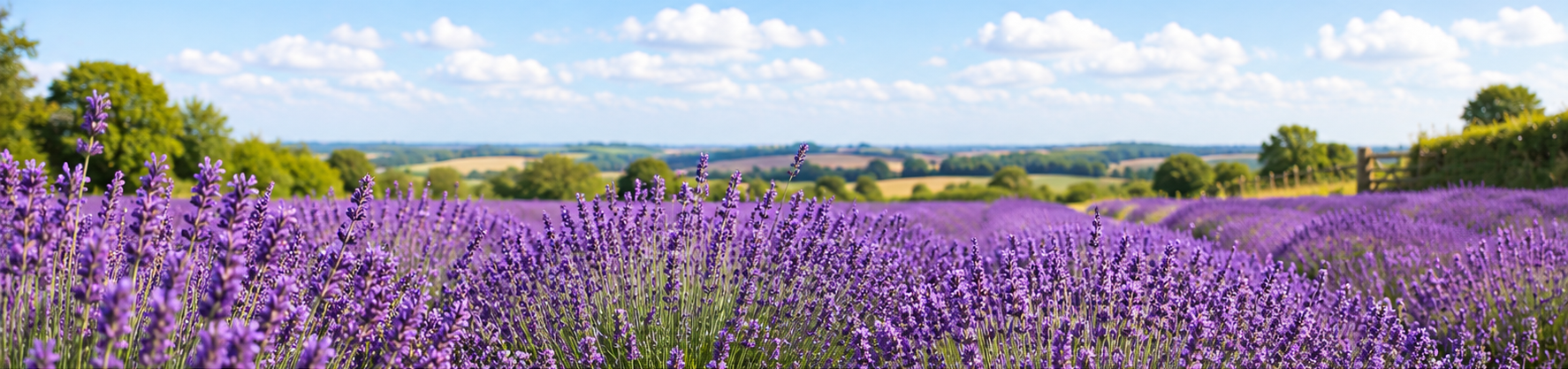
When the company was sold to Lever Brothers in 1921, Charles decided to emigrate to Australia and pursue his ambition of growing true lavender (Lavandula angustifolia) for its valuable essential oil.
The family arrived in Tasmania in November 1921, settling at North Lilydale, near Launceston, in April 1922. Charles named their property Bridestowe Estate, after Blanche’s birthplace in Devon.
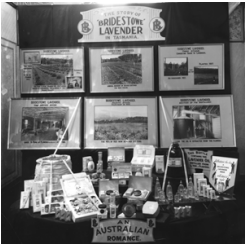
Using true lavender seed brought from France, he planted his first quarter-acre plot. His first harvest in 1924 produced just 11 lb (5 kg) of flower heads and a tiny quantity of oil, which was sent to England for analysis and showed considerable promise.
Charles gradually expanded the crop, planting five acres in 1927–28 and designing and building his own lavender distillery in 1930.
He exported his first batch of oil in 1935, and by 1939 had 50 acres under cultivation.
During the Second World War, when imported lavender oil became unavailable, Bridestowe benefited as Australia’s only significant lavender producer.
After the war, Charles’s two sons joined the family business.
The Dennys purchased another farm near Nabowla, planting lavender there in 1948, and developed machinery to harvest the crop mechanically. Despite competition from cheaper French oil, the family persevered.
Charles handed management of the farms to his sons in 1956, although he remained a keen and active gardener.He died on 2 June 1975 at St Luke’s Hospital, Launceston, Tasmania, Australia, aged 87, and was buried in Lilydale Cemetery.
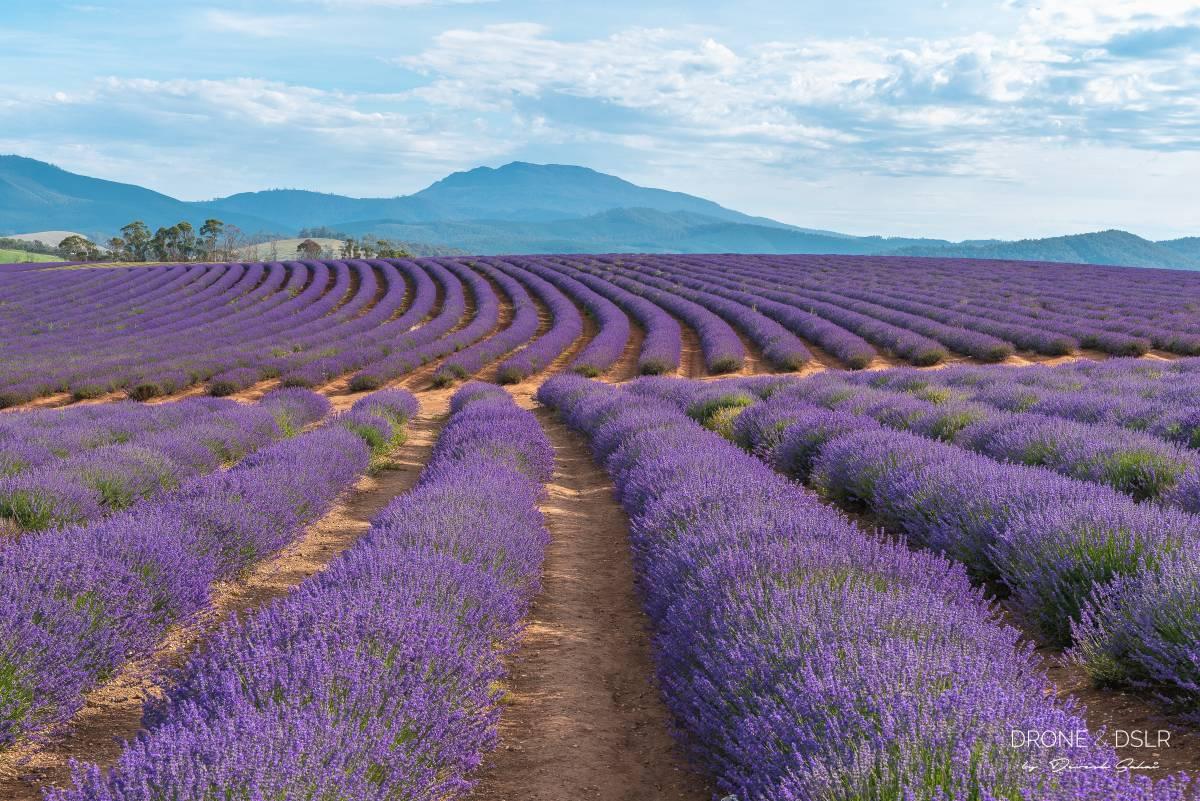
Charles Denny’s determination created a remarkable legacy. By 1981 Bridestowe Estate was producing around 15 per cent of the world’s lavender oil, with about 100 acres (40 ha) of lavender in cultivation.
The Denny family retained the estate until 1990, when it was sold to Natural Extracts International Pty Ltd.
Ellen Jane’s Final Years.
Following Jacob’s death in 1892, Ellen Jane Lampard lived for another twelve years.
In 1901, aged 68, she was living in Richmond and was herself recorded as head of the household. Her unmarried daughter Edith was living with her.
Ellen had seen all eight of her children grow to adulthood, although she had endured the devastating loss of Gratian in 1891.
Ellen died at Petersham on 7 December 1904, aged 71.
She was buried at Petersham on 12 December 1904, and probate was granted in London on 28 December 1904.
Eight Very Different Lives.
Jacob and Ellen’s eight children followed very different paths.
Harriet Mary Lampard, born 27 March 1854, became a Deaconess and eventually retired to Somerset. She died at Taunton on 13 November 1945.
Ada Ellen Lampard, born 8 October 1856, died at Darenth, Woodlands Road, West Byfleet, on 26 June 1939.
Gratian Lampard, born in July 1859, married Frederick Denny and became the mother of Hope before dying tragically young at Rutland Lodge on 2 April 1891.
Frank Ashmall Lampard, born 3 December 1860, followed the family’s commercial tradition, eventually becoming a Foreign & Colonial Produce Agent and living in Nice before dying in Hampstead on 18 July 1931.
Charles Arthur Lampard, born 1 September 1862, became a highly successful East Indian merchant and left an estate exceeding £128,000 when he died on 21 September 1916.
Edith Marion Lampard, born in July 1865, remained unmarried and maintained close ties with her sisters until her death in October 1917.
Mabel Lampard, born 10 May 1867, married land agent and surveyor William Horace Norman, raised four children and lived to the extraordinary age of 103, dying on 10 May 1970.
Finally, Effie Alice Lampard, born 2 May 1871, remained unmarried, enjoyed swimming and music as a young woman, and lived until July 1963, when she died aged 92.
The Lampard Sisters and Hope Denny.
One of the most touching threads running through the later history of the family concerns Hope Denny.
Hope was only four years old when her mother Gratian died at Rutland Lodge in 1891.
Although her father Frederick remarried and established another family, Hope’s connection with her mother’s Lampard family clearly remained strong.
By 1911, she was living with or staying with her unmarried aunts Effie and Edith at Twickenham.
In 1921, Hope was staying with another aunt, Mabel Norman, at Dunster in Somerset.
By 1939, she was at Locks Farm, Williton, sharing the household with her aunts Harriet Mary and Effie Alice.
Dunster and Williton are only a relatively short distance apart, suggesting that Somerset had become something of a later-life centre for several members of the Lampard family.
Rather than disappearing from the Lampard story following her mother’s death, Hope appears repeatedly among her mother’s sisters over several decades.
It gives the impression of an unusually close extended family.
From Tea Dealer to East Indian Merchant.
Perhaps the clearest thread linking the generations is commerce.
Jacob was already a tea dealer in Birmingham in 1852.
By 1881, he was a tea merchant in Richmond, and his son Frank was already working in the same trade.
In 1891, Jacob described himself as a tea merchant and grocer.
Frank eventually became a Foreign & Colonial Produce Agent, while Charles progressed from merchant’s clerk to tea and produce merchant and grocer, and finally to East Indian Merchant.
Charles’s estate of £128,623 13s 5d in 1916 demonstrates the remarkable commercial success achieved by the second generation.
The family’s story therefore mirrors some of the wider changes taking place in Victorian and Edwardian Britain – the expansion of international trade, increased prosperity among the commercial middle classes and the movement of successful families from industrial cities towards the prosperous suburbs and villages surrounding London.
A Family Across More Than a Century.
Jacob Lampard could scarcely have imagined the extraordinary span of history his family would witness.
Born in rural Wiltshire in 1826, he moved to Birmingham, established himself in the tea trade, married Ellen in 1851, raised eight children and eventually settled at Rutland Lodge in Petersham.
His children carried the family into very different worlds.
There was prosperity, but also tragedy.
Gratian died aged only 31. Jacob followed less than a year later. Charles died at 54 and Edith at 52. Frank’s first wife Mary died aged 51.
Yet the longevity of some of the Lampard women was extraordinary.
Harriet lived to 91, Effie to 92 and Mabel to 103.
Mabel, born on 10 May 1867, outlived all seven of her siblings and finally died on 10 May 1970, exactly 103 years after the day of her birth.
Through all these changes, the surviving records reveal a family that remained remarkably interconnected.
Perhaps nowhere is that better demonstrated than in the life of little Hope Denny, who lost her mother at Rutland Lodge in 1891 but, decades later, can still be found living and staying with Gratian’s sisters, first Edith and Effie, then Mabel, and eventually Harriet and Effie in Somerset.
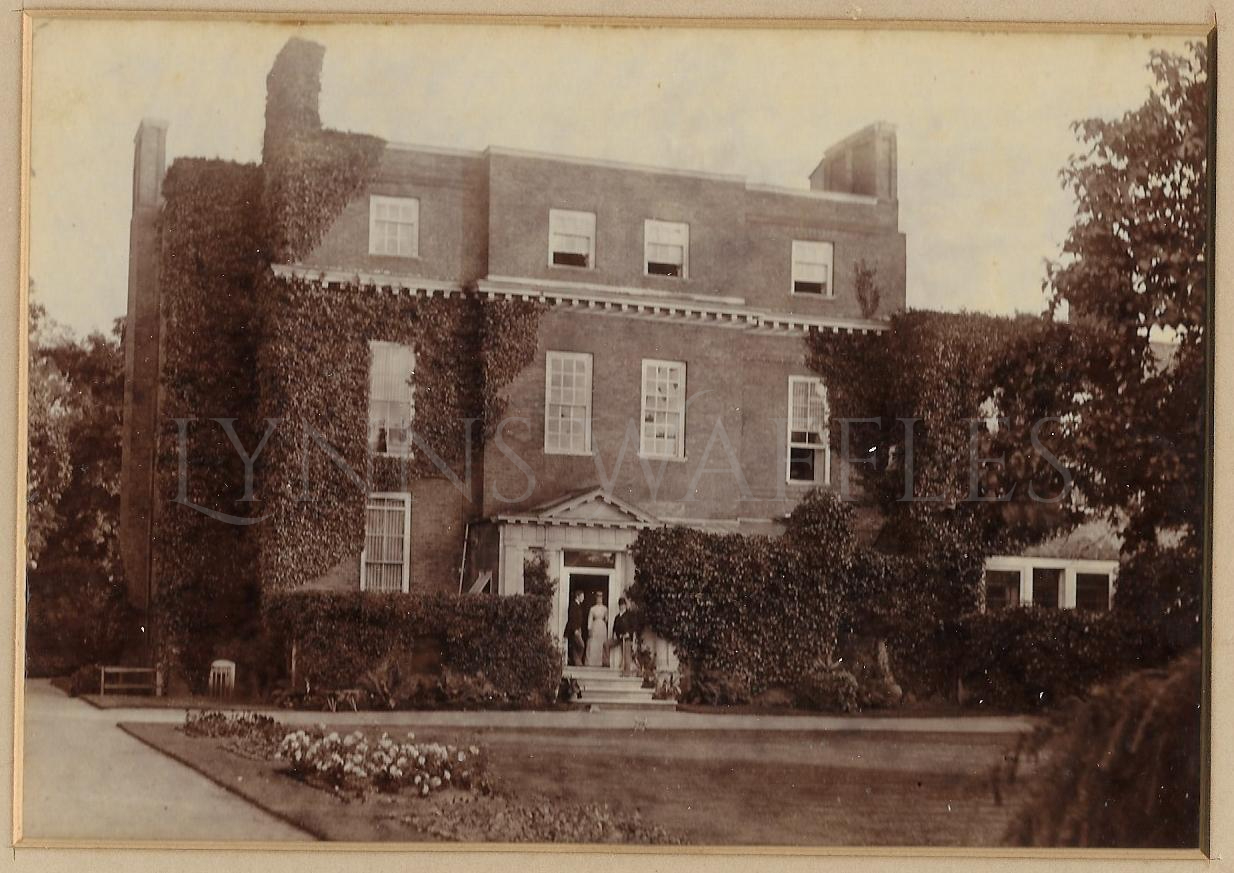
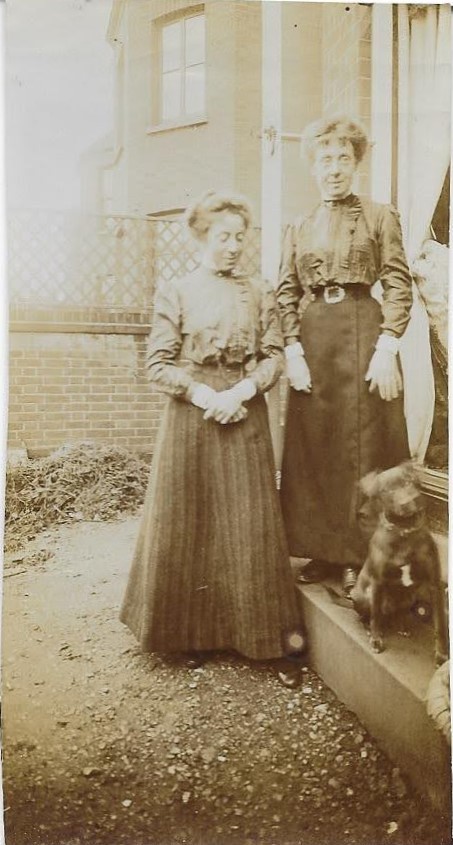
Now I have matched it to Rutland Lodge, Petersham, Richmond, probably c.1890–1895. This house could tell an amazing story of the Lampard family.
The three figures are likey to be members of the Lampard family. The older gentleman on the right could possibly be Jacob Lampard (died March 1892), which, if correct, would date the photograph to no later than early 1892.
Lucy Manners, Duchess of Rutland, lived at the lodge from 1741 to 1751. Her residency permanently attached the name “Rutland Lodge” to the building.
For photographs of the Lampards gathered at Rutland Lodge, Petersham, this wider family history gives those Victorian faces a remarkable context.
They were members of a family whose story stretched from Heytesbury in Wiltshire in 1826 to Derby in 1970, almost a century and a half of family history, encompassing Victorian commerce, international trade, music, travel, tragedy, longevity and, above all, enduring family connections.
I think the Hope Denny thread is one of the nicest discoveries in the whole story.
Seeing her with Edith and Effie in 1911, Mabel at Dunster in 1921, and then Harriet and Effie at Locks Farm in 1939 makes it possible to follow the relationship between Gratian’s daughter and her aunts for nearly thirty years.
It adds something that census dates alone don’t usually give us: a real sense of the family continuing to look after its own.
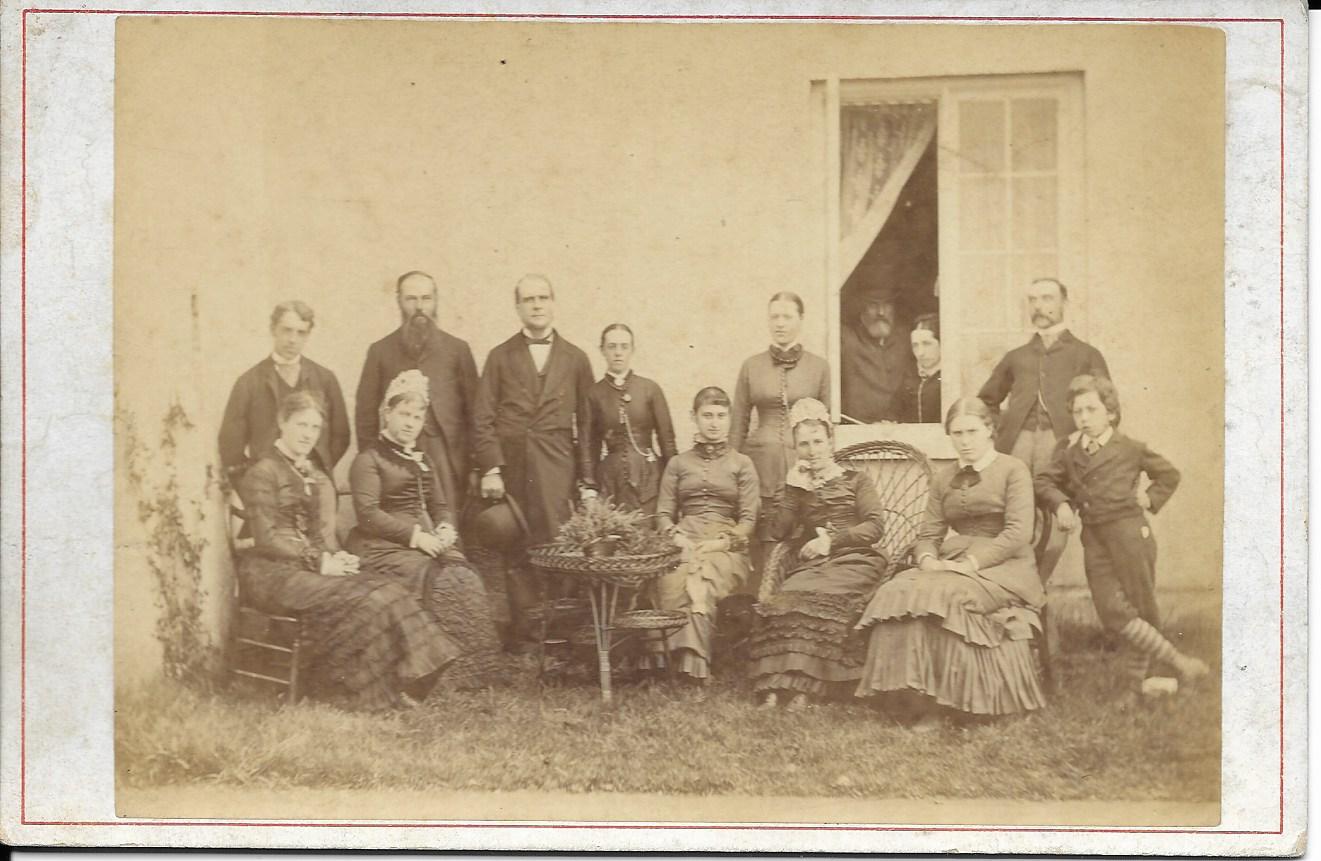
This is also a Cabinet Card I bought, I think it must be a mix of Lampard family members, no writing on the back.
Going on 1874-1878. It could be Jacob Lampard (born 1826) and Ellen Jane Turner (born 1833) second from left standing and seated.
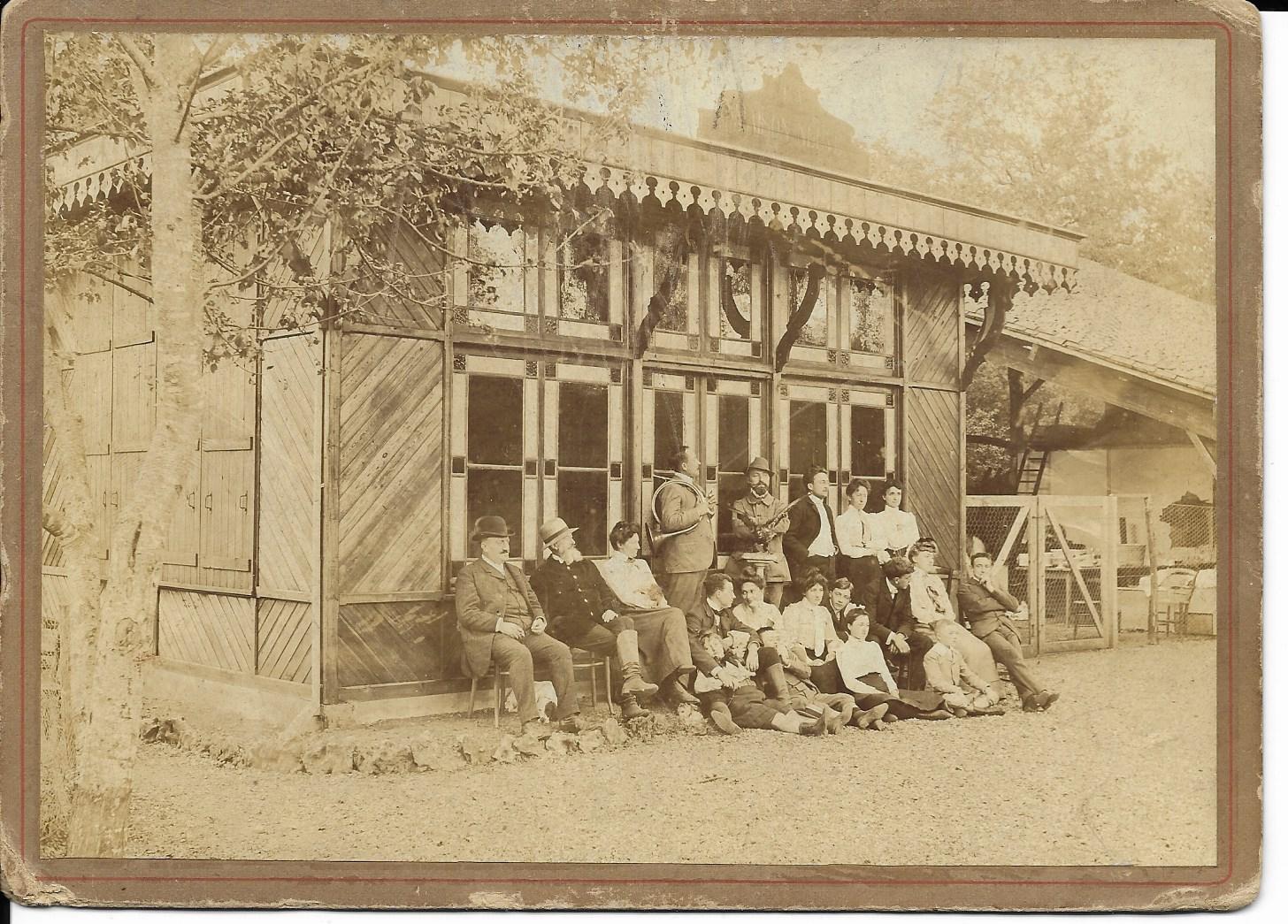
Taken on 18 September 1902. A ‘Miss Lampard’ is among the ladies but which one?
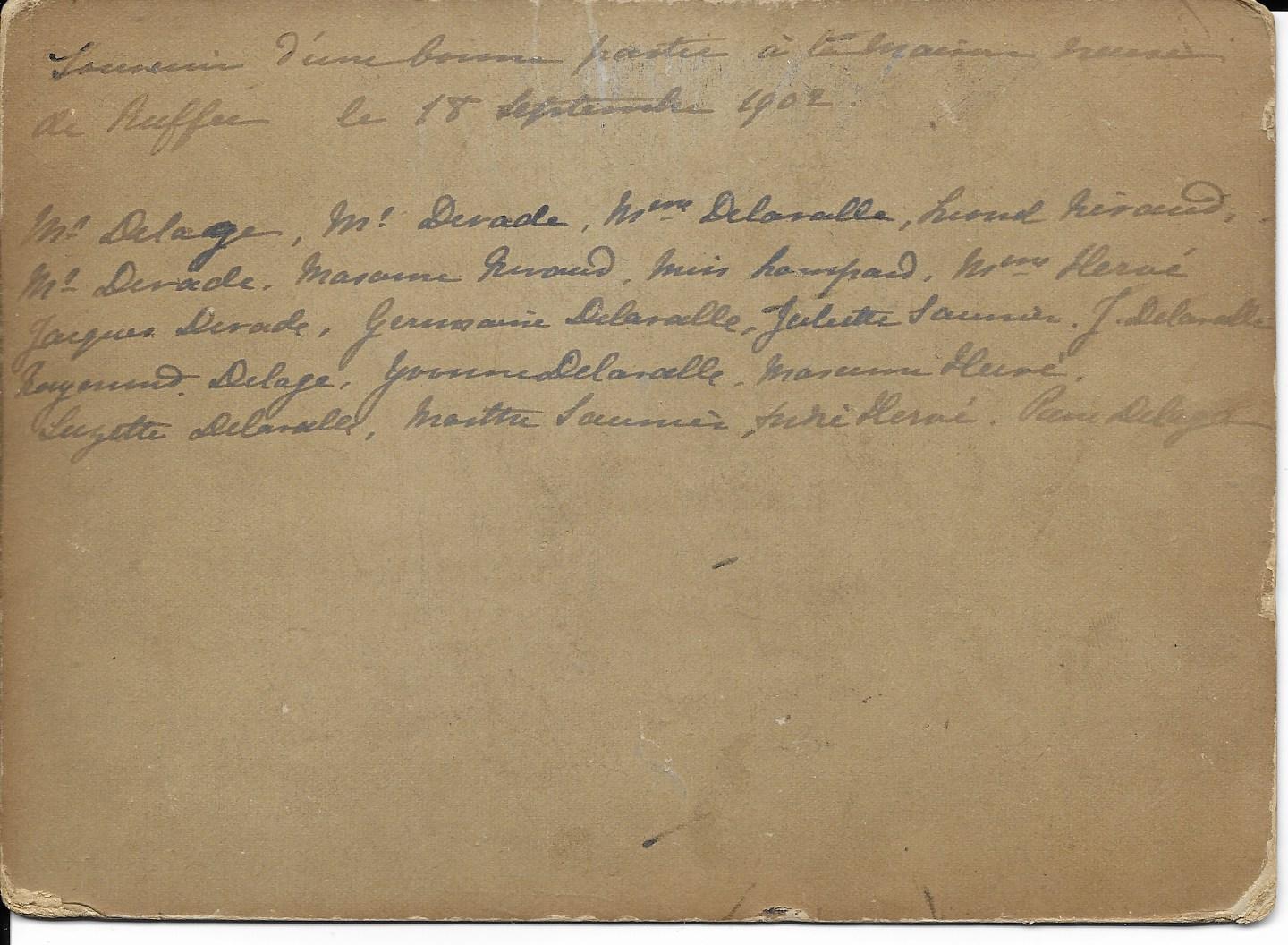
Transcription is “A souvenir of a wonderful excursion to Évian, from Neffes, 18 September 1902.” and includes “Miss Lampard” among the party. The young unmarried woman standing on the right of the chap with the dark jacket, I believe to be Effie Lampard, then aged 31, enjoying a holiday with French friends near Évian.
Possible surnames: Devade, Henri, Delaralle (or whatever that surname is)
Now I’ve completed the family story I am so glad I kept copies of the ones I didn’t buy, because to be able to see the photo of Gratain and her daughter Hope is very special, knowing what I know now.
But without the one name of Harriett Mary Lampard it would have been much more difficult for me to identify the correct family.
Here’s the link to the Ancestry Public Family Tree I have compiled: Lampard Family Tree
If only the person who had owned this collection, and I believe it may have been Mabel Lampard, had made provision for them after death then they might have all stayed together.
UPDATE. 2nd September 2026. I had this lovely email from Caroline in Somerset.
“I live in Williton, Somerset and have just started volunteering at a lovely church in the neighbouring village of Bicknoller. I have actually just spent the afternoon weeding the stones of Harriett, Hope, Harriet Effie, and Effie Alice. As you can see, there is also a Mabel Norman 1867-1970. Is this also a sister?
I had decided to find out something about each grave I work at and found you as soon as I entered her name into Google. Amazing! I’m so pleased!
I have attached photos of the stones. Huge thanks Caroline!
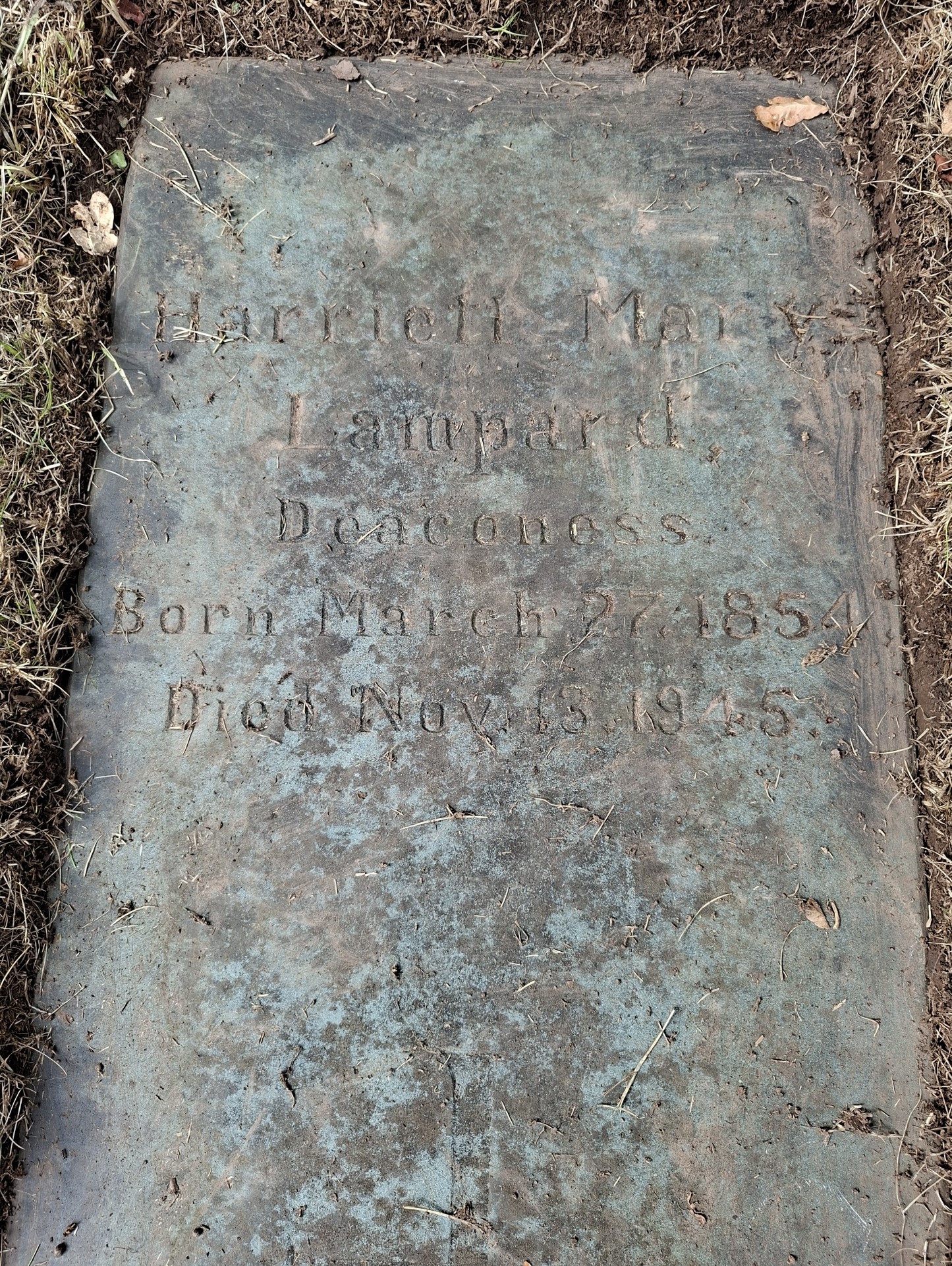
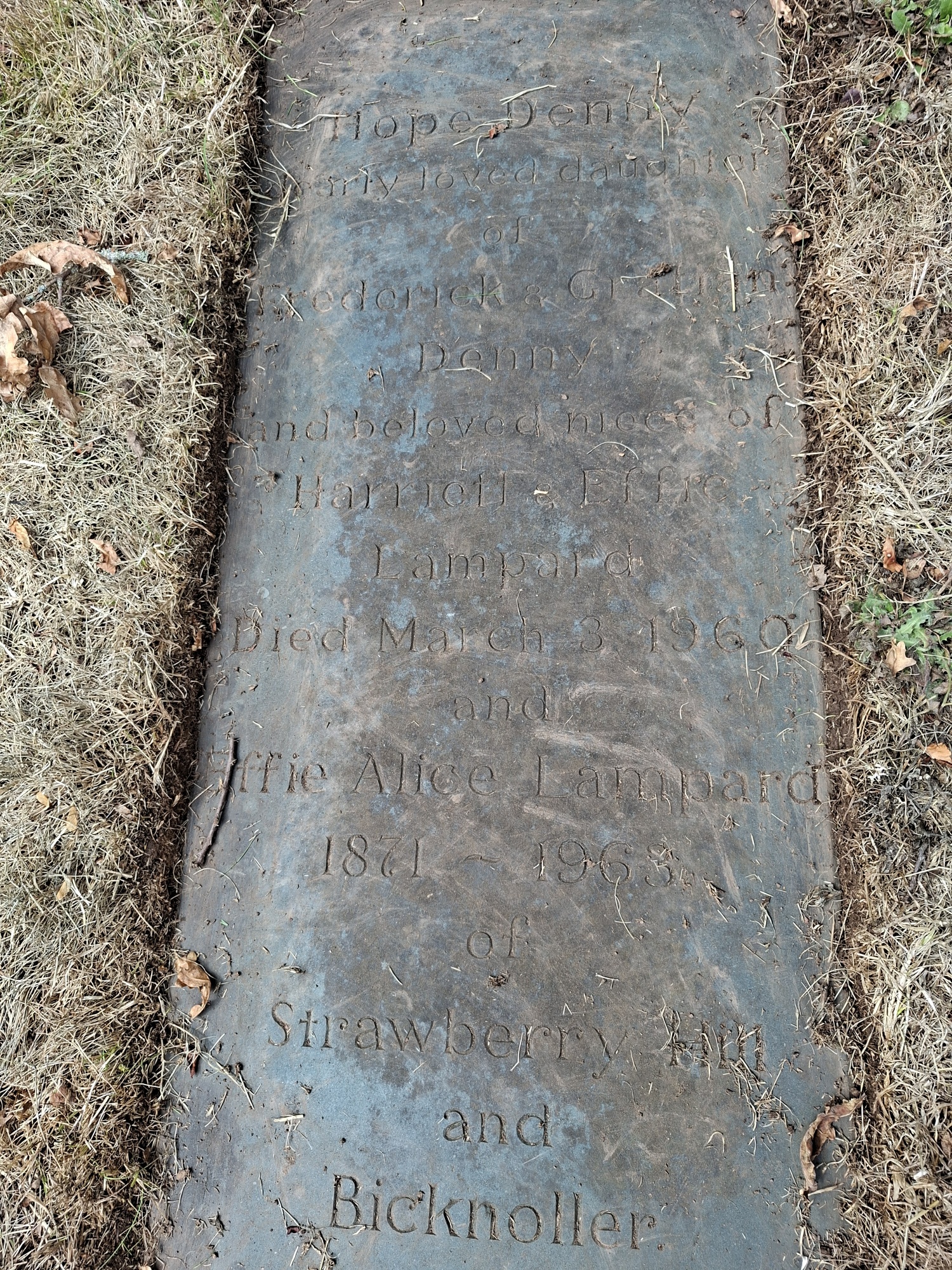
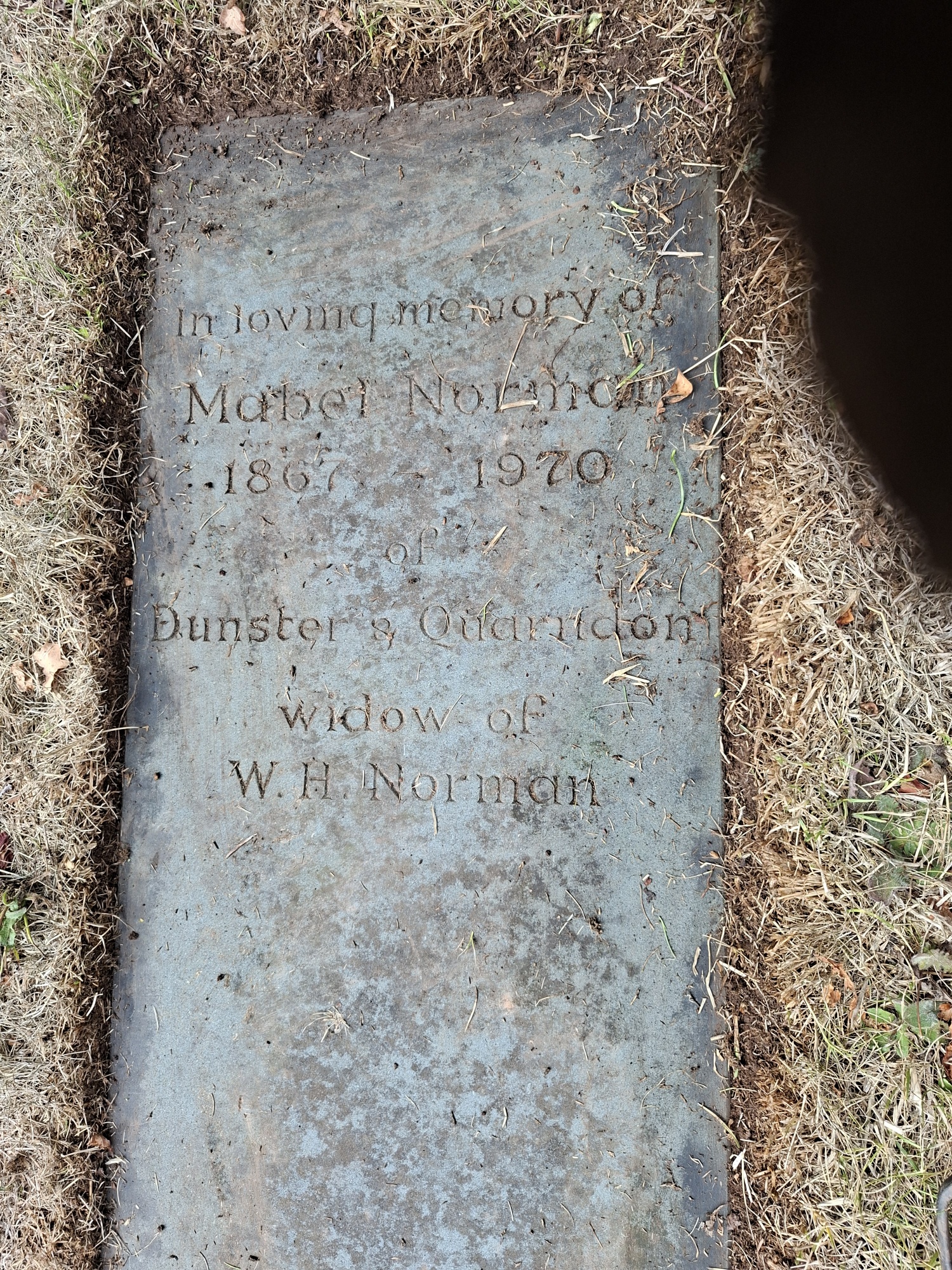
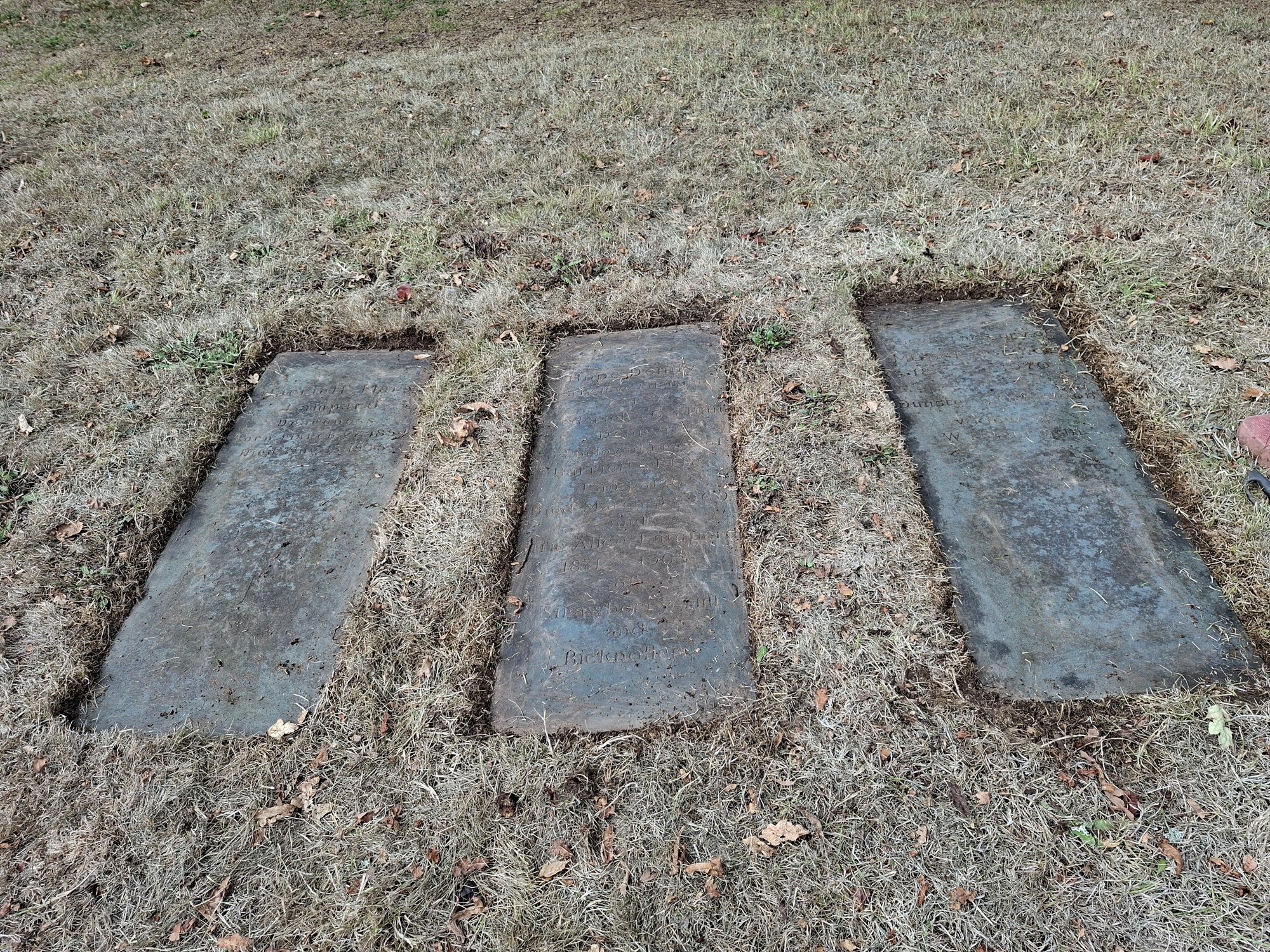
It’s so good to see the sisters remembered after all this time.
You can contact me either by commenting here or via email at lynnswaffles@gmail.com
Till next time then………

