These two ladies I bought about a year ago on eBay, shame there weren’t any more of the family but two is good with names.
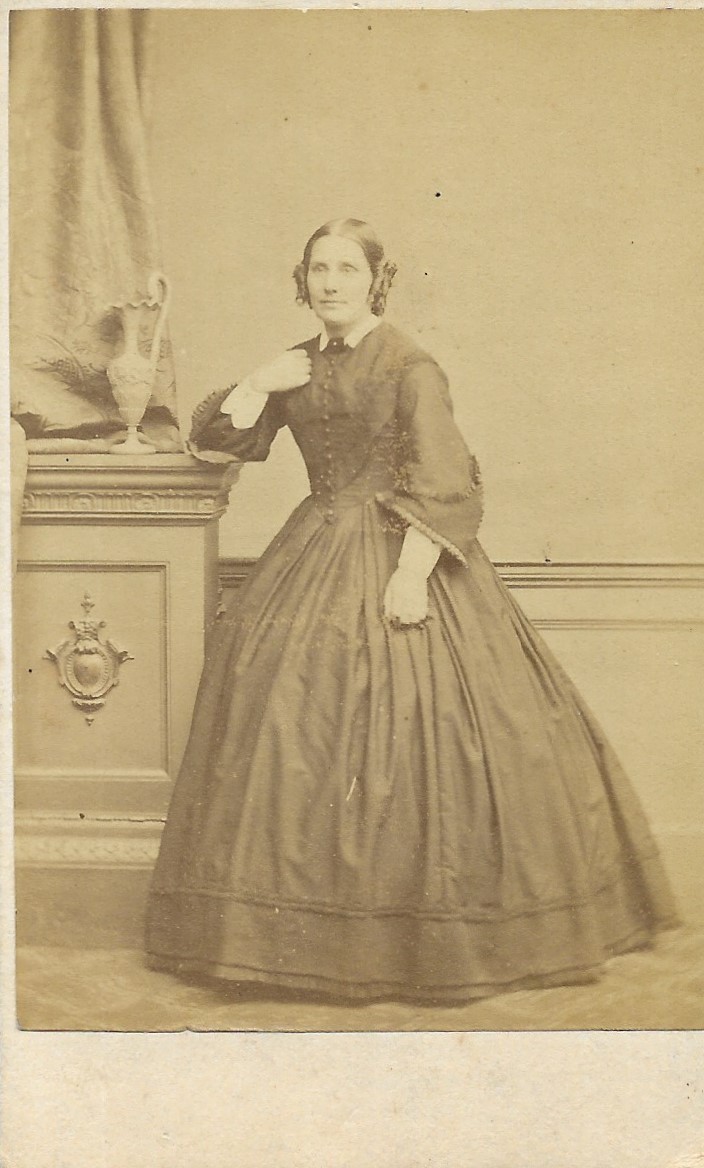
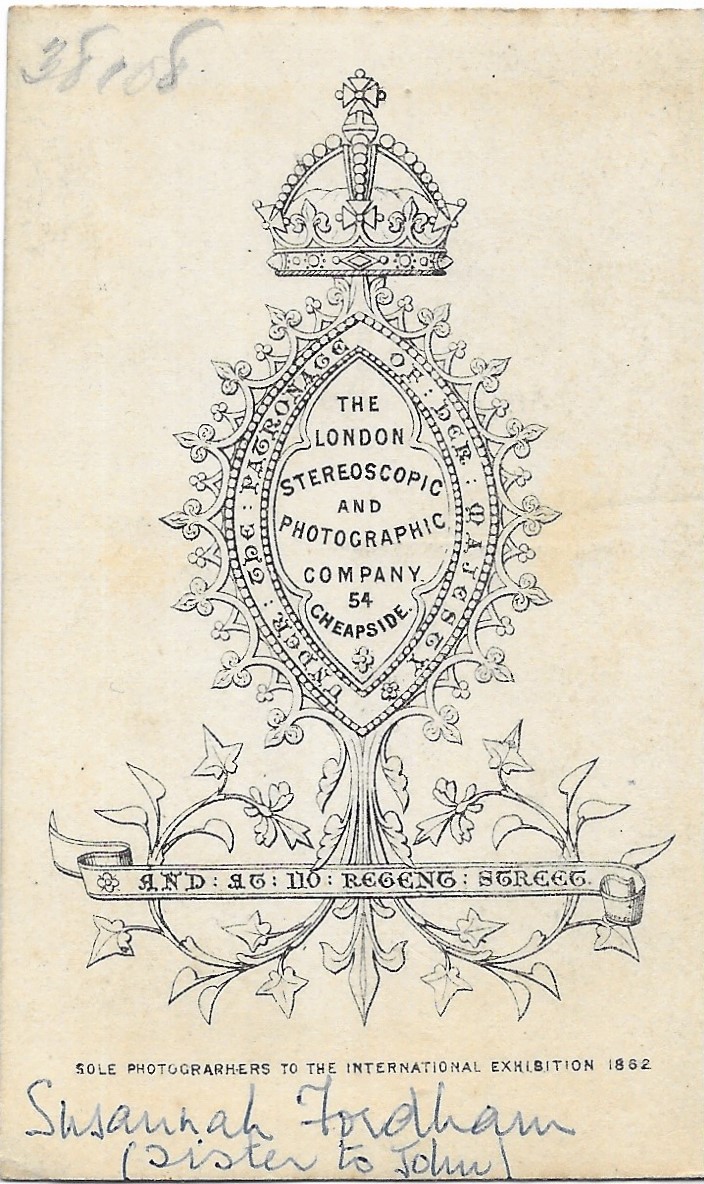
Potentially two generations. Then two surnames, so that looks quite promising for research. plus three first names.
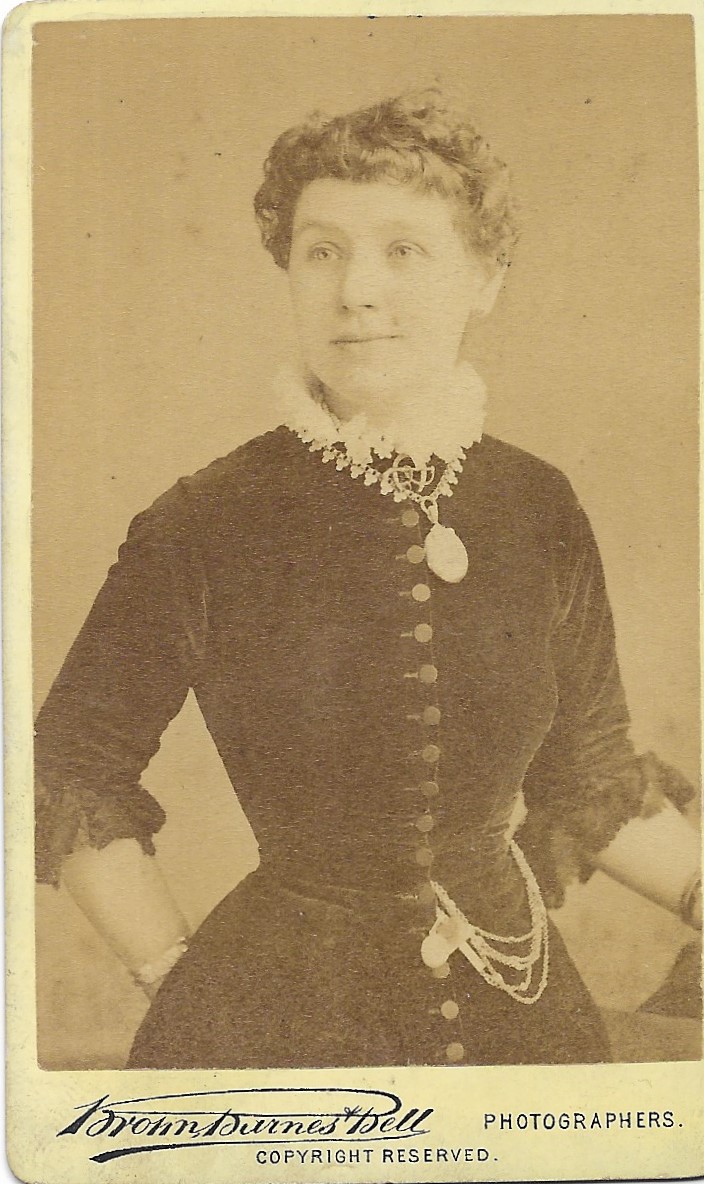
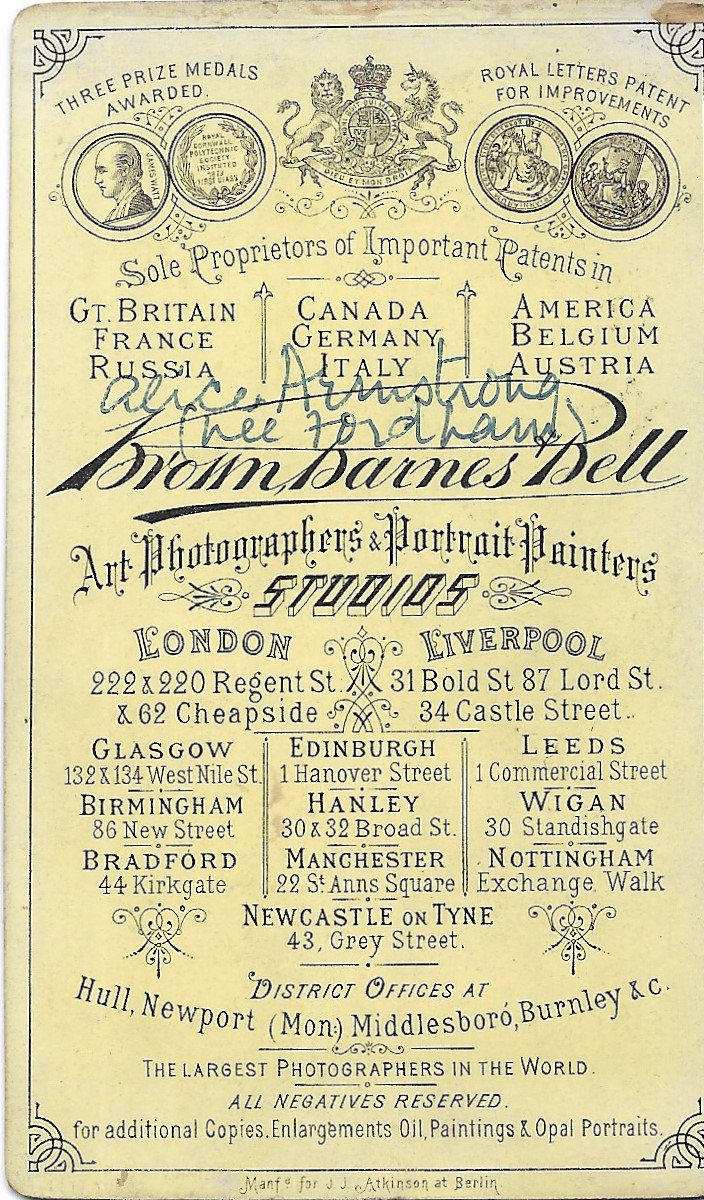
First step was to look for a marriage record between an Alice Fordham and a Mr Armstrong on FreeBMD.
Just the one in 1913, bit later than I expected but I thought I’ll go with it for now. I started a tree with the couple on Ancestry.
Alice J Fordham married Andrew J Armstrong in September quarter of 1913 in Camberwell.
Andrew was 42 years old and Alice was 52 when the couple married.
They were both older than usual when they married so actually Alice Jane Fordham did match with my photo.
Here they are on the 1921 census together, Andrew Joseph Armstrong was a Dentist.
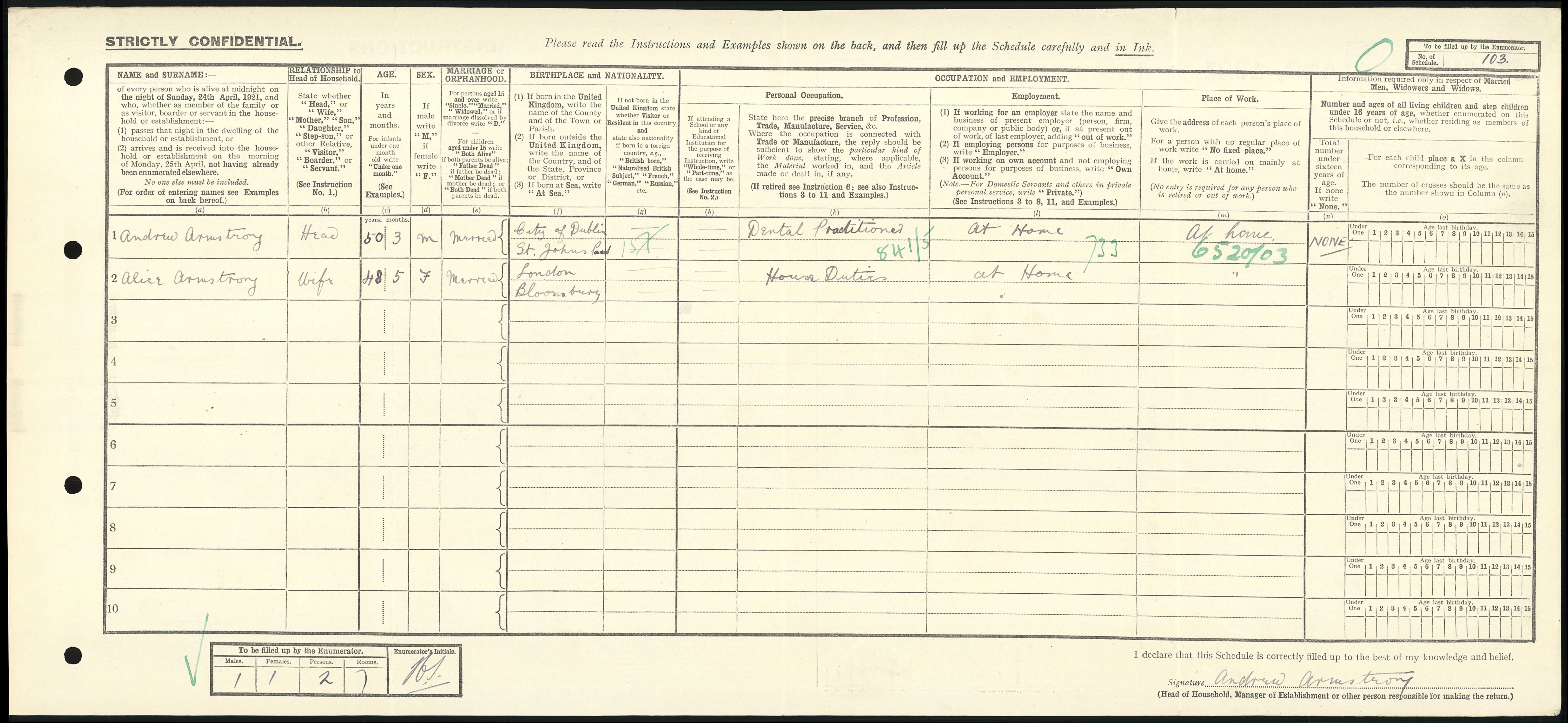
The couple lived in Gloucester Road, Norbeton, Surrey.

The couple now live in Chessington Road, Epsom, Surrey in 1939.
Because of this couple, I was able to gradually add lots more to the family tree. I discovered that Susannah Fordham was Alice’s Aunt.
The beginning: Robert Fordham and Ann Elizabeth Wood.
The story of this branch of the Fordham family begins in Leyton, Essex, in the late eighteenth century, with Robert Fordham, born in July 1789.
Robert was baptised at St Mary the Virgin, Leyton, on 25 July 1789. His parents were also Robert Fordham and Susannah Darley. At the time of his birth, his father was about 33 years old and his mother 27.
Robert’s early life was marked by the death of his father, who died on 14 November 1810 in Tower Hamlets, aged 54. Robert was then 21 years old.
Nine years later, on 21 February 1819, Robert married Ann Elizabeth Wood in Whitechapel, Middlesex, when he was 29 and Ann was about 25. Whitechapel and the surrounding East London districts were already busy, rapidly developing parts of the capital, while Leyton retained a more village-like character. The family would move between these worlds during the generations that followed.
Robert worked as a plumber, and he and Ann established their family in Leyton.
Their first child, Robert John Fordham, was born in 1820 in Leyton. A daughter, Ann Elizabeth Fordham, followed in 1821.
Then, in 1823, came the daughter whose photograph survives today, Susannah Fordham.
Susannah was born in Leyton in 1823 and was baptised at St Mary the Virgin, Leyton, on 19 October 1823. Her father was about 34 and her mother about 30.
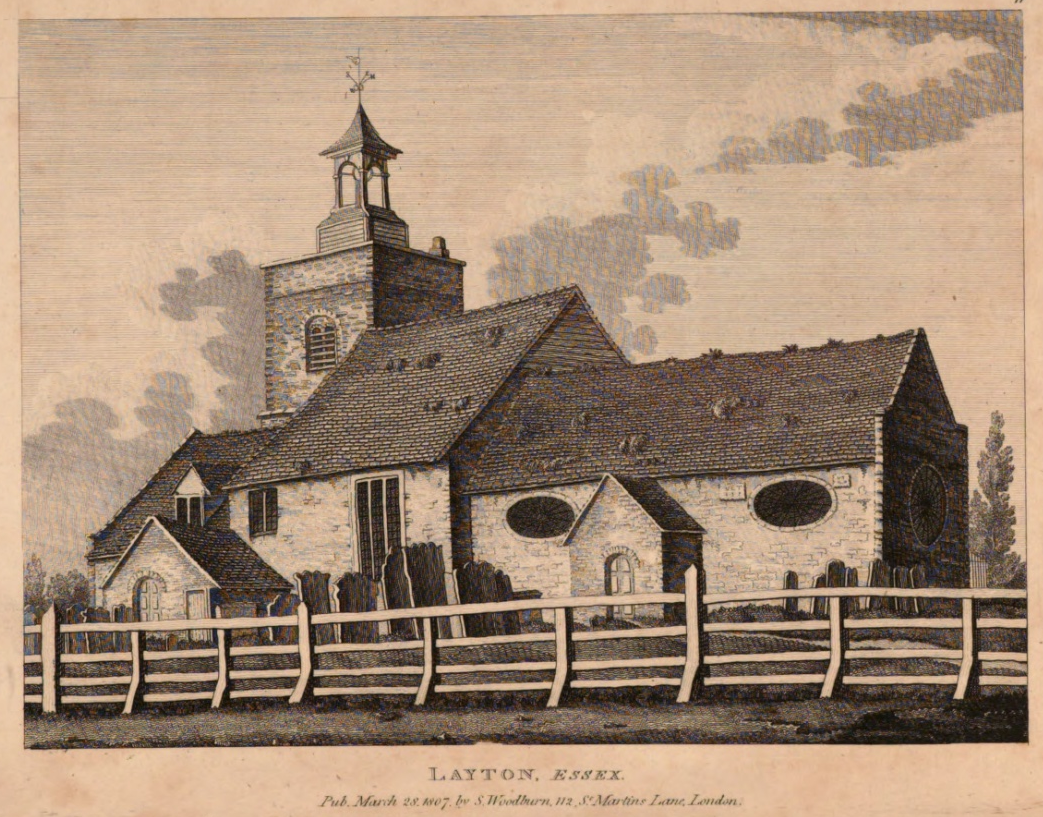
She would grow up surrounded by brothers and sisters. Her younger brother Thomas Anthony Fordham was born in 1826, followed by her sister Mary Ann Fordham in 1828, and her younger brother John Fordham in 1829.
The six children of Robert and Ann were therefore:
Robert John Fordham, 1820–1874
Ann Elizabeth Fordham, born 1821
Susannah Fordham, 1823–1901
Thomas Anthony Fordham, 1826–1861
Mary Ann Fordham, born 1828
John Fordham, 1829–1871
By 1841, Robert, Ann and their children were living at Low Leyton, Essex, where Robert’s occupation was recorded as a plumber.
But the family was soon to suffer its first major loss.
Robert Fordham died in September 1842 in London, aged only 53. He was buried at St Mary the Virgin, Walthamstow, Essex, on 20 September 1842.
For his children, his death meant the loss of their father while several were still young. His youngest child, John, was only about 13.
Ann Elizabeth survived her husband for another fifteen years. She died on 30 November 1857, aged 64.
By then the Fordham children were adults, but the family had already begun to scatter and establish lives of their own.
Susannah Fordham, the woman in the photograph.
Among Robert and Ann’s children was Susannah Fordham, born in 1823.
Her photograph gives us a remarkable visual connection with this earlier generation of the family. When the photograph was taken, she was a woman whose life had stretched from the Georgian period into the Victorian era.
Susannah was six years old when her youngest brother John was born in 1829, and 19 when their father died in 1842.
She remained in Essex in 1841, and after the death of her father she would eventually see the death of her mother in 1857.
Her family suffered further losses. Her brother Thomas Anthony died on 13 February 1861 in Leyton, aged only about 35. Ten years later, her younger brother John died in September 1871 in West Ham, aged only 42. Another brother, Robert John, died in December 1874 in Essex.
Susannah therefore outlived several members of her immediate family.
By 1881, she was living in Guildford, Surrey, where she was recorded as a housekeeper.
There is an especially poignant connection between Susannah and the next generation of Fordhams. In 1871, her young niece Edith Charlotte Elizabeth Fordham, only six years old, was recorded as staying with her aunt Susannah in London after the deaths of Edith’s parents.
Susannah never married and there are no known children recorded for her. She appears instead to have remained a member of the extended Fordham family, becoming an aunt to the children of her brothers and sisters.
In 1901, at the age of 78, Susannah was living in Chingford, Essex, where she was recorded as an aunt.
She died on 27 December 1901 in Essex, aged 78, and was buried on 2 January 1902.
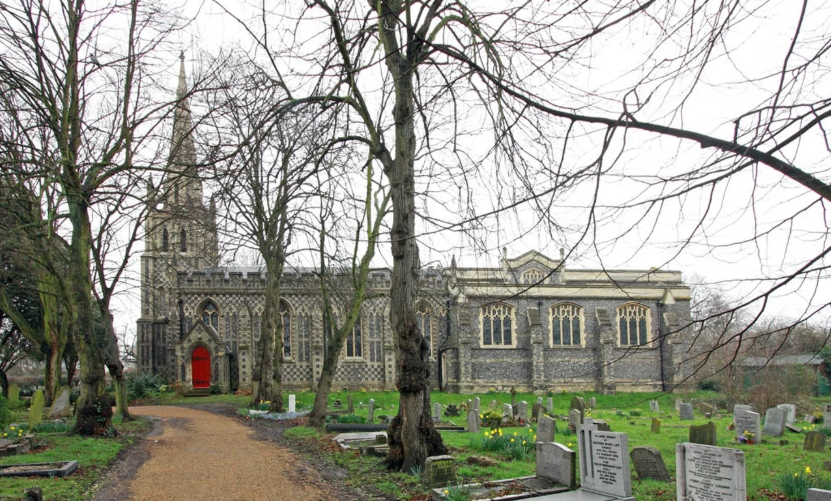
Her probate was proved on 26 September 1902 in London, with an estate of £1,604 9s 6d left to Anne Elizabeth Sambell, widow.
The photograph of Susannah therefore represents much more than the face of a Victorian woman. She was the daughter of Robert Fordham the plumber and Ann Elizabeth Wood, the sister of six children, the aunt who helped care for the orphaned children of her brother John, and a survivor who lived long enough to see the Fordham family enter the twentieth century.
The next generation, John Fordham and Charlotte Arnold.
The youngest son of Robert and Ann was John Fordham, born in 1829 in Leyton, Essex, and baptised at St Mary the Virgin, Leyton, on 17 May 1829.
John was only about 13 when his father died in 1842.
By 1851, aged 22, John had left Leyton and was living in Watford, Hertfordshire, where he was employed as a grocer’s assistant, living in the household of William Gates, a grocer.
His life took a new direction when he married Charlotte Arnold on 21 April 1860 at the Old Church, St Pancras, London. John was 31 and Charlotte was 29.
Charlotte had been born on 30 April 1830 in Pimlico, Middlesex, the daughter of James Arnold, aged 41, and Katherine Arnold, aged 28. She was baptised on 24 May 1830 at St Margaret’s, Westminster.
In 1851, Charlotte was living with her family in Westminster.
John and Charlotte began their married life in London. In 1861, they were living in Bloomsbury St George, where John was described as a tobacco manufacturer.
On 11 February 1861, less than a year after their marriage, their first child was born.
Her name was Alice Jane Fordham.
Alice Jane Fordham, the second photograph.
Alice Jane Fordham was born on 11 February 1861 in Bloomsbury, Middlesex, the daughter of John Fordham, aged 32, and Charlotte Arnold, aged 30.
She was baptised on 21 April 1861.
Alice was the first of six children born to John and Charlotte.
Her younger siblings followed in quick succession:
Herbert John Fordham was born in September 1862 in St Giles, Middlesex.
Lewis Stirtevant Wood Fordham was born on 11 February 1864 in London, exactly three years after Alice.
Edith Charlotte Elizabeth Fordham was born on 30 October 1865 in Leyton, Essex and was baptised on Christmas Day, 25 December 1865.
Amelia Anne Fordham followed on 22 February 1867 in Leyton, and was baptised on 21 April 1867.
Finally, Thomas James Robert Fordham was born in January 1869 in Leyton and baptised on 23 May 1869.
Alice therefore grew up as the eldest of six children:
Alice Jane Fordham, 1861–1953
Herbert John Fordham, 1862–1933
Lewis Stirtevant Wood Fordham, 1864–1945
Edith Charlotte Elizabeth Fordham, 1865–1929
Amelia Anne Fordham, 1867–1953
Thomas James Robert Fordham, 1869–1927
For a few short years, this was a large and growing Victorian family. But tragedy was approaching.
The orphaned Fordham children.
Alice was only ten years old when her father died.
John Fordham died in September 1871 in West Ham, Essex, aged just 42.
The loss must have transformed the lives of the six children. Alice was ten; Herbert was nine; Lewis was seven; Edith was five; Amelia was four; and little Thomas was only two.
Their mother, Charlotte, was left to care for six children.
But she herself would not survive for long.
Only about nine months after John died, Charlotte Arnold died in June 1872 in Essex, aged only 42.
She was buried on 10 April 1872, according to the burial record supplied in the family research.
The exact sequence of the records is somewhat unusual because the burial date precedes the stated month of death, but the important family history fact is clear: within a very short period, all six children lost both parents.
This was an enormous event in the lives of the Fordham children.
They were not a single family of six children who simply continued living together under their mother’s care. They were now six brothers and sisters, ranging from a ten-year-old girl to a toddler, who had suddenly been deprived of both parents.
And the records that follow show just how dramatically their lives changed.
The orphaned Fordham children.
The consequences of John and Charlotte’s deaths can be glimpsed in the later census records.
In 1871, the children were still appearing as members of their parents’ household.
But after the deaths of their father and mother, the siblings became dispersed.
Their aunt Susannah Fordham, their father’s unmarried sister, appears to have played an important part in the lives of at least some of the children.
In 1871, little Edith, only six years old, was recorded as a niece staying with her aunt Susannah in London.
The family story becomes particularly striking when we reach 1881.
Thomas James Robert, the youngest child, was only about twelve. Rather than being recorded in an ordinary family household, he was living at the Infant Orphan Asylum in Wanstead, Essex, where he was recorded as a scholar.

The Infant Orphan Asylum at Snaresbrook.
In the nineteenth century, at Snaresbrook in the parish of Wanstead, Essex, stood the Infant Orphan Asylum, an institution established to provide orphaned and destitute children with food, shelter, education and preparation for adult life. Although situated at Snaresbrook/Wanstead, it fell within the West Ham registration district, which can cause some confusion when tracing children and staff in genealogical records.
The asylum became a substantial institution. In 1861, the census recorded 671 people living there, making it almost a small Victorian community in its own right.
By 1881, the asylum had a well organised educational and domestic structure. Children were divided into infant boys, infant girls and senior boys. The senior boys’ school was headed by James Jennings, aged 47, Senior Boys’ School Master, assisted by Henry Baily (24), William Foster (22), Arthur Overton (24) and William James Enderson (23), all assistant masters.
The infant girls were taught by Catherine Murrell Nelson, aged 38, governess, assisted by teachers including Susannah Cork (30), Eliza Mary Starkey (22) and Sarah Maria Maddock (26). The infant boys were under Maria Angelina Cragg, aged 41, governess.
Education was only part of life at the asylum. Hundreds of children required a large supporting workforce, and the 1881 census records numerous nurses, cooks, kitchen maids, laundry workers, servants and infirmary staff. The asylum therefore operated almost as a self-contained community, with its own schools, medical care, kitchens, laundry and domestic services.
The children came from a surprisingly wide area. Those recorded in 1881 had been born in London, Essex, Kent, Surrey, Sussex, Norfolk, Suffolk, Yorkshire, Scotland and Ireland, as well as overseas. Among them were Dagmar Mary Petersen, aged 10, born in Denmark, and Robert Francis W. Pheney, aged 13, born in Taranaki, New Zealand.
For these children, the asylum was not simply an orphanage. It was their home, school and community, providing a structured life of education, supervision, meals, work and recreation. For children who had lost one or both parents and had no secure family home, it offered stability, care and an education that could prepare them for adult life.
The location is particularly important to family historians: records may refer to Snaresbrook or Wanstead, while census and civil-registration records may place the institution within West Ham, because that was the relevant registration district.
Key dates
19th century, Infant Orphan Asylum established at Snaresbrook, Wanstead, Essex.
1861, Census records 671 people living at the institution.
1881, The asylum has a structured system of schools, governesses, teachers, nurses and extensive domestic staff.
1881, Children are recorded as coming from across Britain and Ireland and from overseas, including Denmark and New Zealand.
1881, The asylum is located at Snaresbrook/Wanstead but falls within the West Ham registration district.
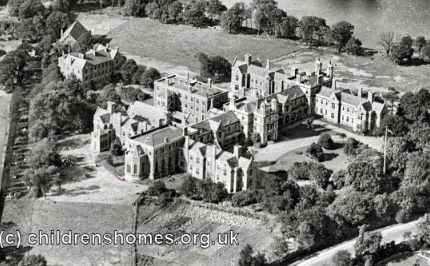
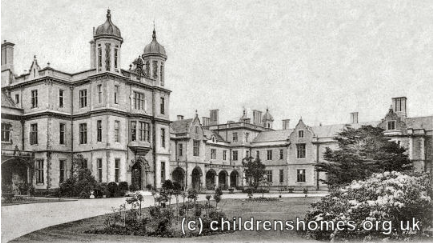
Wonderful photos above of the Infant Orphan Asylum, and much much more can be found at www.childrenshomes.org.uk
The orphanage was therefore not simply an incidental address in his childhood. It provides powerful evidence of the consequences of losing both parents at such a young age.
Other siblings followed very different paths.
Alice, the eldest, eventually appears in a number of households and residences, including Denmark Hill in Lambeth in 1891, Camberwell in 1901, and Chingford in 1911. In 1911, aged 50, she was unmarried and recorded as a visitor, with no occupation.
Her younger sister Amelia also remained unmarried and was later found living with her siblings.
The children had been separated by circumstances, but the records suggest that the surviving brothers and sisters continued to have connections with one another throughout their adult lives.
Herbert John Fordham.
Herbert, born in September 1862 in St Giles, was nine when his father died and about ten when his mother died.
In 1881, aged 19, he was living in St Giles Without Cripplegate, London, as a lodger and working as a clerk. In 1891 he was a boarder in Folkestone, Kent.
On 11 July 1894, at the age of 31, Herbert married Rose Kate Wood in Oundle, Northamptonshire.
Their only child, John William Wood Fordham, was born on 27 August 1895 in Millbrook, Hampshire.
Herbert and Rose lived in Hampshire for many years. In 1901 he was head of his household in Portswood, and in 1911 he was recorded in Chingford, working as an agent for a Trade Protection Society.
By 1921 he was living in Ipswich, Suffolk, where he was working as a Trade Protection Agent.
Herbert died on 4 December 1933 in Ipswich, aged 71, and was buried there. His probate was recorded on 6 March 1934.
Lewis Stirtevant Wood Fordham.
Alice’s next brother, Lewis Stirtevant Wood Fordham, was born on 11 February 1864 in St Giles, London, and baptised on 20 March 1864 at St George, Bloomsbury.
He was only seven when his father died and eight when his mother died. In 1881, aged 17, he was living in Leyton as a boarder and working as a clerk in wool sales.
Lewis married Elizabeth Wright in October 1885 in Lambeth.
They had four children:
Edgar Jules Lewis Stirtevant Wood Fordham, born 1886 in Clapham.
Gertrude Fordham, born 1888 in Lulse Hill.
Percy Fordham, born 1891 in Clapton.
Evelyn Mauriel Sambell Fordham, born about 1895 in Clapton.
Lewis became a wool broker and lived for many years in London and Essex. He was recorded in Hackney in 1891 and 1901, and in 1911 he was living in St John-at-Hackney as head of household, working as a wool broker.
In March 1921, he travelled to Sydney, Australia, although he returned to London, arriving on 16 April 1921. By the 1921 census he was living in Hornchurch, Essex, again working as a wool broker. He was widowed by 1939 and was still recorded as a wool broker.
Lewis died on 17 March 1945 in Romford, Essex, aged 81, and was buried at Havering-atte-Bower on 22 March 1945. His probate was recorded on 13 October 1945 in Llandudno.
Edith Charlotte Elizabeth Fordham.
Edith was born on 30 October 1865 in Leyton and baptised on 25 December 1865. She was only five when her father died and six when her mother died.
Her childhood after that tragedy appears to have been closely connected with her aunt Susannah. In 1871, she was recorded as a six-year-old niece staying with Susannah. By 1881, at the age of 16, Edith was living in Guildford, Surrey, working as an assistant in a stationer’s shop.
On 3 June 1889, aged 23, she married Arthur William Mancell in Brixton, Surrey. They had three children:
Mabel Doris Mancell, born 15 March 1894 in Hackney
Rose Mancell, born about 1900 in Chingford
William Arthur Mancell, born 23 June 1905 in Chingford
Edith and Arthur lived in Hackney and Chingford. In 1914, records show Edith in Canada while her husband Arthur travelled there, with Edith named as his next of kin. By 1921 she was back in Chingford, where she was recorded as a married woman engaged in home duties.
Edith died on 20 August 1929 in Chingford, aged 63, and was buried on 24 August 1929. Her probate was recorded on 21 September 1929.
Amelia Anne Fordham.
Amelia Anne Fordham, born on 22 February 1867 in Leyton, was only four when her father died and five when her mother died. She was baptised at St Mary the Virgin, Leyton, on 21 April 1867.
In 1881, aged just 14, she was living in Battersea, London, where she was recorded as a scholar at “Royal Masonic Institution For Girls“
The Royal Masonic Institution for Girls at Battersea.
The Royal Masonic Institution for Girls began on 25 March 1788, founded largely through the efforts of Chevalier Bartholomew Ruspini, a prominent Freemason and surgeon-dentist. Originally called the Royal Cumberland Freemasons’ School, it was established to provide a home, education and training for girls whose fathers were deceased or experiencing financial difficulties. The first school was at Somers Place East, near Euston, before later moving to St George’s Fields near Westminster Bridge.
As the school grew, larger premises were needed, and a new building was constructed at St John’s Hill, Battersea, near Wandsworth Common. It opened with a spectacular ceremony on 2 August 1852, attended by around 4,000 people, with bands, dancing, marquees and a large dinner. The girls moved into the new premises in December 1852. There were about 65 girls initially, rising to around 79 by 1861.
The institution was much more than an orphanage. The girls received academic, religious and moral education, together with music, physical exercise and domestic training intended to prepare them for employment. Their lives were highly structured, with the day beginning around 6.00 am in summer and 7.00 am in winter.
In 1868, the school officially became known as the Royal Masonic Institution for Girls. Admission was by election: candidates were considered by the Governors and Subscribers and chosen by ballot. In April 1877, for example, 50 approved candidates were considered and 13 girls were elected.
Although disciplined, life included celebrations and outings. During Christmas 1875–76, 39 girls remained at the school and enjoyed a Twelfth-night celebration with the matron, governesses and members of the House Committee. In 1875, the girls also visited the Crystal Palace, travelling from nearby Clapham Junction.
The school continued to expand. An infirmary was added in 1872, partly following an outbreak of scarlet fever, with further classrooms and accommodation built as numbers increased. In 1880, a Junior School was established for younger girls, later moving to Weybridge, Surrey, in 1918.
The institution was supported largely by Freemasons’ subscriptions and donations and became one of English Freemasonry’s major charitable institutions. By the 1880s, annual expenditure had reached approximately £16,000. It also enjoyed important royal connections: Queen Victoria was Chief Patroness, while the Prince of Wales was Patron and President and the Princess of Wales Patroness.
The school’s centenary in 1888 was marked by further development. The Alexandra Wing, constructed around 1889–1890, was formally opened by the Prince of Wales on 12 March 1891, providing additional accommodation and facilities.
Behind the imposing Gothic buildings was a large community of girls and staff, including the matron, governesses, teachers, secretary and collector, together with domestic workers. For girls who had lost their fathers or whose families were struggling financially, the school offered not only a strict and carefully regulated life but also education, friendship and the opportunity for a more secure future.
The school remained at St John’s Hill for more than eighty years. As London expanded and the area around Clapham Junction became increasingly urbanised, the institution eventually moved away from Battersea. In 1934, the senior school relocated to Rickmansworth Park, Hertfordshire, and the old Battersea buildings were subsequently demolished, although two original lodges survived.
The institution continued in Hertfordshire and eventually became the Royal Masonic School for Girls. Its surviving archives provide a valuable insight into the lives of the girls who passed through its doors, including their elections, admissions and education.
From its foundation in 1788, through its move to Battersea in 1852, its renaming in 1868, expansion during the Victorian era and the opening of the Alexandra Wing in 1891, the Royal Masonic Institution for Girls provided generations of girls with a home, education and the chance of a more secure future.
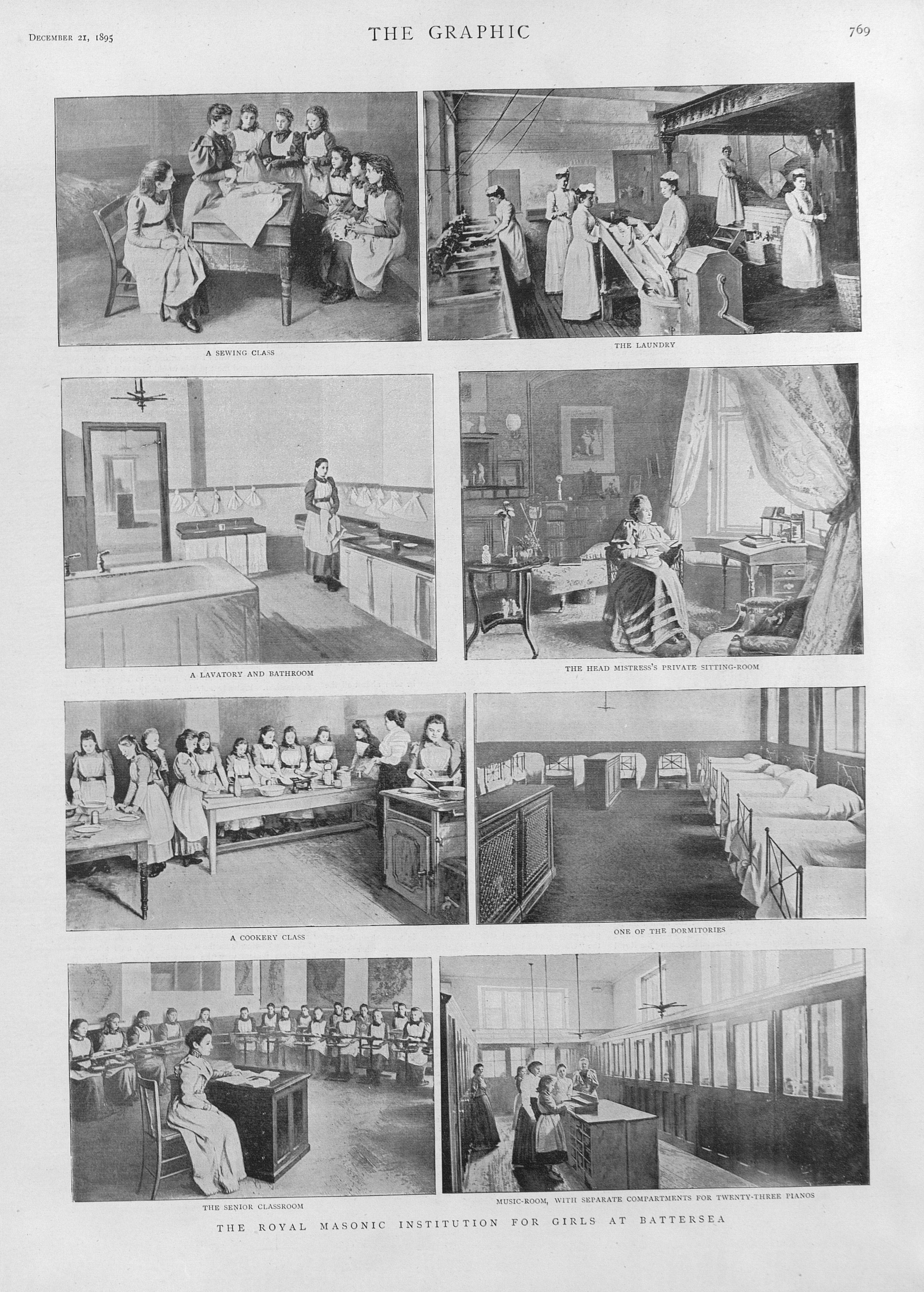
Later records show that Amelia remained unmarried. By 1901, she was living in Chingford as a sister, and in 1911 she was still there, single and with no occupation recorded.
In 1921, she remained in Chingford, described as being engaged in home duties, again living as a sister. In 1939, Amelia was still living in Essex, unmarried and undertaking unpaid domestic duties.
She survived almost all of her brothers and sisters.
She died in February 1953 in Chingford, aged 86, and was buried on 16 February 1953. Her death came only weeks after that of her sister Alice.
Thomas James Robert Fordham, from orphanage to industrial school.
The story of the youngest child, Thomas James Robert Fordham, is perhaps the most striking illustration of what happened to the children after their parents died.
Thomas was born in January 1869 in Leyton, the youngest of the six children. He was baptised on 23 May 1869.
When his father died in September 1871, Thomas was only about two years old.
When his mother died in June 1872, he was only about three. By 1881, at the age of approximately 12, he was living at the Infant Orphan Asylum in Wanstead, Essex, recorded as a scholar.
By 1891, aged 22, he was living in Chelmsford, Essex, where he had become an officer at the Industrial School and Home for Destitute Boys.
This seems a particularly poignant development in his life. Having himself experienced the loss of his parents and spent part of his childhood in an orphan asylum, Thomas subsequently worked in an institution caring for boys who were themselves described as destitute.
His career then moved in another direction. By 1901, Thomas was living in Chingford, working as a manufacturer’s clerk. In 1911 he was still in Chingford and was recorded as a commercial clerk.
By 1921, he was living in Chingford as head of his household and working as a clerk with the British Xylonite Company Ltd at Hale End, a celluloid manufacturer.
Thomas never married and had no known children.
He died on 25 April 1927 in Epping, Essex, aged 58, and was buried at Chingford on 29 April 1927. His probate was recorded on 24 June 1927.
Alice Jane’s long life.
While her brothers and sisters followed their separate paths, Alice Jane Fordham lived a long life and remained connected to the family for more than nine decades.
She had been only ten when her father died and eleven when her mother died.
As the eldest child, she would have been old enough to understand the upheaval that followed, while still being a child herself.
The census records show something of the scattered nature of her adult life.
In 1891, aged 30, Alice was a visitor in Denmark Hill, St Matthew’s, Lambeth. In 1901, she was living in Camberwell, London. By 1911, she was in Chingford, Essex, still unmarried and recorded as a visitor with no occupation.
Then, surprisingly, at the age of 52, Alice married.
In July 1913, she married Andrew Joseph Armstrong in Camberwell, London.
Andrew had been born in 1871 and would live until 1954.
Alice was recorded living with her husband in Camberwell in 1914, and by 1921 they were living in Kingston upon Thames, Surrey, where Alice was recorded as a married woman and wife.
Her later life was spent in Surrey. In 1939, she was living there, married and recorded as undertaking unpaid domestic duties.
The little girl born in Bloomsbury in 1861 had lived through the deaths of both parents, the dispersal of her siblings, two world wars and enormous changes in London and Britain.
She also witnessed the deaths of most of her brothers and sisters. Her brother Thomas died on 25 April 1927, when Alice was 66. Her sister Edith died on 20 August 1929, when Alice was 68. Her brother Herbert died on 4 December 1933, when Alice was 72. Her brother Lewis died on 17 March 1945, when Alice was 84. Only Amelia remained.
Then, in January 1953, Alice’s extraordinarily long life came to an end.
Alice Jane Fordham died on 19 January 1953 in Epsom, Surrey, aged 91.
She was buried in Epsom in January 1953, and her probate was recorded on 21 April 1953 in London.
Only a few weeks later, her younger sister Amelia died in February 1953, aged 86.
A family shaped by early loss.
Looking back across the generations, the story of the Fordhams is one of remarkable longevity alongside repeated early bereavement.
The first Robert Fordham, born in 1789, established his family in Leyton and worked as a plumber. He died at only 53.
His daughter Susannah, born in 1823, lived to the age of 78 and became the surviving link between the older Fordham generation and the children of her younger brother John.
John Fordham, born in 1829, married Charlotte Arnold in 1860 and created a large family of six children. Yet John died at only 42, and Charlotte followed him at only 42 herself.
Their children were therefore left without parents at exceptionally young ages.
The subsequent records reveal the consequences. The children were separated between relatives, households, lodgings and institutions.
The fact that Edith was living with her aunt Susannah in 1871 is particularly significant. It shows that the extended family could provide some support when the immediate family collapsed.
Herbert became a Trade Protection Agent and raised a son.
Lewis became a successful wool broker and raised four children.
Edith married and had three children.
Thomas became a commercial clerk after his extraordinary early experience and, most poignantly, worked with destitute boys.
Amelia remained close to her siblings and lived into her eighties.
And Alice, the little girl born in Bloomsbury in 1861, lived until 1953, reaching the remarkable age of 91.
Here’s the link to the small family tree I have compiled on Ancestry: The Fordham Family
The two surviving family photographs, Susannah Fordham, born 1823, and Alice Jane Fordham, born 1861, therefore represent two generations of this family separated by only 38 years. Aunt and Niece. Susannah was the sister of Alice’s father, John.
When John and Charlotte died within months of one another, Susannah was part of the extended family left behind. Her young niece Edith was actually recorded living with her in 1871.
From Robert Fordham’s baptism at Leyton in 1789, through the large family he created with Ann Elizabeth Wood, to Susannah’s long life, the tragic deaths of John and Charlotte, the institutional childhood of Thomas, and finally Alice Jane’s death in Epsom in 1953, this is a family story spanning more than 160 years.
Between them stands a family that experienced love, marriage, children, work, separation and profound loss.

You can contact me either by commenting here or via email at lynnswaffles@gmail.com
Till next time then……..

