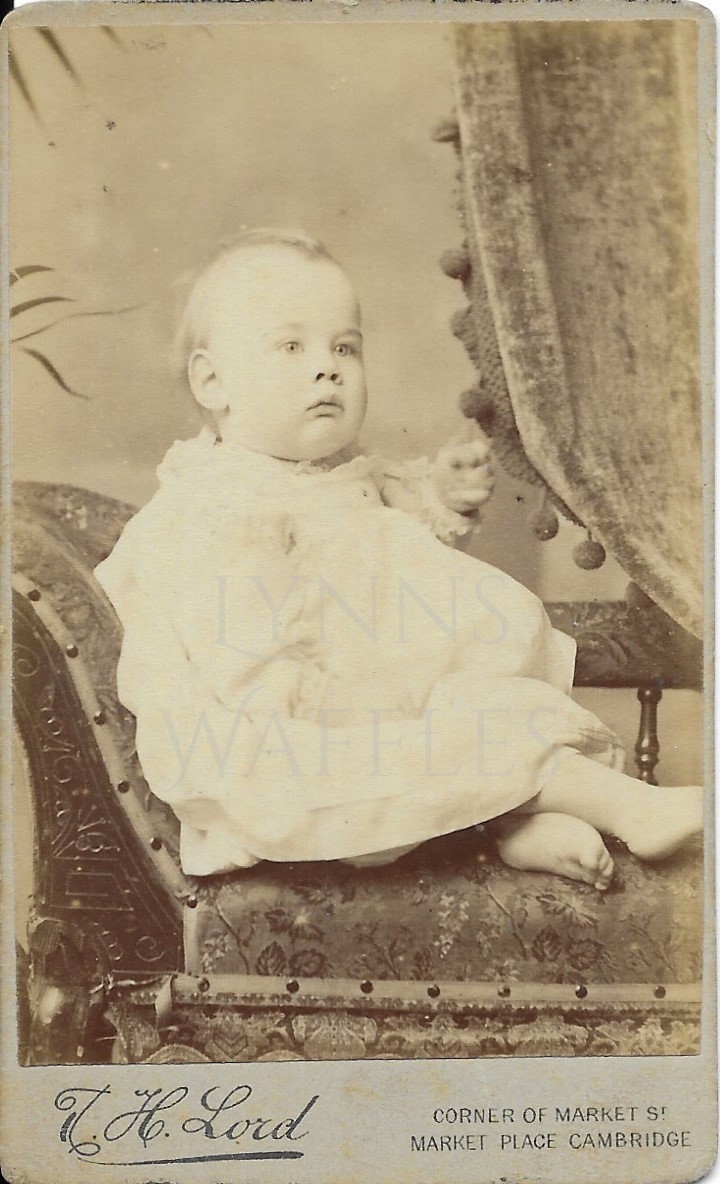
This is another smashing CDV that I bought at the North Petherton Festival of Cards back in March. (The Venue @ Junction24, Market Way, North Petherton, nr. Bridgwater, Somerset TA6 6DF).
This photograph is much more than just a portrait; it becomes the opening page of a remarkable life story.
I could never have imagined when I bought this, the story I would discover. This CDV, taken in Cambridge when he was about twelve months old, captures the very beginning of an extraordinary life.
Just putting his name in the FreeBMD search for births came up with one result; he was born in December 1891. Cambridge.
So I started a family tree with all I could find about him and his parents. The more I found, the more astonished I was, what a family.
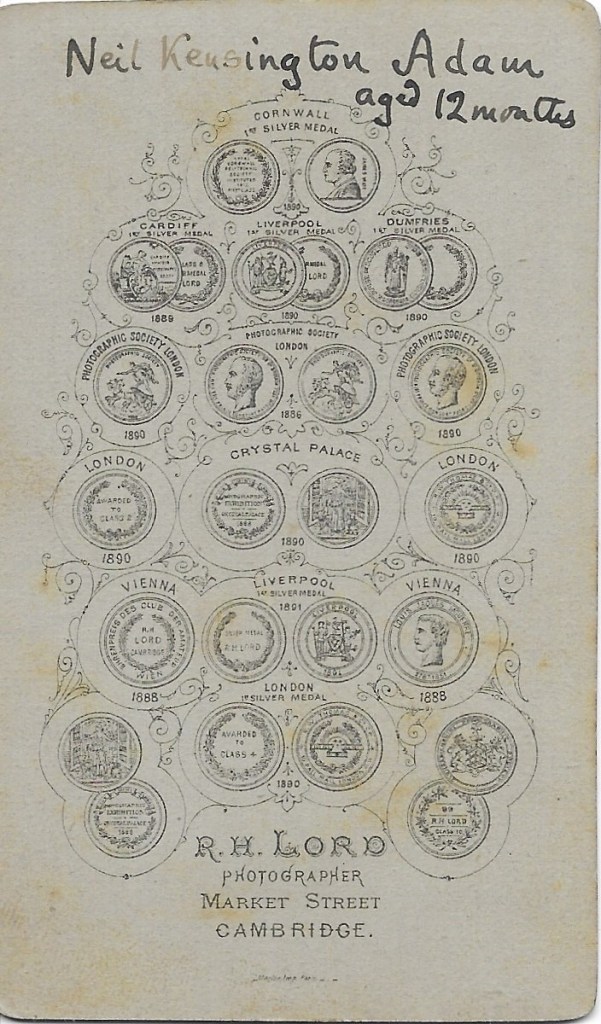
The photograph was taken by R. H. Lord of Market Street, Cambridge, and the writing on the back identifies him as “Neil Kensington Adam aged 12 months.”
When he took this photograph in late 1892, Neil was born on 5 November 1891, he was photographing the son of a Cambridge academic, never knowing that his tiny sitter would one day become one of Britain’s leading scientists. It’s one of those lovely twists of history.
The photographer, Ralph Herbert Lord, was born in 1855 in Whitby, Yorkshire and died in 1922. He operated at 13 Market Place and (19 and 20) Market Street, Cambridge, between 1884 and 1900. He must have photographed many local families, but few of his infant sitters would later achieve such distinction.
From Infant to Fellow of the Royal Society. The Story of Neil Kensington Adam 1891-1973.
There is something rather special about holding a photograph of a child when you know what the future held for them.
The little boy sitting solemnly on an upholstered Victorian chair, dressed in a long white infant’s gown with his tiny bare feet just visible beneath the hem, could never have imagined that one day he would become one of Britain’s most respected scientists.
Neil Kensington Adam was born in Cambridge on 5 November 1891, the eldest child of James Adam and Adela Marion Kensington.

James Adam.
Neil’s father, James Adam, was one of the foremost classical scholars of his day. His greatest achievement was a celebrated scholarly edition of Plato’s Republic, a project that occupied him for over a decade before its publication in 1902.
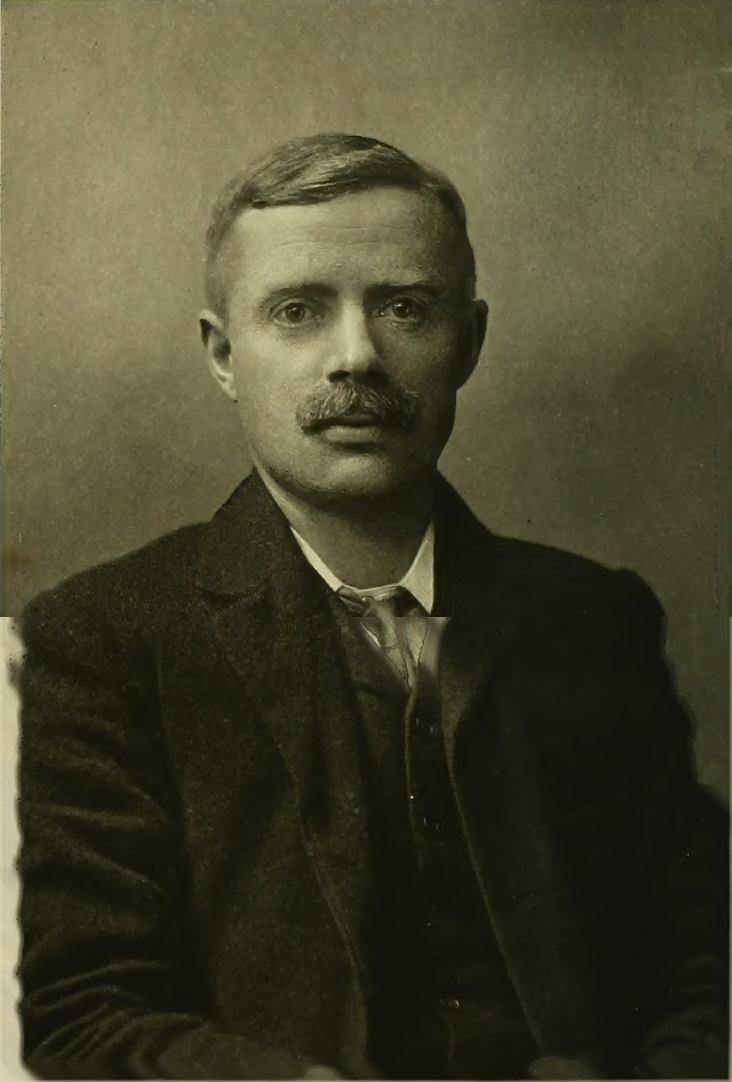
The work earned him a Doctor of Letters (Litt.D.) from Cambridge in 1903, while he had already received an honorary degree from the University of Aberdeen in 1898. In 1902 he was appointed Gifford Lecturer at Aberdeen, delivering a series of lectures on The Religious Teachers of Greece.
However, years of intense academic work took a heavy toll on his health. Suffering from rectal cancer, he underwent surgery in Aberdeen but died on 30 August 1907, aged just 47, at 5 Albyn Place.
His death was recorded as resulting from syncope following an operation to remove the cancer, bringing to an untimely end the life of one of Cambridge’s most distinguished classical scholars.
Adela Marion Kensington.
Neil’s mother, Adela Marion Kensington, MA (1866–1944), was an outstanding classical scholar in her own right. Educated at Bedford College and Girton College, Cambridge, she became the first Girton student to receive a special distinction in the Classical Tripos.
She married her former lecturer, James Adam, in 1890, and together they shared a lifelong passion for Greek philosophy, collaborating on scholarly works.
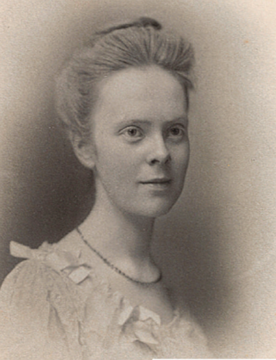
—Original publication: A Critical Woman Barbara Wootton, Social Science and Public Policy in the Twentieth Century – Ann Oakley
After James died in 1907, Adela raised their three young children while continuing a distinguished academic career.
She edited and published her husband’s unfinished lectures, wrote several books of her own on Plato and Socrates, taught at Cambridge colleges, and became a respected advocate for women’s education and women’s suffrage.
Learning and intellectual curiosity surrounded Neil from the very beginning.
One lovely detail comes from the recollections of Neil and his younger sister Barbara: “The Adam household at Emmanuel College was one where learning was woven into everyday family life. Adela taught all three of her children Latin and Greek from an early age, and even the family cat was named Plato. Neil later remembered a happy childhood surrounded by books, lively discussion and scholarship, a home that undoubtedly helped shape the distinguished scientific career he would later enjoy“.
Barbara Frances Adam.
Barbara Frances Wootton, Baroness Wootton of Abinger (1897–1988), Neil’s younger sister, became one of Britain’s most influential economists and social scientists.
Educated at Girton College, Cambridge, she achieved first-class honours in economics, although as a woman she was initially denied a Cambridge degree.
Her distinguished career included posts at the Trades Union Congress, the University of London and Nuffield College, Oxford, and she became widely respected for her work on economics, social policy and criminology.
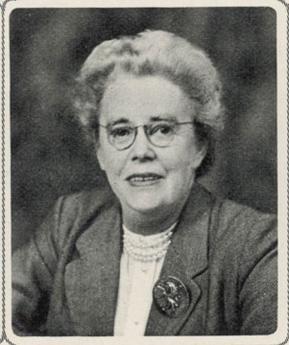
Her contributions to public life were recognised with numerous honorary degrees, the award of the Companion of Honour, and in 1958, she was created Baroness Wootton of Abinger, becoming one of the first female life peers.
Tragically, her first husband, John Wesley Wootton, was killed in the First World War just five weeks after their marriage, though she later remarried in 1934 to a student, George Percival Wright, and continued her remarkable career in public service.
Growing up in Cambridge meant that Neil lived amongst colleges, libraries and some of Britain’s finest scholars. After attending Winchester College, he followed a path that seemed almost inevitable by entering Trinity College, Cambridge, where he studied chemistry.
His university career was outstanding. He graduated with a Bachelor of Arts in 1913 and was elected a Fellow of Trinity College only two years later, a considerable honour for such a young scientist.
He would later earn both an MA and a Doctor of Science degree as his research gained international recognition.
When the First World War broke out, Neil’s scientific abilities were quickly put to practical use. Rather than serving in the trenches, he worked for the Royal Naval Air Service at Kingsnorth in Kent.
There, he helped improve the rubber-coated fabrics used to cover military airships, making them stronger and less likely to leak the valuable lifting gas they depended on.
It was work that quietly contributed to Britain’s war effort, although his younger brother, Arthur, sadly lost his life during the conflict in 1916.
Arthur Innes Adam.
Arthur Innes Adam (1894–1915) was the eldest son of James and Adela Adam and inherited his parents’ love of classical scholarship.
Educated at Winchester College, he won numerous academic prizes before entering King’s College, Cambridge, in 1912 with a major scholarship. A gifted student with a deep love of Greek and Latin literature, he was also an accomplished musician, an enthusiastic member of the Bach Choir, and a popular, thoughtful young man who inspired those around him.
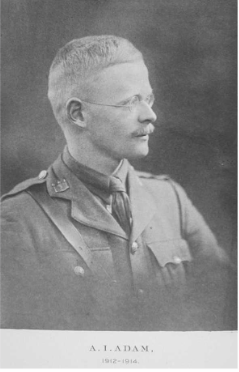
With the outbreak of the First World War, Arthur was commissioned into the Black Watch before transferring to the Royal Flying Corps.
He was wounded and reported missing during the Battle of Loos in September 1915, and was later presumed to have died in action at just 21 years of age.
Friends remembered him as a man of great warmth, humour and quiet determination, whose promising academic career and life were tragically cut short by war.

Following the war, Neil devoted himself to research into surface chemistry, a field that examines what happens where liquids, gases and solids meet.
Although the subject sounds highly specialised, it affects everyday life in countless ways. His experiments explored how molecules arrange themselves into films just one molecule thick upon the surface of water.
These investigations helped scientists understand soaps, detergents, oils and lubricants, and laid the foundations for modern developments in coatings, pharmaceuticals, materials science and even aspects of biology.
His research became so influential that in 1930 he published The Physics and Chemistry of Surfaces, a book that rapidly became the standard reference work for scientists around the world. It remained an authoritative textbook for many years and established Neil as one of the leading experts in his field.
Recognition soon followed. In 1935, at only forty-three years of age, he was elected a Fellow of the Royal Society (FRS), one of the highest honours a British scientist can receive.
Two years later he became Professor of Chemistry at the University of Southampton, where he continued teaching and researching until his retirement in 1957.
Generations of students benefited from his knowledge and enthusiasm, while his work continued to influence chemists both in Britain and overseas.
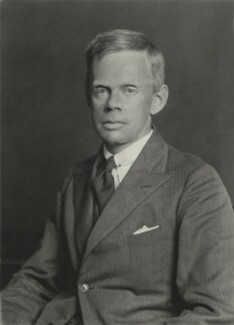
Away from the laboratory, Neil lived a comparatively quiet life with his wife, Winifred Wright. Those who knew him described a thoughtful and dedicated scholar whose interests extended beyond science.
Throughout his life, he and his wife remained committed to the Christian Science faith, and he was respected both for his intellect and integrity.
Neil Kensington Adam died in Southampton on 19 July 1973, aged eighty-one, leaving behind a scientific legacy that continues to be recognised by historians of chemistry today.
More than 130 years later, that photograph allows us to meet him again, not as the celebrated chemist he became, but as the bright-eyed infant at the very beginning of an exceptional journey.
You can contact me either by commenting here or via email at lynnswaffles@gmail.com
Till next time then………


This a fantastic life story Lynn and amazing as we never know where our old photograph finds will lead us 👍
LikeLiked by 1 person
Thanks Simon, I was astonished when I discovered who he was! xx
LikeLike