Update: As of 21 August 2025, I’m thrilled to tell you this whole collection is now in the very safe hands of a lady and her family who are descendants📚
Chapter 6

The Wainwright & Ling Families.
In the last Chapter, I told you all about the connections between the Gellibrand and Gadesden and how they married into the Wainwright and Ling families.
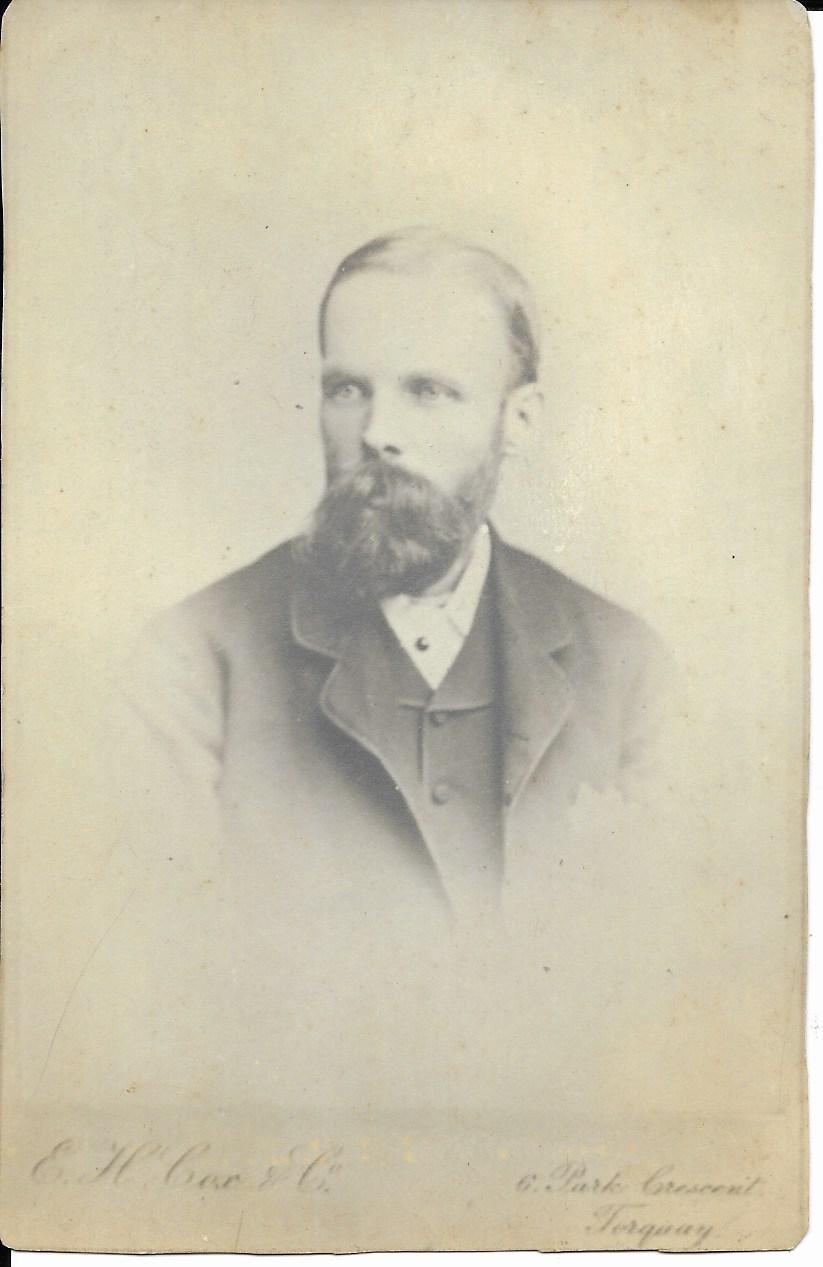
So I’m really pleased to be able to show you some faces of these two families. First, we have Edward Clayton Ling, he’s the chap who married Isabella when she came to England after becoming a widow. A chance meeting between the two, if this meeting hadn’t happened the gentleman of my couple wouldn’t have been born.
“He (Edward) studied and became a medical doctor and obtained a position as a ship’s surgeon. When travelling home from Tasmania, Australia aboard ‘Sobroan‘ in early 1876 he met and courted widow Isabella Gellibrand nee Brown. They married on 28th December 1876 in Saxmundham, Suffolk, where his family lived. She brought her seven children to the marriage“
This is from the watercolourworld.org website. Much more on the link below the picture of the ship “The Sobraon was the biggest composite ship of all time. Made of wood and iron, she was very strong and could sail closely into the wind, reaching incredible speeds for a ship without additional propulsion. (She was originally designed as a steamer but built as a clipper.) Her composite design almost led to disaster on her maiden voyage, when the large quantities of metal interfered with her compass“.
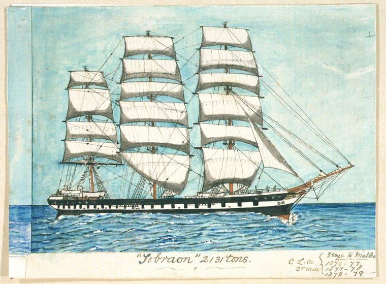
Sobraon 2131 tons C.L.M. 3rd Mate. 3 Voys to Melbourne 1876-77 1877-78 1878-79, C. L. M.
© National Maritime Museum, Greenwich, London, CC BY-NC-ND
“The people who commissioned and built the Sobraon wanted her to be fast, luxurious and very special. Unlike most clipper ships there were only two passenger classes; 90 people could travel first class and 40 in second class. Onboard facilities including a water condenser, ice chamber and fresh food and milk (the Sobraon could carry nearly 100 sheep, 50 pigs, three bullocks and a lot of poultry) meant passengers could make long journeys in relative comfort. A crew of 69 sailed the ship and looked after their needs“.
Edward was trained as a Doctor. This record is from The Apothecaries Hall, Saxmundham, Suffolk on 9 September 1869 when he was 21: “In the list of successful candidates who passed the primary examination at Apothecaries Week, Mr Edward Clayton Ling, second son of Mr J.M Ling, this town“.
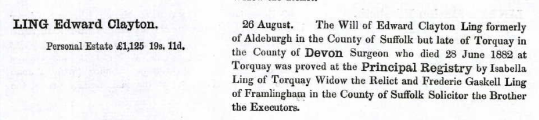
Well, my question about Edward being in Torquay was answered when I saw his probate record below as it states he was living here from Aldeburgh, Suffolk. Proved by Isabella in August 1882.
Edward Clayton Ling MRCS. LSA. (Member of the Royal College of Surgeons of England) and (Licensed Surgical Assistant)
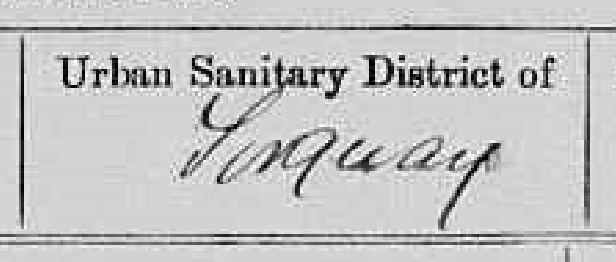
It looks like he had moved there from Suffolk because that is where he died at a very young age, 34 on his death certificate below, that ties in with the census records for him, although I still haven’t found a correct birth registration for him. I had to find out just why he died, so I ordered a digital image of his death certificate.

His mother Mary Anna Ling was present at his death.
The cause of death for Edward is ‘Phthisis haemoptysis apnolah asthenia’ not sure if I have the spelling correct but basically it seems Edward died of having TB, Tuberculosis, so I would think he went to Torquay in the hope of being in a milder climate in Devon by the sea to help with his condition. He was a Doctor so he possibly became infected through his work, many people died in the Victorian era from TB or Consumption as it was known. He died at ‘Abbotsford WSD Torquay‘ have no idea what WSD stands for, but am hopeful of one of my Twitter followers being able to help!
A huge thank you to all my followers on Twitter and Facebook for all your help, Several of you found the same information too, you are amazing. Lots of really interesting information about ‘Abbotsfield. WSD. Torquay. (Or so I thought, but it’s actually USD, thanks so much Dave!) It’s all in the writing as Dave explained to me, he’s an expert, so thanks Dave @Dave_Lifelines on Twitter. Dave said “Later on (I’m not sure exactly when it changed) they use the abbreviations UD (Urban District) and RD (Rural District)” Once again Dave wasn’t the only person who found this information about USD and not WSD, so thanks to everyone one of you.
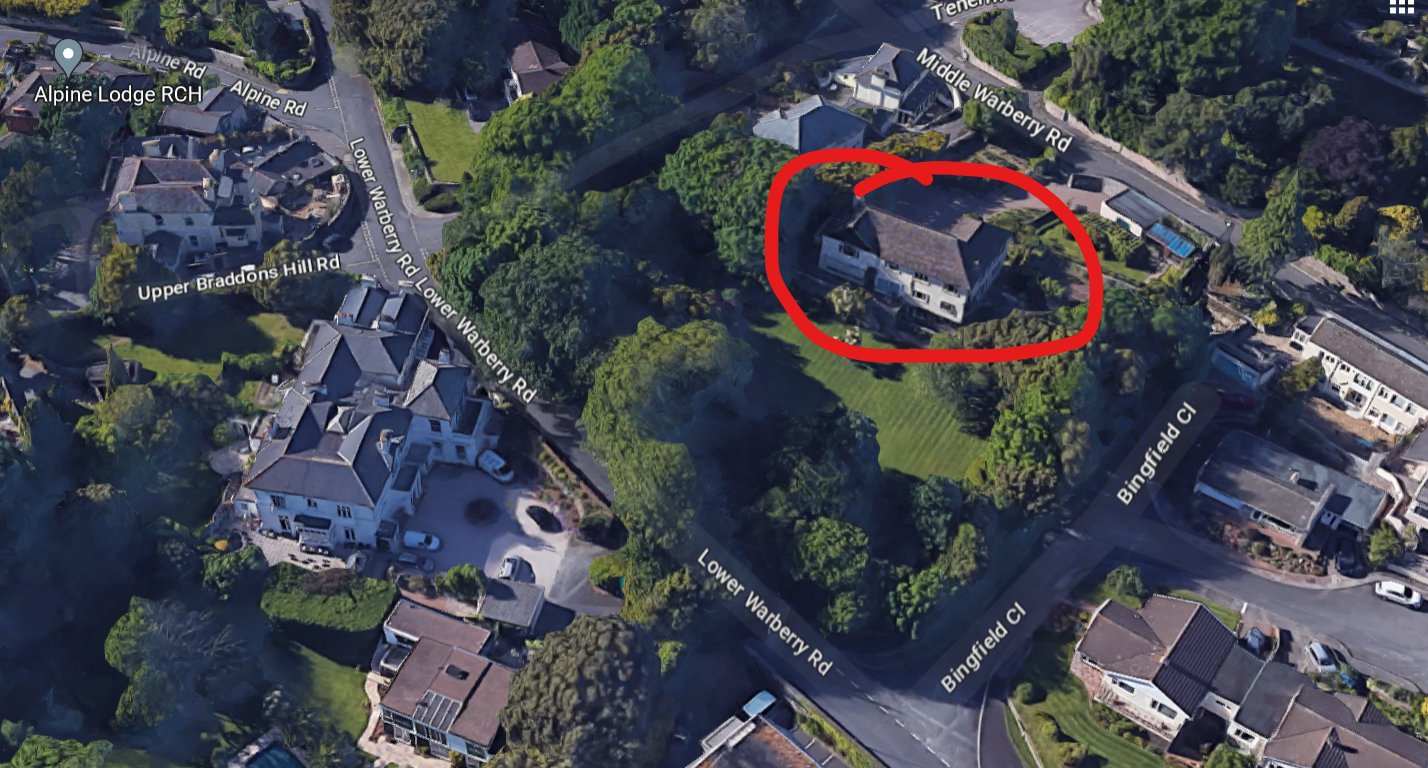
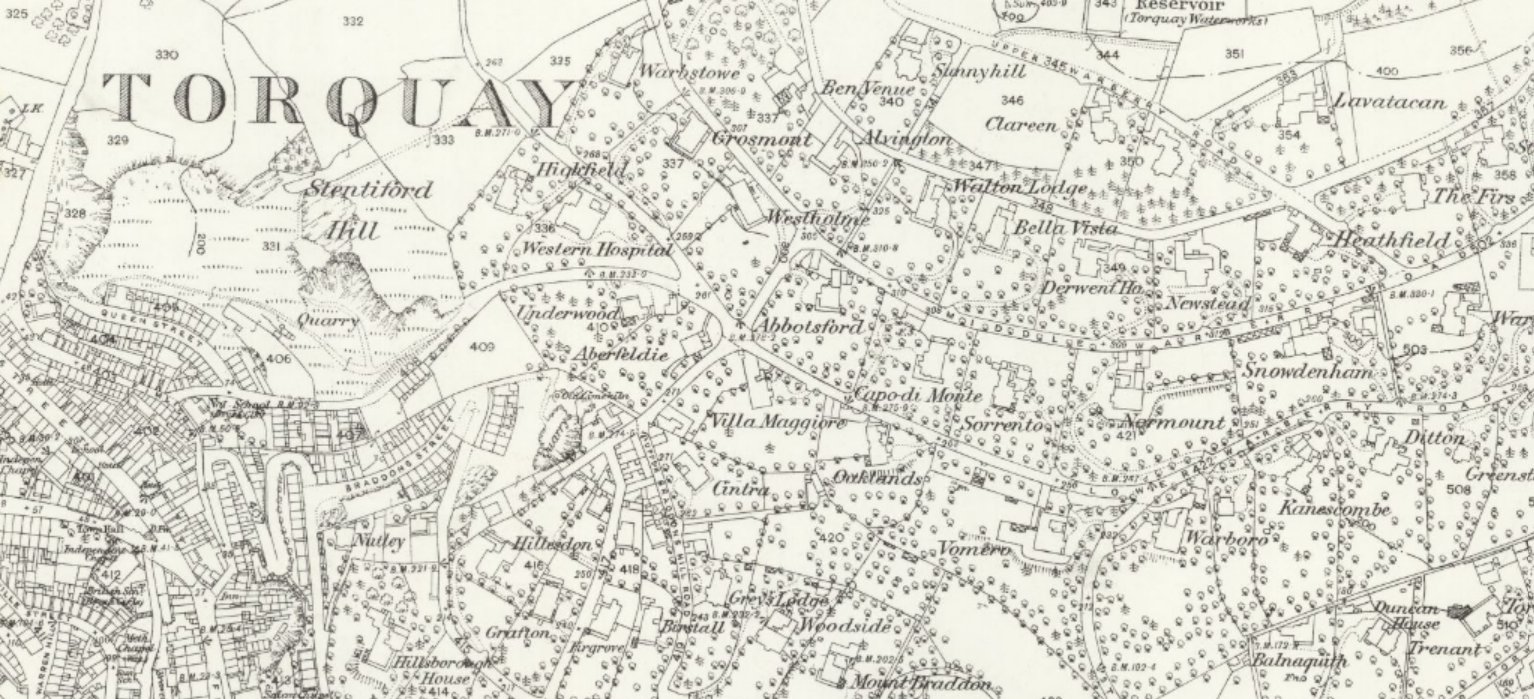
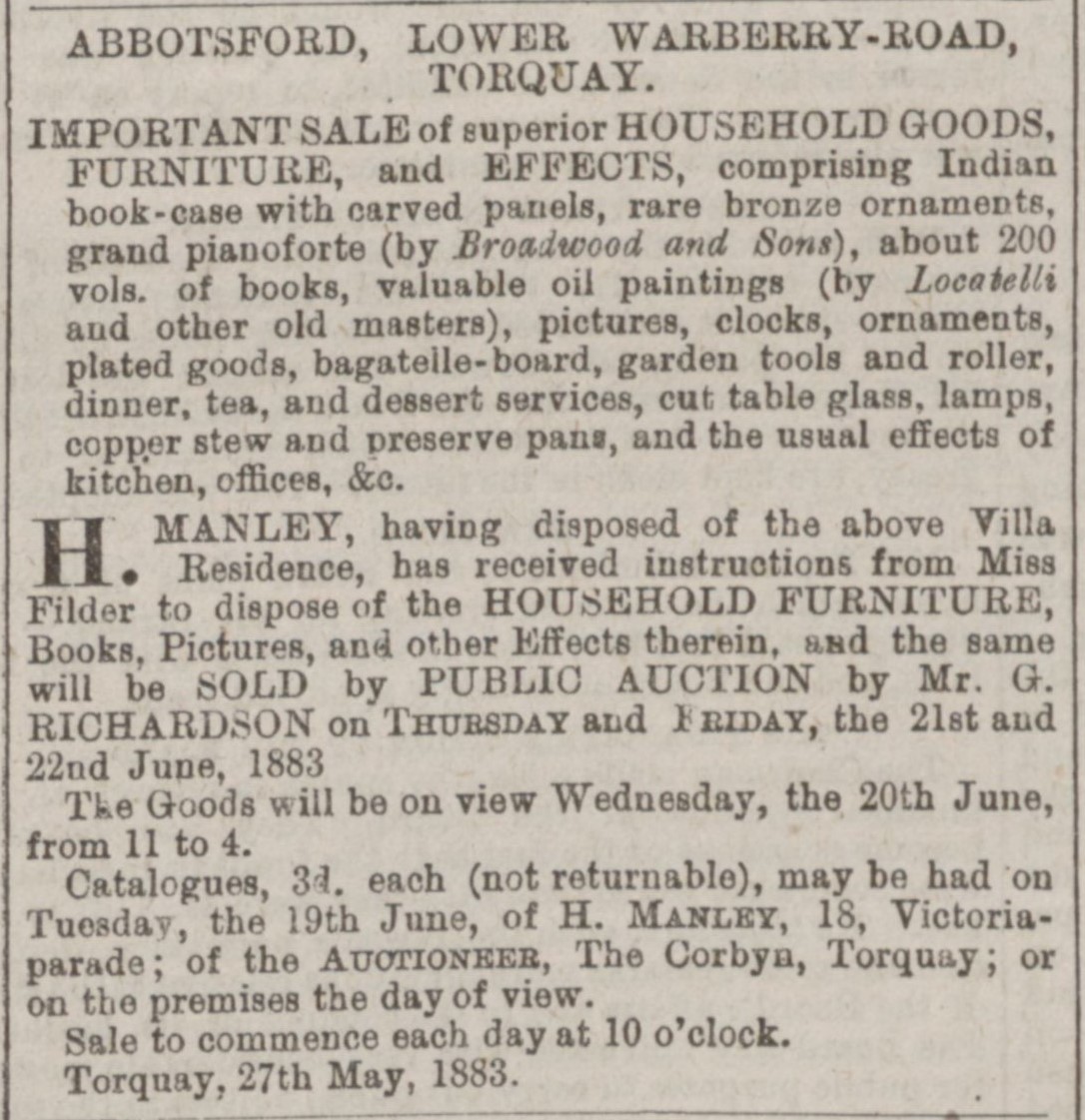
I’m just sharing a little of what I received in help to find out a bit more about Abbotsford House, Lower Warberry Road, Torquay. The name of the house has changed at least a couple of times since 1882. This is one of the adverts in the newspaper archives shared with me that is very helpful as it states the property was owned by Miss Filder, it looks from my and others’ research that the house was owned for many years by the Filder Family, maybe back as far as General Filder. In 1871 General Filder’s wife Ann died at Abbotsford. In the 1881 census, it has two servants living there and it says “Mary Hodder ‘Head in Charge’ age 25 Housemaid. Plus Selina Bolt age 16 Under Housemaid”.
A Mr W F Splatt JP lived there in the early 1860s and he had links with Australia, but he didn’t own it. The more I’ve read about it the more I’m sure that the Lings rented the house, as many others did over the years, to live for a while in the hope of it being good for Edward to be in a milder climate with fresh sea air to help him with his TB and also as one follower has told me there was a Hospital for Consumption (TB) just close by to this address. There is more here about the connection with Torquay and TB Consumption/TB in Torquay Once again thanks so much for all the help Twitter and Facebook Followers!
Edward’s mother Mary Anna (PALLANT) was born in 1822 in Suffolk, the daughter of Mary and John. She married Dr John Mitford LING (1810-1885) also a Doctor/Surgeon, in April 1843 in Plomsgate, Suffolk. They had seven children, Edward was the third born. Another son was a Surgeon and another a Solicitor. Mary Anna died on 7 February 1891 in Saxmundham, Suffolk at the age of 69.
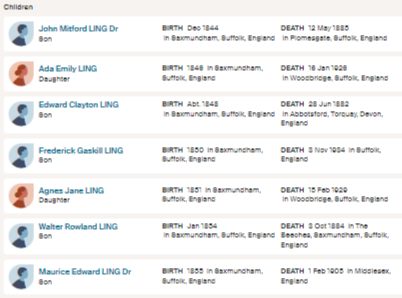
The eldest son John Mitford was a Doctor and he also died young at 40, In the newspapers, it said he died suddenly at his father’s residence, the Beeches. John left a wife and 2 young daughters. Frederick Gaskell was a Solicitor. Walter Rowland age just 30 again when he died. “LING. 3rd inst, at the Beeches, Walter Rowland third surviving and dearly loved son of John M. Ling, of Saxiundham” It must have been dreadful for the couple to lose 3 sons within a few years as young men.
Then we come to Maurice Edward, again a Physician/Surgeon who you can see a photo of below, he was 50 when he died, still relatively young, leaving a wife and 3 very young sons. He married Mary Constance BLAINE on 18 December 1900 in South Kensington, Middlesex. They had three sons, Maurice, Frederick and Kenneth. Maurice died on 1 February 1905 in Middlesex.
“12 Harley House, Regents Park, London. Feb. 1, from appendicitis, MAURICE EDWARD LING, M.D, of Morley House, 115, Harley Street“
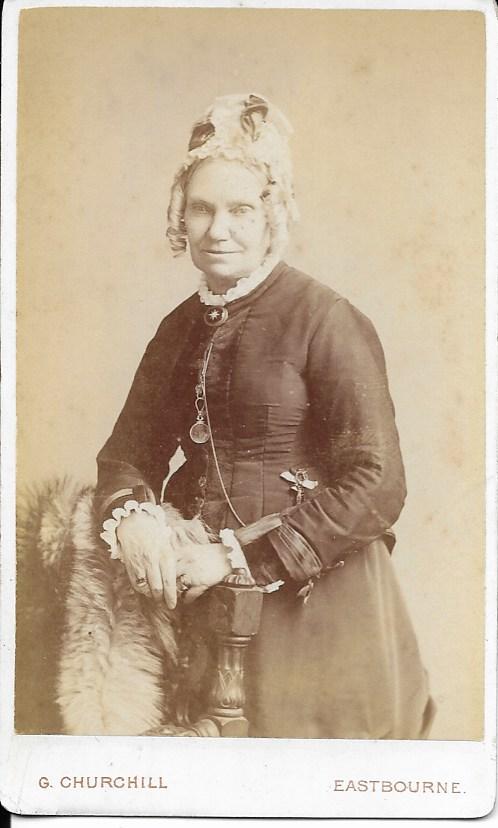
We next have three wonderful photos of Harriet Eliza Gadesden, Harriet Eliza had married William Wainwright back in 1835 and I mentioned her in the last Chapter, she was to become the Grandmother of Muriel Constance Clayton Ling, Edward Clayton Ling’s daughter by Isabella.
These two photos are identical but one has interesting information in the form of a paper sleeve wrapped around it saying ‘Harriet as seen dressed for her Mother’s Meeting’
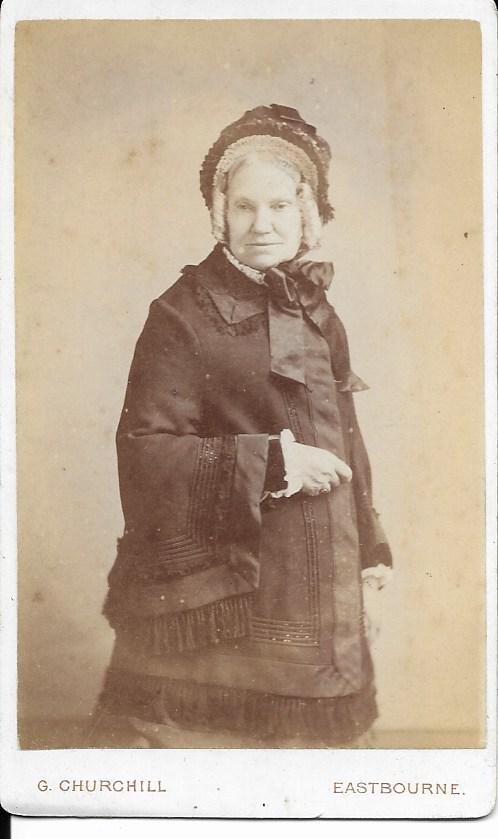
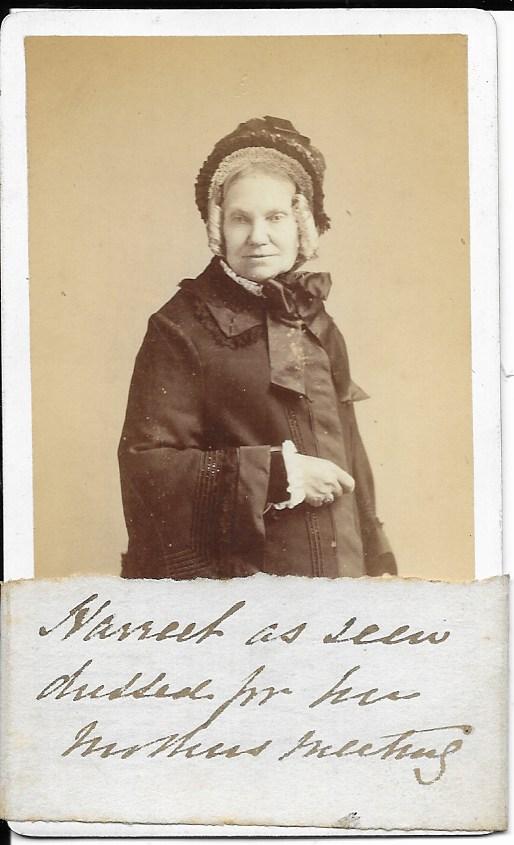
On the 1891 census Harriet age 89 was living at Hoe Place, as the family had been in the 1881 and 1871 census records, it was just her with her unmarried daughter Harriet who was 48, with six servants living in and a Gardener and his family also living on the estate. It is now a School, Hoe Bridge School, Hoe Place, Old Woking Rd, Woking, Surrey. After her mother died Harriett moved to a smaller property with just two servants.
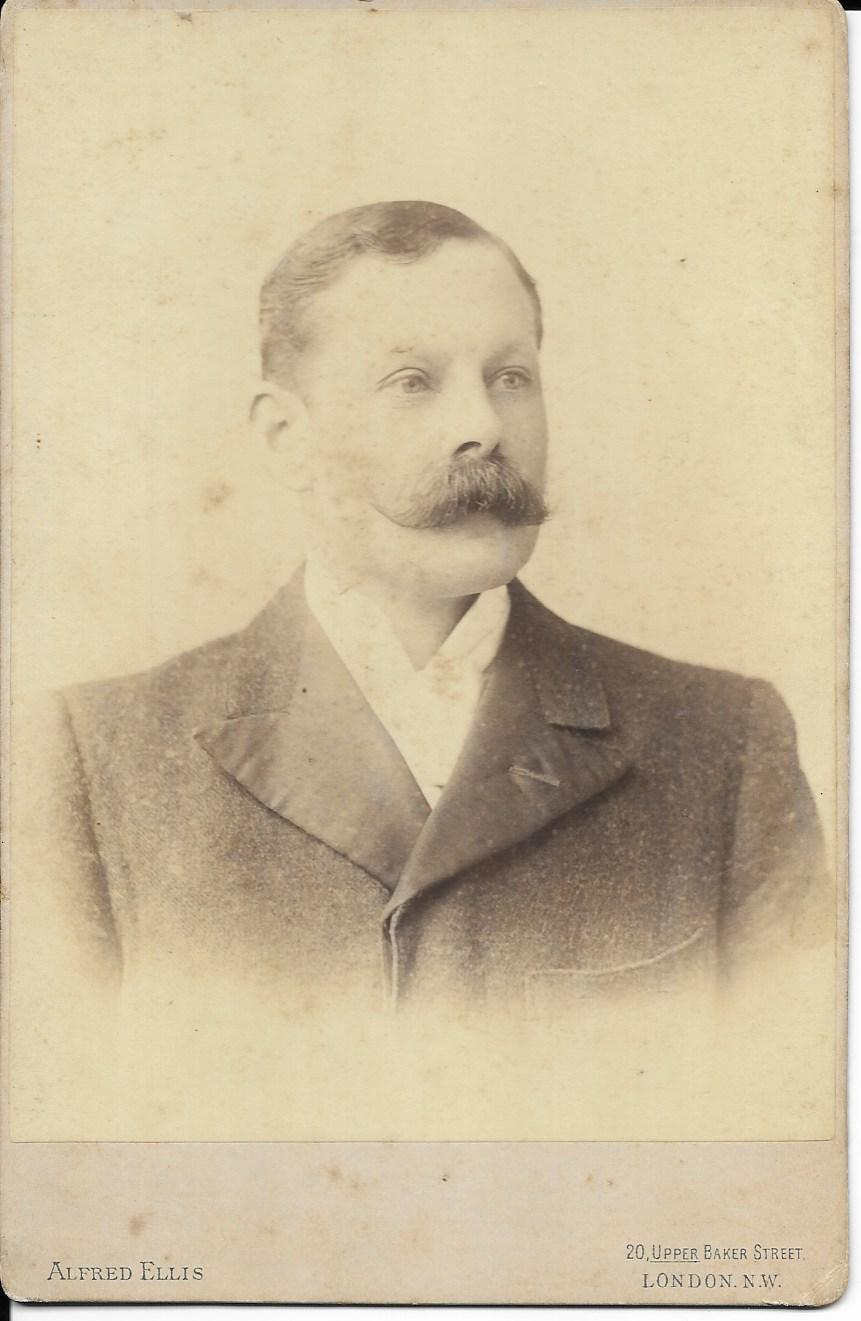
These next two old photos are a bit frustrating as they both have Wainwright written on the back and nothing else what a shame!
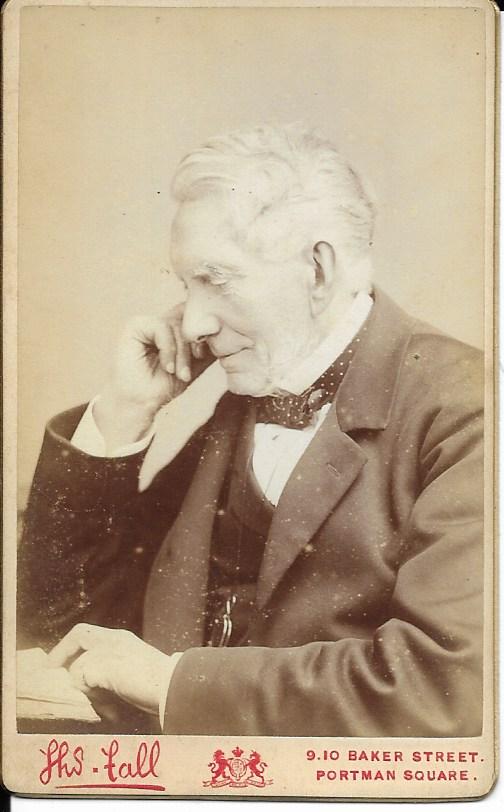
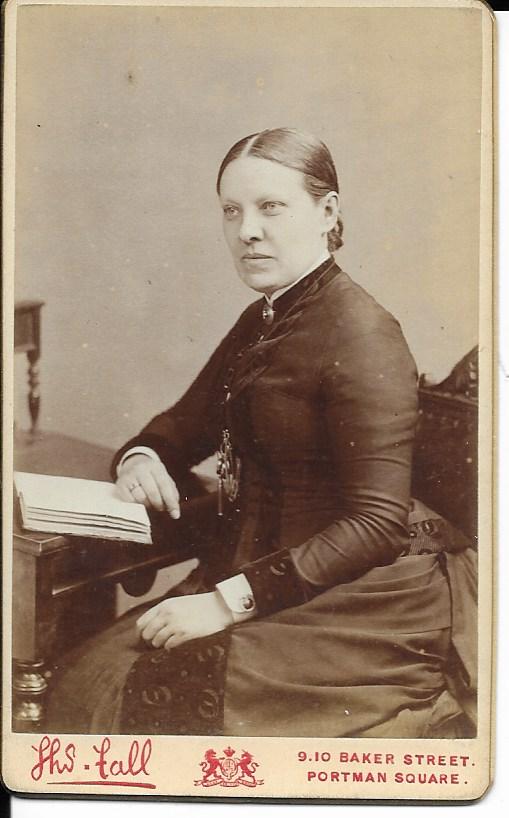
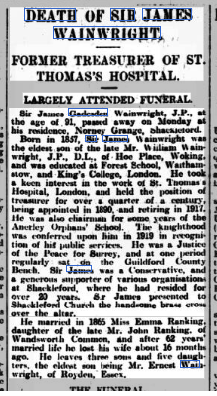
James Gadesden WAINWRIGHT was born on 23 December 1837 in Everton, Lancashire, his parents were William and Harriet. James married Emma RANKING on 18 April 1865. He died on 18 February 1929 in Guildford, Surrey, at the age of 91. He became Sir James Gadesden Wainwright (1837–1929) and was a governor, almoner and treasurer of St Thomas’ Hospital in London, England. The couple had eight children.
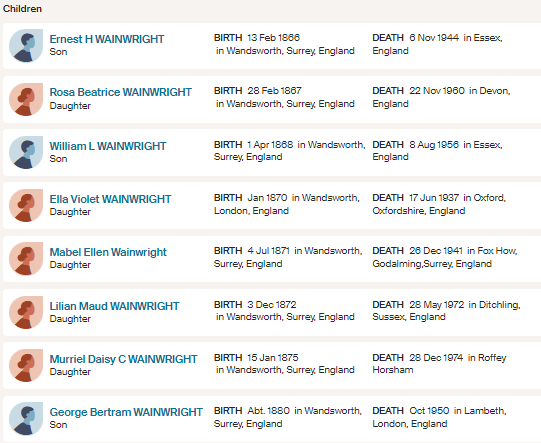
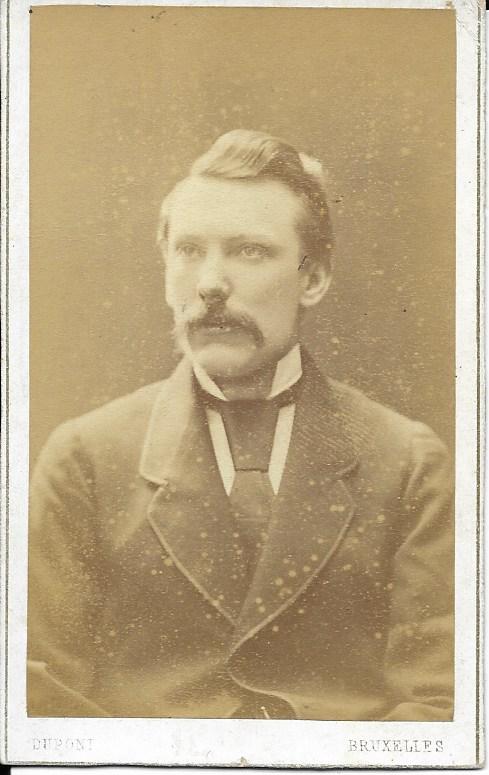
This is James and Emma’s third child William Longworth WAINWRIGHT who was born on 1 April 1868 in Wandsworth, Surrey, he married Mary Lilian CAVELL on 25 August 1898 in Ore, Sussex. They had three children. He died on 8 August 1956 in Essex at the age of 88.
When I first read the record of William’s marriage, I thought oh Cavell, I wonder if there’s a link to Edith Cavell? Quite honestly I was astounded to find that there was!
When I was about 11/12 I had chosen her as my subject at school for a project about WW1, I don’t think I wrote an awful lot about her back then in 1964/65 as I was restricted to what I could read in the school library books and encyclopedia’s, how different it would have been to have had the internet.
Cavell Family.
The following information I found on edithcavell.org.uk
“This next text is from a booklet published for St Mary’s Church, Swardeston back in the late 1990s compiled and written by the then vicar, Rev Phillip Mcfadyen. The booklet is still available in the church”: “The Reverend Frederick Cavell came to Swardeston soon after he was ordained. He evidently knew what he was taking on as he had spent some years as the curate of neighbouring East Carleton. He liked Swardeston so much that he remained there for the rest of his ministry some 46 years. Frederick Cavell was trained for the ministry at Kings College, London and his certificate is to be found hanging at the back of Swardeston Church. While he was training in London, he fell in love with his housekeeper’s daughter but they were not to be married until she had completed some extra education and thought fitted to the role of a parson’s wife. In 1863, after twelve years at East Carleton, Frederick Cavell accepted the living at Swardeston. Two years later, Edith Louisa Cavell was born, on December 4th, 1865. At first, the Cavells lived in a temporary parsonage some distance from the Church at the bottom of Swardeston’s beautiful common. This fine Georgian farmhouse is still standing and is known as ‘Cavell House’ as it was here that Edith was born in 1865.
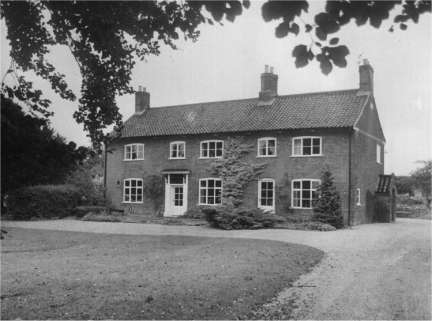
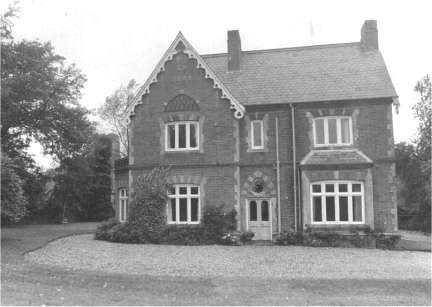
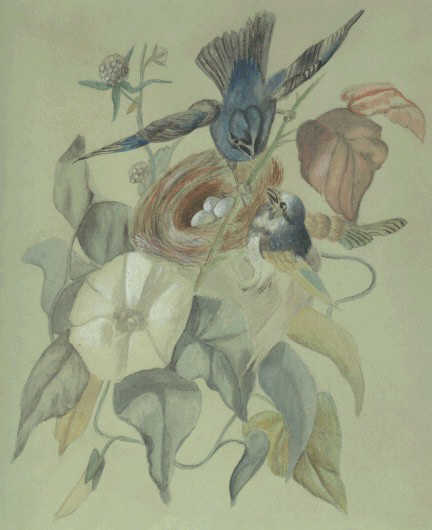
In that same year, a new Vicarage was built next to the Church. This was the house in which Edith grew up and knew as her home. It was here that the three younger children, Florence, Lilian and John, were born. The Vicarage was built at Frederick Cavell’s own expense and local people say that it nearly ruined him. He was always a ‘poor parson’ from that time. Although the family lived frugally, they had to employ staff to help run such a large house and keep up appearances. The staff were evidently paid a subsistence wage as scratched on an attic bedroom wall are these words pencilled by a maid in 1876: “The pay is small, The food is bad, I wonder why I don’t go mad.” Obviously, an intelligent and discerning maid, as most girls in service would not be so literate. Even if the family were poor and the food not very appetising, they were concerned to share what they had with their poorer parishioners. Sunday lunch was a great family affair and whatever was cut from the Sunday joint, an equal amount was taken out to hungry cottagers nearby. Sundays in a Victorian Vicarage could be gloomy by today’s standards. No cards, and no books allowed except the Bible. Frederick Cavell was something of a Puritan and would want to keep a strict Sabbath. Edith wrote to her favourite cousin Eddie, “Do come and stay again soon, but not for a weekend. Father’s sermons are so long and dull”. It is said that the Cavell children did occasionally sneak a game of cards in the study when Father was in Church. They certainly were not dour and sour Victorians as many biographies suggest. The Vicar could easily be tempted to disguise himself as a bear and cause the Cavell children to shriek with delight. One of Edith’s favourite winter pastimes was ice skating. A 96-year-old member of the Unthank family who lived at Intwood Hall can recall seeing her skating down by the Ford at Intwood and obviously enjoying herself. Nearer at home, the moat at the Old Rectory behind the Church would often freeze in winter and this was a favourite haunt of the Cavell children. Spring in Swardeston is still a spectacle of wildflowers around the common, although many species are disappearing (there were some 200 in her day). Edith had a great respect and love of nature and she seems always to have surrounded herself with plants and animals. Many of her photographs show her with her dogs and the Church has two chalk drawings of reindeer dated 10.10.1882, showing the influence of the favourite Victorian painter, Landseer. Flowers were a fascination to her and she would collect and draw them as they grew on the common. She soon became a very accomplished artist and one or two village folk treasure examples of her work. A powder box given to Mrs Emma Burgess at the birth of her baby was beautifully painted with flowers by Edith.
Copyright: McFadyen, Rev Phillip, Chamberlin, Rev David, Miller, Nick, “Edith Cavell 1865-1915 – A Norfolk Heroine” 1985, 1997-2020. http://www.edithcavell.org.uk (Accessed 8 Sep 2023).
Do take a look at the website, link above, if you have the time as it has much much more wonderfully written information than I have shared here about Edith Louisa Cavell. It’s such a moving story about her life, her work and her death, well worth a read.
Edith Louisa Cavell was arrested on 5 August 1915 by the local German authorities, she was charged with treason for aiding in the escape of over 200 British, French and Belgium soldiers, she had helped save the lives of soldiers on both sides in her work as a nurse. “She believed in the humanity of all people, she did not discriminate on the basis of nationality, race, religion or country” (Judson 1941)
Edith was shot at dawn in Schaerbeek in Belgium on 12 October 1915 and was buried there on the rifle range where she fell. There was outrage in this country and elsewhere at the time. In 1919 her body was brought back to England and given a state funeral in Westminster Abbey, then buried again to the east of Norwich Cathedral on the grounds. Her family preferred this to a burial in Westminster Abbey.
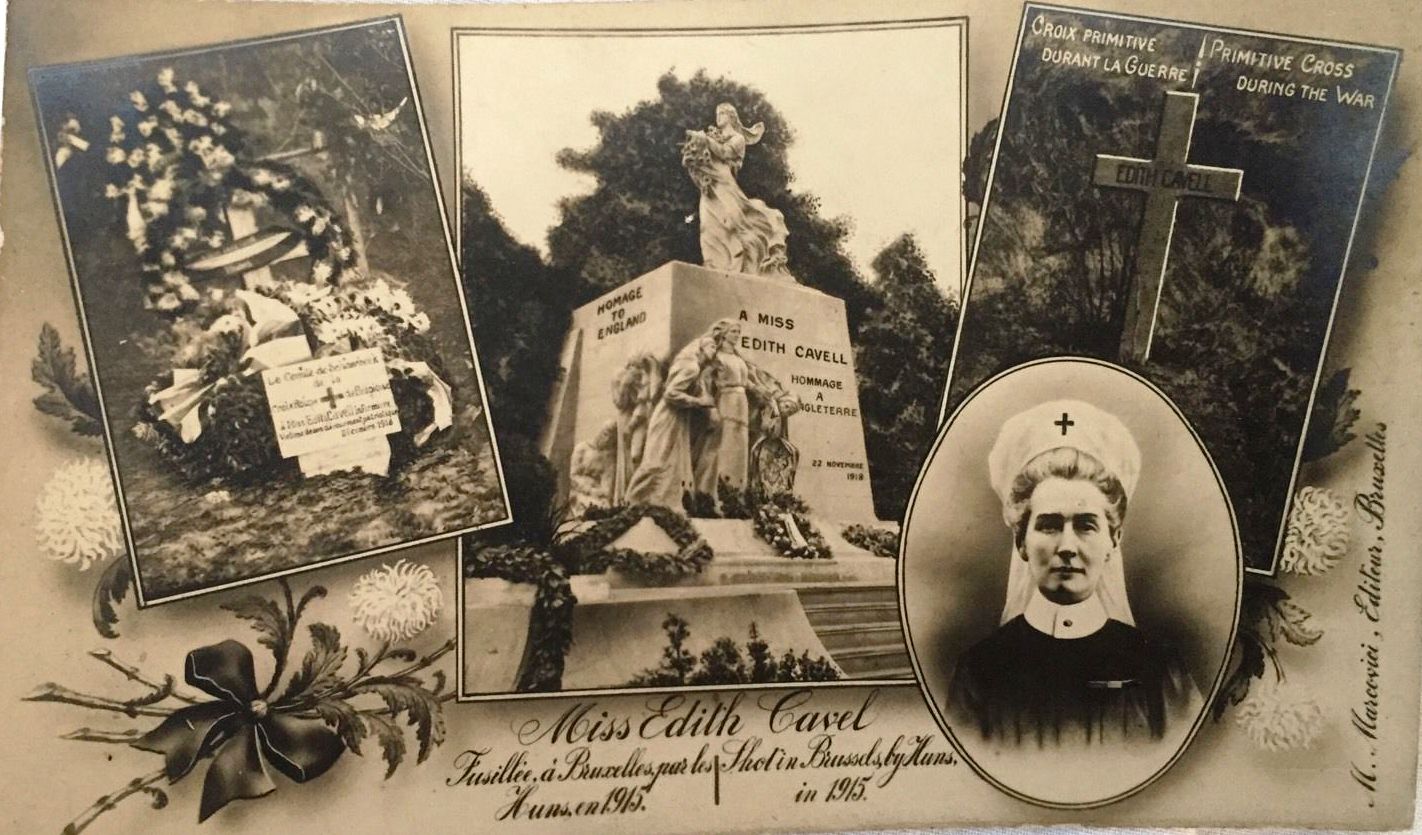
She had been held for almost ten weeks before her death, Edith’s final words to the German Lutheran prison chaplain, Paul Le Seur, were recorded as, “Ask Father Gahan to tell my loved ones later on that my soul, as I believe, is safe, and that I am glad to die for my country.
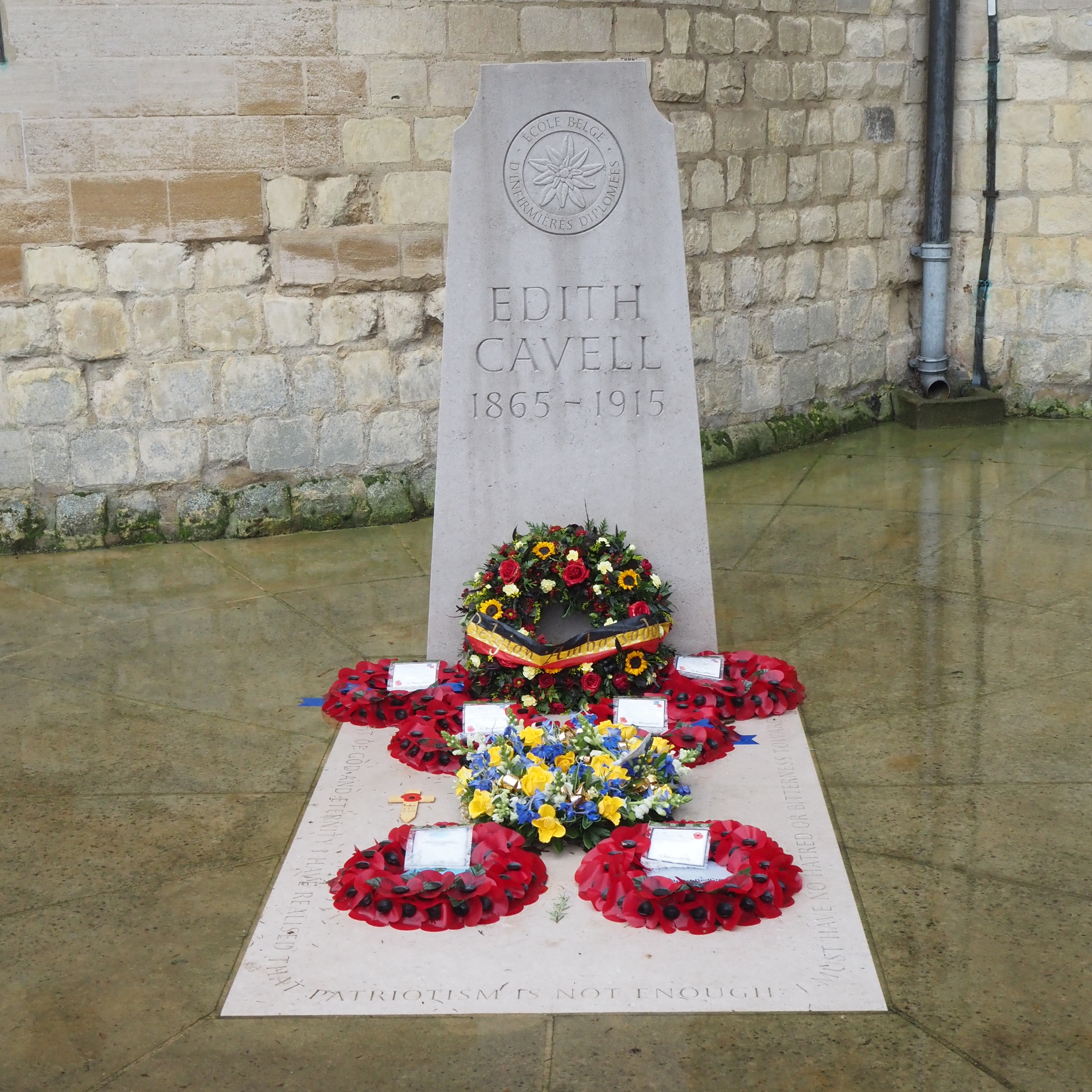
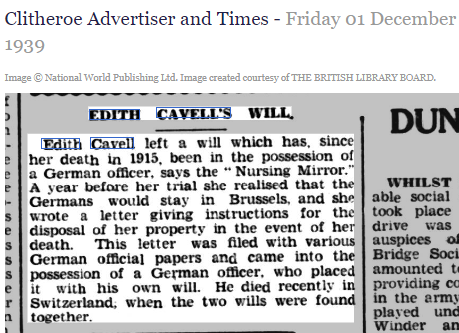
Edith‘s father Frederick CAVELL was born on 10 August 1824, his parents were John and Margaret (Scott). He married Louisa Sophia WARMING on 1 June 1864. They had four children Edith being the eldest:
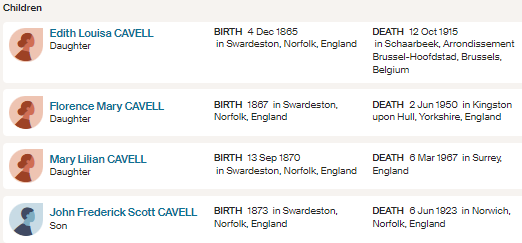

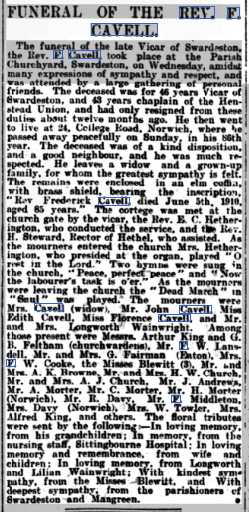
He died on 5 June 1910 in Norwich, Norfolk, having lived a long life of 85 years, and was buried in Swardeston, Norfolk. His death/funeral was reported in the Norfolk News – Saturday 11 June 1910.
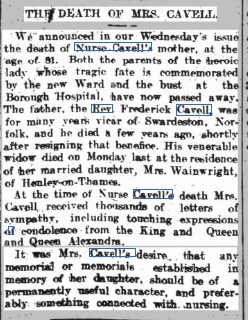
Louisa Sophia (WARMING) died on 17 June 1918 at the home of her daughter and son-in-law Mary Lilian and William Wainwright in Henley on Thames, Oxfordshire, this report by Birkenhead News – Saturday 22 June 1918. Sadly she never got to see her daughter Edith buried back in Norfolk.
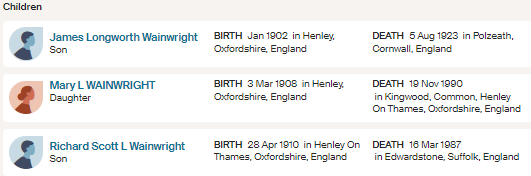
Mary Lilian CAVELL was born on 13 September 1870 in Swardeston, Norfolk, she married William Longworth WAINWRIGHT (1868-1956) on 25 August 1898 in Ore, Sussex. They had three children:
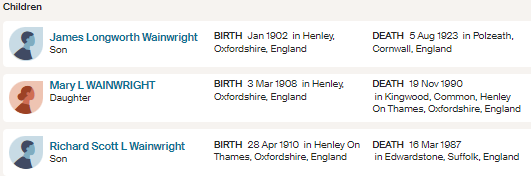
Mary Lilian, known as Lilian died on 6 March 1967 in Surrey at the age of 96. The couple’s daughter Mary Longworth married Lionel Horace Kent in 1930 but I’ve not found any children of the couple, and the youngest child Richard Scott Longworth I believe married but there are a couple of possibilities so I would need certificates to confirm (more later). As you can see from the dates above their eldest son James died tragically on 5 August of 1923 in Polzeath, Cornwall. Here’s the small newspaper report of his death by drowning:
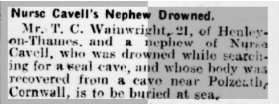
James L Wainwright Drowned: Published: London Daily Chronicle – Wednesday 15 August 1923
James’s death happened just 8 weeks after Mary Lilian’s youngest brother John Frederick Scott Cavell had died unexpectedly at the age of 51 on 6 June 1923.
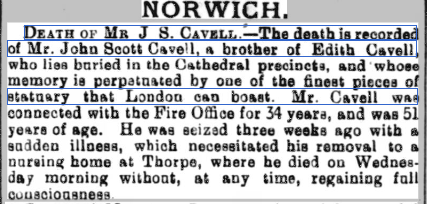
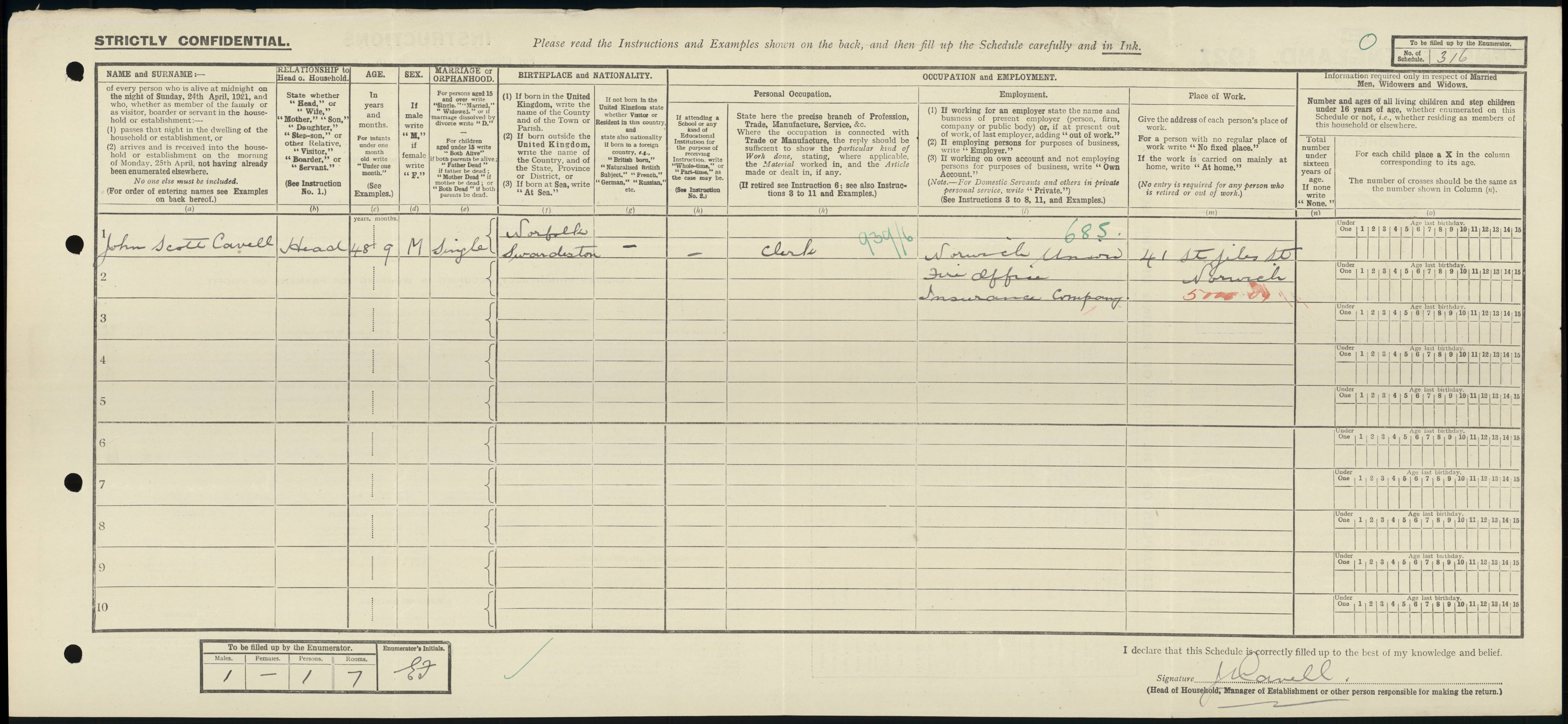
John Frederick Scott Cavell‘s death, reported by Diss Express – Friday 08 June 1923. Below here on the 1921 census, as you can see he never married. He worked for the Norwich Union Insurance Company, fire office as a Clerk.
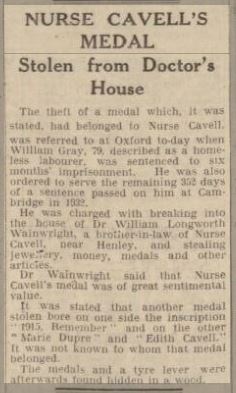
Dr William Longworth Wainwright was a surgeon at St Thomas’ Hospital. In the 1930s, following his retirement, the couple moved to Crix Farm, Hatfield Peverel, Essex until William Wainwright’s death in 1956. It was there in February 1935 that the couple’s house was burgled and Edith’s medal was among the items taken, thankfully it was recovered!
Dr William L. Wainwright obviously served in the Home Guard during WW2, because in 1944 he was awarded the OBE for gallantry as a military non-combatant.
The citation reads: Captain William Longworth Wainwright, M.B., B.S., M.R.C.S., L.R.G.P., Home Guard.
On 8 May 1944, Captain Wainwright, who is 76 years of age, displayed bravery, initiative and fortitude when a small house containing explosives caught fire a short distance away from his garden. The wooden sides of the house
quickly caught fire. Realizing that he could not prevent the fire from spreading, Captain Wainwright entered
the building and at great risk was successful in carrying out a considerable quantity of explosives. Whilst
doing this the roof collapsed and Captain Wainwright sustained serious burns about the face, neck, hand
and arms. After having his burns dressed he insisted on returning to the scene giving all the assistance he
possibly could until he was satisfied that nothing further could be done to save the building any more of its
contents.
Mary Lilian moved to Pleyhill, Hatfield Peveral, Essex after her husband died, maybe a smaller property? It wasn’t until I added the 1939 register details to her children that I found that her youngest son Richard Scott Longworth Wainwright‘s home was Pleyhill, a Fruit Farm and he was married to Barbara E L (Bristow)and was a Fruit Grower, so it’s nice to know that Mary Lilian lived with them. They had married in 1934, and I believe they had two children. Her probate record says that was her home, but she died in Wilmar Lodge Nursing Home at Ewell in Surrey on 6 March 1967. Florence Mary Cavell, her older sister who had never married but had also chosen a career in Nursing as her sister Edith had done died 2 June 1950 in Hull, Yorkshire. She passed on all the family heirlooms relating to their sister Edith to Mary Lilian Wainwright that last surviving sibling.
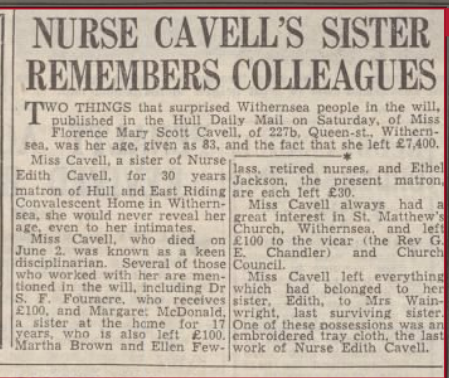
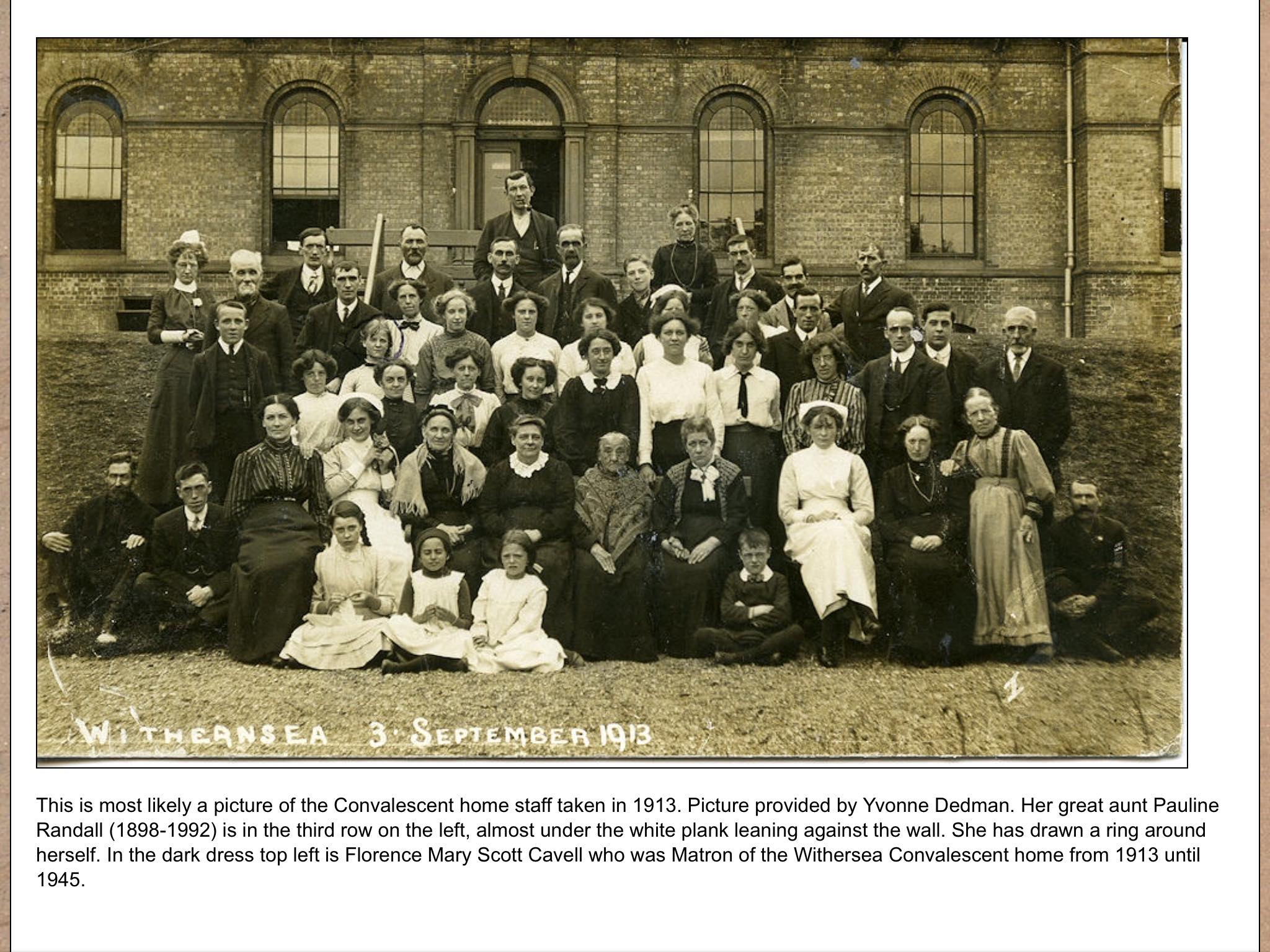
Hull Daily Mail – Monday 25 September 1950. Left to sister who was living at Mrs Wainwright of Little Crix, Hatfield Peverel. I came across this super photo of Florence in her role as Matron on the Withensea Website: Withensea Group Photos
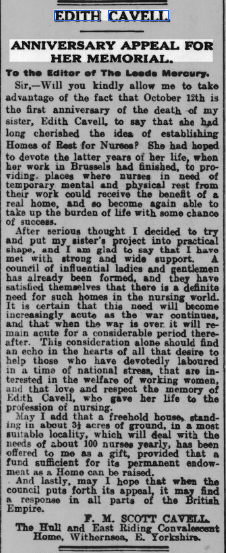
Florence had written this letter below to the newspapers in 1916. Leeds Mercury – Thursday 12 October 1916.

This is the last photo for this Chapter and it’s such a lovely one of mother and daughter. Emma was Edith Cavell’s grandmother. Emma RANKING was born in April 1843 in Wandsworth, Surrey, her parents were John and Rosa. She died in October 1927 in Guildford, Surrey, at the age of 84, and was buried in Shackleford, Surrey. She would have known about all the tradgedies in the family and all about her grandaughter Edith’s death.
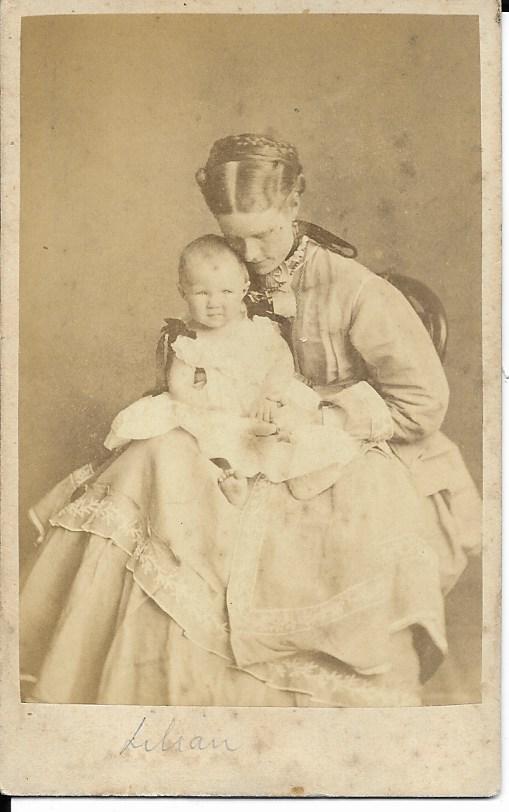
Lilian Maud WAINWRIGHT was born on 3 December 1872 in Wandsworth, Surrey. She married Sydney Duke TURNER on 6 June 1901 in Lambeth, Surrey. They had four children that I have found so far. She died on 28 May 1972 in Ditchling, Sussex, at the age of 99.
The Ranking family photos and their connections will feature in the next Chapter of the Holworth Collection.
Till next time then……

