Just over two years ago, I helped my friend Linda get her blog started. Since then, we have co-produced many blogs.
She has a One Place Study of the village of Billinghay and Anwick in Lincolnshire and wanted to share her research with others who had connections to the area.
It has resulted in the two of us teaming up to create some really interesting blogs on her site. Here’s the direct link:
Linda conducts most of the local research as she knows the area so well. She and many of her ancestors have lived and worked there for generations. I edit and present all of Linda’s hard work. We make a great team.
Having a research partner is incredibly rewarding because our strong connection allows us to exchange different perspectives, challenge each other’s ideas, and ultimately achieve better results together.
It also makes research more fun, and although I’ve never been there, I’ve certainly got to know the Billinghay area in Lincolnshire and its people fairly well.
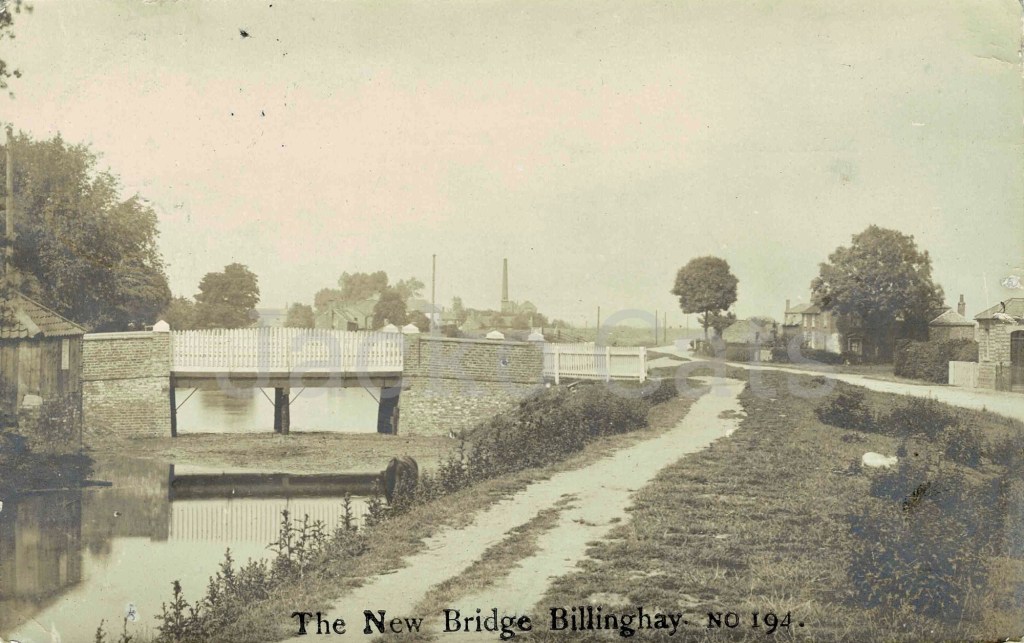
Linda has acquired many old postcards from the area that she has written blogs about; we both keep an eye out for ones for sale online and at postcard fairs. This recent find online was numbered 194 by the Photographer B. Smith.
Linda found out that the Photographer’s name was Benjamin Smith and that on the 1901 census he was living in Heckington, Lincolnshire.
So while I was interested in finding out more about the Photographer, Benjamin and his family, we decided to split the research.
Linda is concentrating her efforts on the writer, and the area on the postcard. While I concentrated my efforts on Benjamin Smith and his family.
What I’ve found is so interesting that I thought it deserved a blog of its own.
Family History of Benjamin Smith.
The story of the Smith and Robinson families begins in the rolling Hampshire countryside and stretches across Victorian England into the modern age, touching Winchester, London, Lincolnshire, Windsor, and Middlesex. It is a story of ordinary people whose lives were shaped by family devotion, hard work, loss, and quiet perseverance.
I’m starting my story with William Smith, born on 6 July 1829 in the Hampshire village of Tichborne. His parents were Benjamin Smith and Mary Anne Marsh. William’s early life was marked by hardship. When he was only eight years old, his father died in 1837, leaving the family to carry on without him. Despite this loss, William remained rooted in Hampshire throughout his life.
In March 1856, William married Frances Guy, known affectionately as Fanny. Together, they built a family during the great age of Victorian expansion. William worked steadily throughout his life, at various times employed as a porter, a traveller, and eventually a grocer’s assistant before retiring. Their home moved between Tichborne, Winchester, and Holt, but Hampshire always remained their anchor.
Their first child, Lucy Emily Smith, was born in Winchester in October 1857. A son, Edward, followed in 1859, and, several years later, in January 1865, another son, Benjamin Smith, arrived.
In July 1869, new life was brought with the birth of their youngest child, Arthur Smith.
The family’s happiness was shadowed by sorrow the following year when young Edward died in Winchester in March 1870 at only ten years old.
I wanted to know the cause of death, so I ordered the digital death record for Edward; all I got was this partial image. The death was registered on 30 April 1870. I have reported it as an error to the GRO, so hopefully it will be corrected, or I will get a refund.

Benjamin grew up in Winchester and Holt during the later Victorian years. Census records show him living with his parents as a child, though in 1881, at age sixteen, he was described as an “invalid,” hinting at illness or disability during his youth. Nevertheless, Benjamin later forged an independent life far from Hampshire.
Meanwhile, his older sister Lucy had married Henry Vincent Seymour Bailey on 15 June 1876 at St Margaret’s, Westminster.
Henry worked in domestic service as his parents had before him. In 1861, he and his younger sister Maud were being looked after by another couple, a Sailmaker and his wife. While their father Henry was working in Westminster as an under butler for William Tatton, created 1st Baron Egerton in 1859. While their mother, Martha, was a cook for a slate quarry owner.
In 1881, Henry V S Bailey was now 24 years old, was the Head Footman for Queen Victoria and her family, living in the Royal Mews attached to Buckingham Palace. At the time of the 1891 census (5 April 2026), Queen Victoria was on an extended health and rest holiday on the French Riviera, mostly in the town of Grasse. She stayed at the Grand Hotel there from late March to late April 1891. So it’s likely that Henry was with the royal household there. I can only find his wife and children in England.
He later became a King’s Messenger, still attached to the Royal Household. Lucy and Henry’s marriage carried the family from Hampshire into London society’s working world. They raised six children across Winchester, Pimlico, and Windsor: Charlotte Maud, Henry, William, Arthur Benjamin, Ernest, and Francis Vincent Bailey.
Tragedy struck when Lucy died in March 1899 at only forty-one years old, leaving Henry a widower with children to support. He never remarried. Census records decades later still describe him as widowed, living in Battersea and later London, proudly noted as a retired King’s Messenger. He lived long enough to see the outbreak of the Second World War before dying in October 1939 at age eighty-two.
Benjamin Smith’s own path took him north to Lincolnshire from Hampshire. By 1891, he was living in Sleaford with relatives, perhaps drawn there by work or family connections.
He met Annie Harriet Robinson, born in Sleaford on 12 January 1869, to Thomas Robinson and Ann Harper. Annie grew up in a large Lincolnshire family surrounded by siblings, including Charles Henry, Eva Mary, May, George, Walter Richard, Martha Ann, Susanna, and Harper Thomas Robinson.

Benjamin and Annie married in April 1897 in Sleaford. Their marriage united Hampshire roots with Lincolnshire traditions, and together they established a life in Heckington, a village near Sleaford.
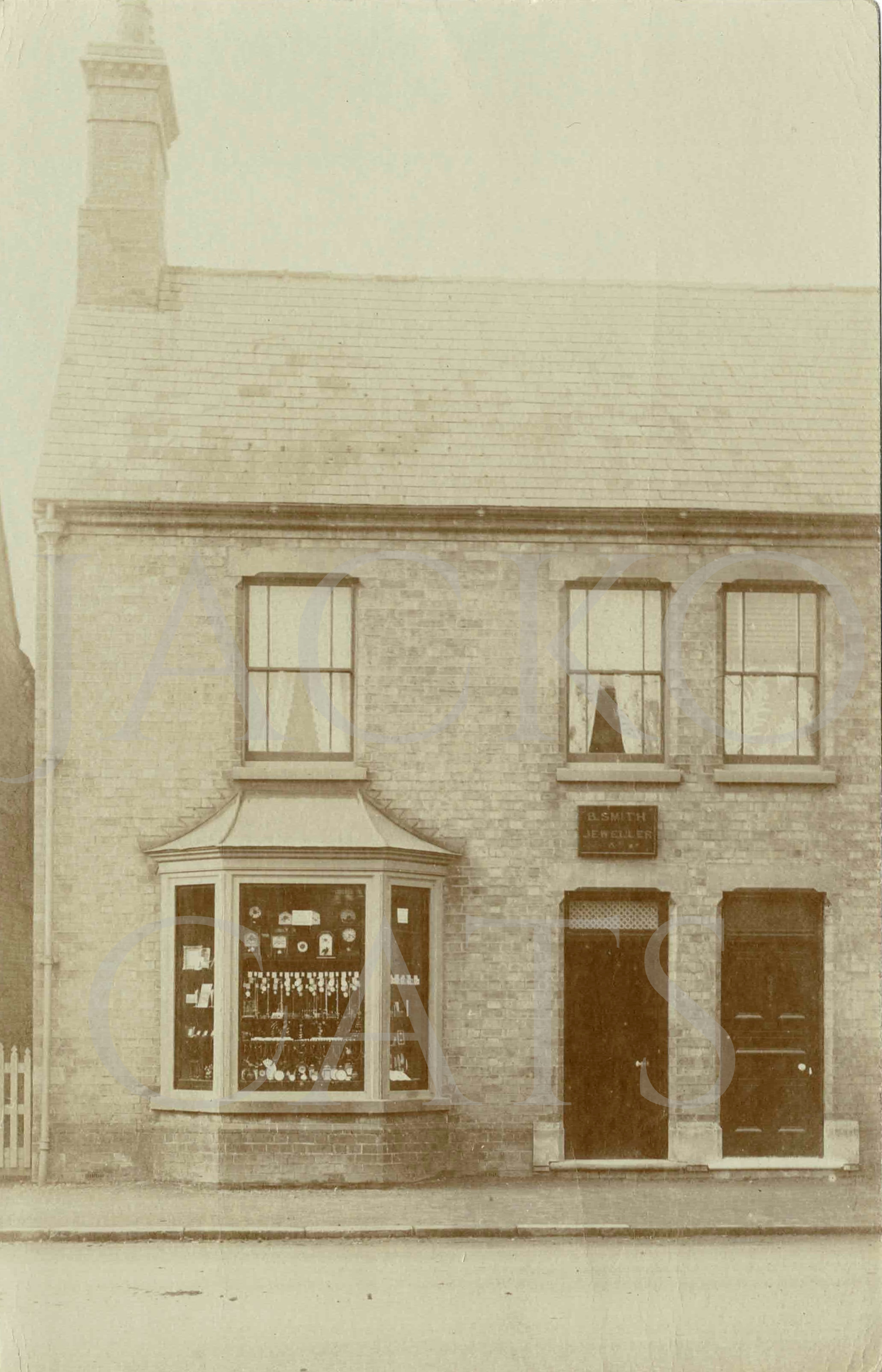
Benjamin became a jeweller, stationer, photographer, and dealer in fancy goods, occupations that suggest a skilled and adaptable businessman serving the needs of a growing rural community.
Annie worked alongside him, helping in the business according to the 1911 census. Their shop would likely have sold stationery, small luxury items, photographs and postcards taken by Benjamin of the local people and area. He likely would have done jewellery repairs too, the sort of establishment that formed the centre of many small English villages.
On 14 October 1900, their only child, Francis Benjamin Smith, was born in Heckington, Lincolnshire. He grew up surrounded by the family business and the close-knit rhythms of village life.
Census records show Francis attending school in 1911 and later working in Lincolnshire in electrical meter services by 1921, part of a new generation entering the modern technological world of electricity and utilities.
The early twentieth century brought many farewells to the older generation. Annie lost her mother in 1906 and her father in 1910. Benjamin’s father William died in Winchester in November 1911 at the age of eighty-two, after a long life spanning from the reign of George IV into that of George V. Benjamin’s mother, Frances, followed in 1913.
As England changed through war and industrial progress, the Smith family also changed. Sometime between 1921 and 1930, Benjamin retired and moved with his wife and son to Acton in Middlesex.
Was it to enable their son, Francis Benjamin, to have better work opportunities?
Benjamin himself died on 24 November 1930 in Acton, Middlesex, aged sixty-five. Probate was granted in London the following month. He was living at 11a Bedford Corner, Acton.

Now widowed, Annie returned to a quieter domestic life. The 1939 Register describes her back in her home county of Lincolnshire, carrying out unpaid domestic duties.
Yet even in old age, more sorrow arrived.
Her son Francis, died very suddenly in Acton at 56 Wavendon Avenue, Brentford, on Wednesday, 10 July 1940, at only thirty-nine years old, unmarried and without children.
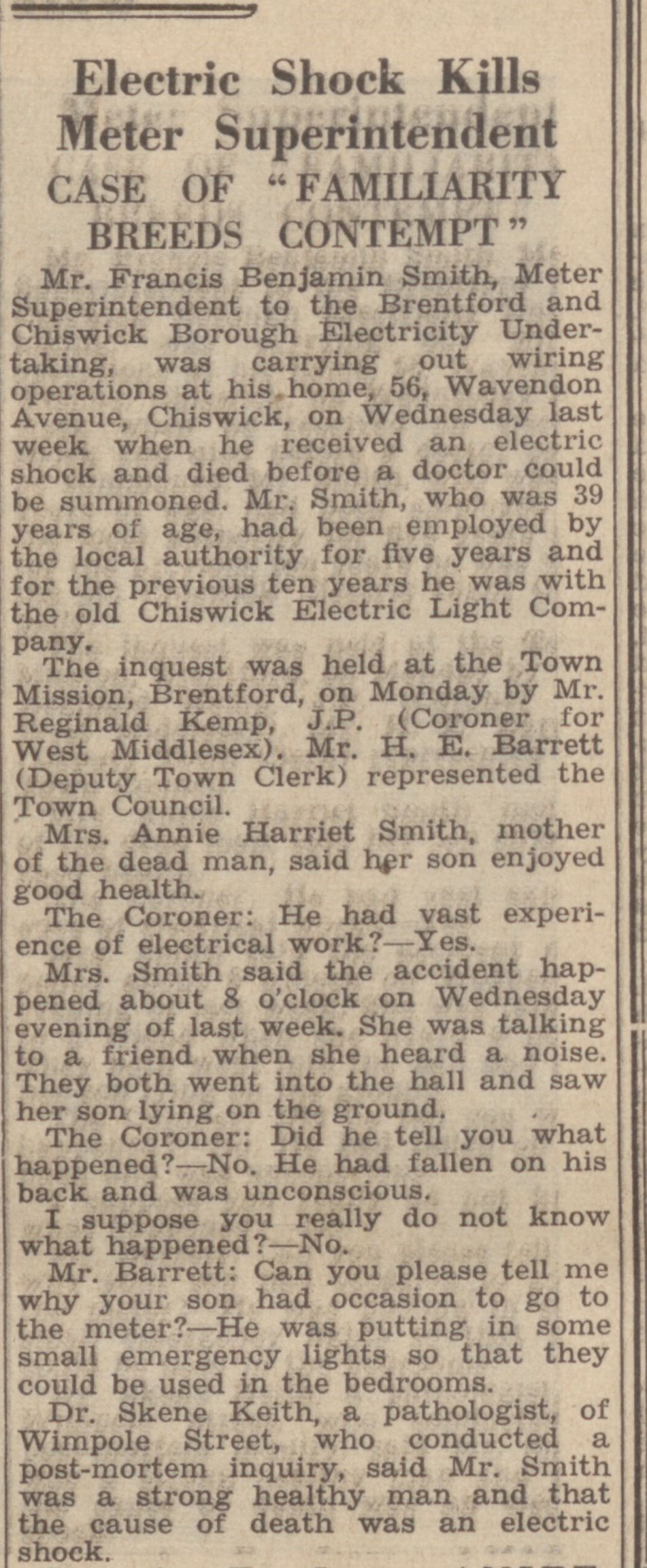
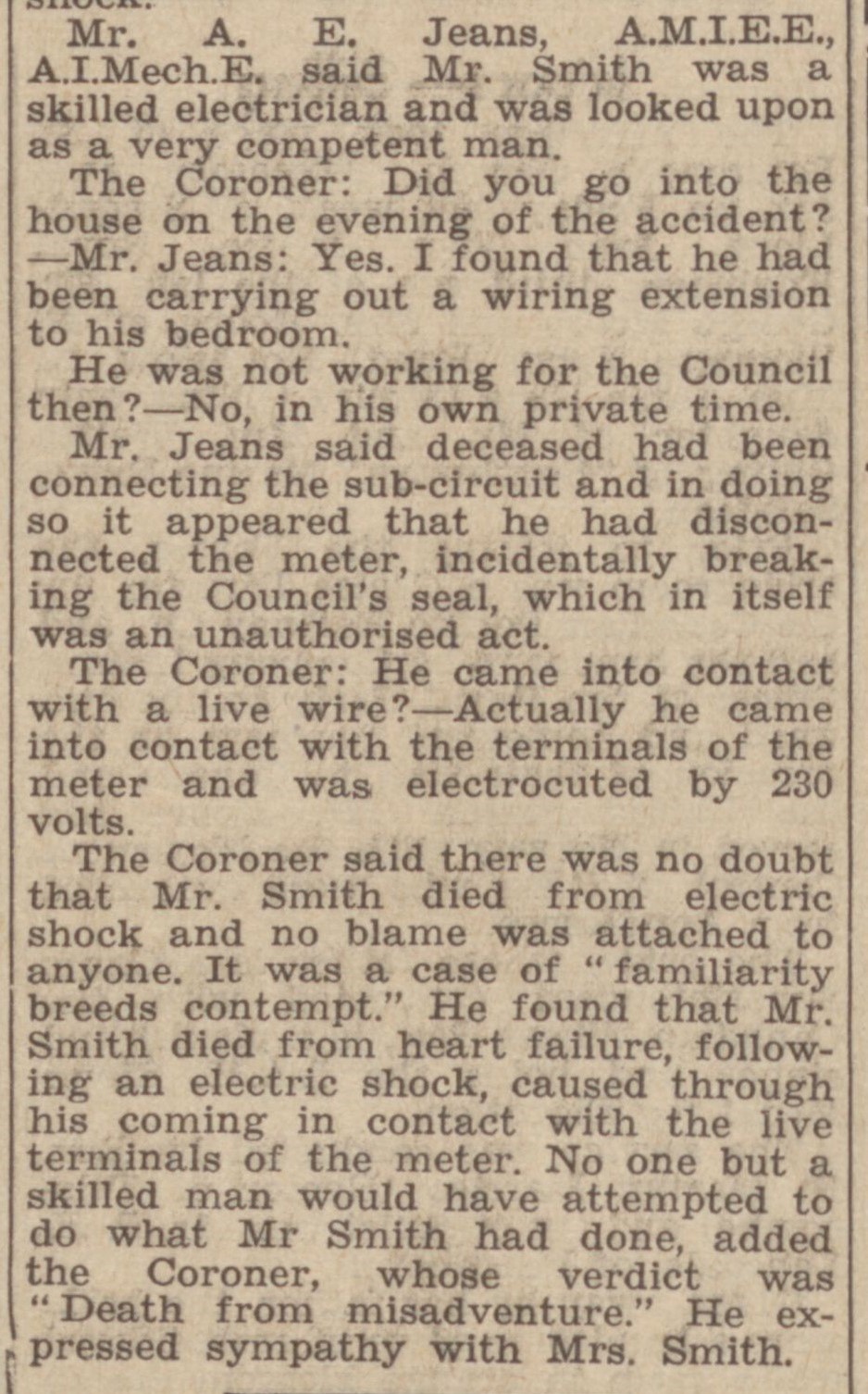
His death came during the difficult early months of the Second World War. Annie also outlived many of her siblings, including George, Walter Richard, May, Susanna, and Eva Mary, whose life had eventually carried her across the Atlantic to Toronto, Canada.
Finally, in January 1951, Annie Harriet Robinson Smith died in Sleaford, Lincolnshire, the town where her story had begun eighty-two years earlier.
Benjamin Smith’s family tree on Ancestry: Benjamin Smith Family Tree
Across nearly 125 years, the Smith and Robinson families experienced the great transitions of nineteenth and twentieth-century Britain. Though they were not famous people, their story reflects the enduring strength of ordinary families, people who worked hard, cared for one another, endured loss, and quietly built lives that connected Hampshire, Lincolnshire, London, Berkshire, and beyond.
You can contact me either by commenting here or via email at lynnswaffles@gmail.com

