Another of my Twitter puzzle photos I posted for VEDay.
UPDATE. Please see the comment by Robert dated 18.7.23 with more detailed information about this old photo, thanks Robert.
I asked: I know nothing but the names on the back, can anyone help please?
What regiment? Can anyone ID their uniforms?
I would love to know who Charley is! Not researched.


1) Are they Street Lamplighters? Note the interesting sticks. Oh, wait!! They are Artillerymen. Those are igniters, maybe ceremonial. 2) This might help:
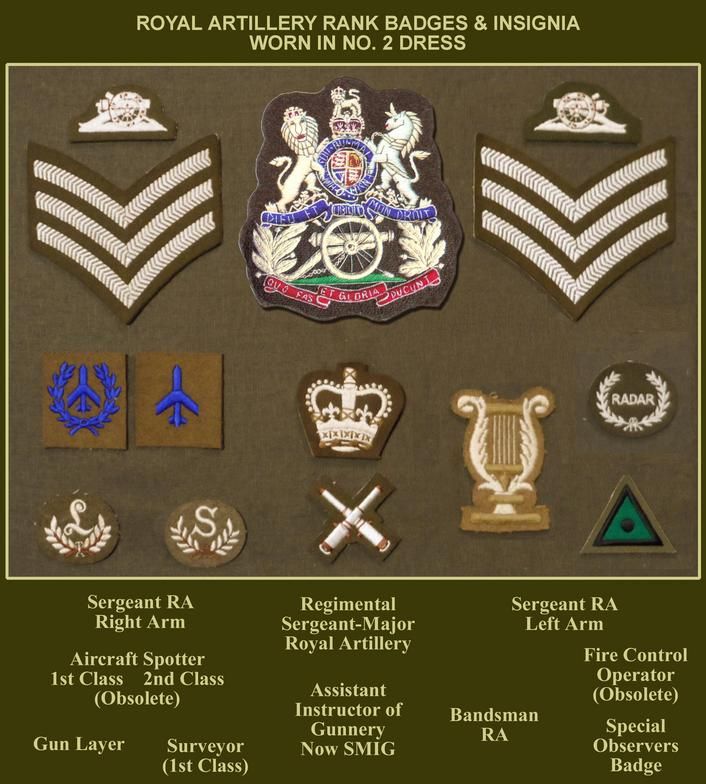
3) Yes they have the cross cannons on their jackets. 4) They appear to be members of the British Army Royal Artillery. The sticks are probably some sort of ceremonial fuse lighter. The cuff ranks and fusilier collar badges also point that way. 5) What’s amazing is my Granddad was in that corps. 6) You could contact the Royal Artillery for more information. You have a unit, ranks, and surnames. They would probably love the distraction. Great idea! I have done just that, so will let you all know if they are able to help, have had a quick reply from them to say my email has been passed to the relevant department so fingers crossed.
UPDATE: Had a lovely email from the Royal Artillery Museum, huge thanks to them and their volunteers! ‘Thank you for your e-mail. I asked one of my volunteers (kindly still working from home) to have a look at this, as he is better at uniform identification than I am. He says: The crown above crossed guns on the left sleeve indicates that this three Royal Artillery (RA) Sergeant Majors are members of the Technical Training Cadre RA established in 1860 – now known as Sergeant Major Instructors in Gunnery (SMIG). They are wearing RA collar badges. None of them is wearing any campaign medals.
They are wearing No1 Temperate Ceremonial uniform with shoulder epaulettes, their rank and lack of campaign medals, as well as hairstyles, indicate that the photo was taken either between 1900 and 1914 (probable) or the 1930s (possible).
I hope that this helps a little‘.
7) Almost certainly Artillery. The chap on the right has a gun layers proficiency badge, however, it looks like the photo is in reverse as it’s back to front, hold it to a mirror and it should look correct. They have gunnery arm badges. Can you read initials on their shoulder titles? (Unfortunately not) 8) Definitely Artillery – Driver and Gunner are Artillery ranks equivalent to Private. Looking at the men I would guess that this is the late 19th century. The names (even DORMER which is very much a Berks/Bucks surname) are just too common to work with. 9) The photographer is bothering me. It clearly says D M Sutta & Co- but I can’t find him… Not an English name so could this have been taken overseas? (My thoughts too) 10) Looks like Royal Artillery. Gun Layer badge with wreath and crossed canons with a crown QMS Instructor of gunnery.
Here’s some of the regiment’s history from the National Army Museum
Huge thanks to Twitter followers: @PaulSuttonKing @ShuttleAlmanac @UrbanSpaceMan64 @Dave_Lifelines @Hert_FHS
Till next time then………
 lynnswaffles.com
Hi Lynn I hope you soon receive some information for these very handsome men. The Military is always a fascinating subject. Hope all is well with you. Stay safe.
LikeLiked by 1 person
Was good to have an update from the Museum, did you see it towards the end of the blog. Seems a bit impossible to try & trace the men individually, would need to go through their archives I think Rita🤔xx
LikeLike
Yes I agree it would be hard going to find all the info to do with everyone , good luck anyway Enjoy your weekend.
LikeLiked by 1 person
I note that these artillerymen are booted and spurred which suggests to me that they are members of the Royal Horse Artillery. So would their ‘sticks’ be riding whips? I haven’t heard of ceremonial fuse lighters….
LikeLiked by 1 person
Thank you once again Blair, I really appreciate your help.
Lynn
LikeLike
Lynn I’m very sad to say that the information given to you by the Royal Artillery Museum although no doubt well meant, is inaccurate. As mentioned by some of your contributors the three men are Royal Horse Artillery and we can tell this from the small ball shaped buttons of their blue serge frocks. The other features of riding whips, spurs and tight fitting pantaloons would be worn by other mounted artillerymen such as field artillery, but the buttons were unique and so a key identifier. The asp d the museum got so badly wrong is referring to them as sergeant majors. They are actually simply gunners (the basic rank like ‘private’) but the confusion has been caused by what were then gunnery prize badges of crossed gun barrels surmounted by a crown. Much later these same badges but slightly larger were used to distinguish specialist instructors who were indeed sergeant majors, but not back then. Gunnery prize badges had been a way to encourage competition and increased standards of gunnery and they were awarded in incremental, ascending steps, according to 1st, 2nd and 3rd prize. The crossed barrels with crown over comprised the 1st prize and indicated that all three men were in the winning battery. It’s as simple as that. The date would be late 1890s to turn of century, or around the time of the second Anglo/Boer War.
LikeLiked by 1 person
Good Morning Robert. Thank you so very much for contacting me, it’s really kind of you. Good to have the correct information about this old photo. I always find it great that everyone joins in over time and through their experience and knowledge we usually get there in the end, so no worries. Kind Regards Lynn
LikeLike
I’m pleased to help Lynn. The inscription on the back is significant too. It refers to ‘Gr’ Dormer and ‘Dr’ Sutcliffe. The prefixes refer to Gunner and Driver. Nowadays Gnr and Dvr are used but two letters were used as an alternative at that time. Both were the equivalent of Private in other parts of the army. The gunner as described manned the guns, and the driver rode and steered the gun and its caisson (aka limber) when on the move by riding astride one of the team of six draught horses drawing it along. When the gun was in action they looked after the horses, but also the ammunition contained in the caisson/limber.
There were so many mistakes in the comments from the Royal Artillery Museum that it was embarrassing. The blue serge uniforms the men are wearing is not ‘No1 Blues Ceremonial’, which is a modern construct, but the working undress uniform used walking out of the unit lines and for routine duties around barracks. The dress uniform of the Royal Horse Artillery was far more elaborate, only waist length and embellished with yellow or gold (according to rank) horizontal rows of round cord decoration known as frogging. The same dress uniform is still worn today by the King’s Troop of that regiment responsible for firing gun salutes in London. They featured in the late Queen’s funeral carrying out that duty and you might perhaps have seen them on TV. There were always batteries of such light artillery in India as part of the British garrison at that time with the role of supporting the cavalry.
Yours sincerely,
Robert
LikeLiked by 1 person
Hi Robert. Huge thanks for lots more information!
I didn’t know I could but I can ‘edit’ a comment & so have done yours & then deleted your last comment. Always learning. Best Wishes Lynn
LikeLike
Thank you for taking the trouble to edit, Lynn, I appreciate it, especially because keeping the information as accurate as possible is important to me.
Best wishes,
Robert
LikeLiked by 1 person
I have just put an update at the beginning of the blog Robert, thank you!
LikeLike