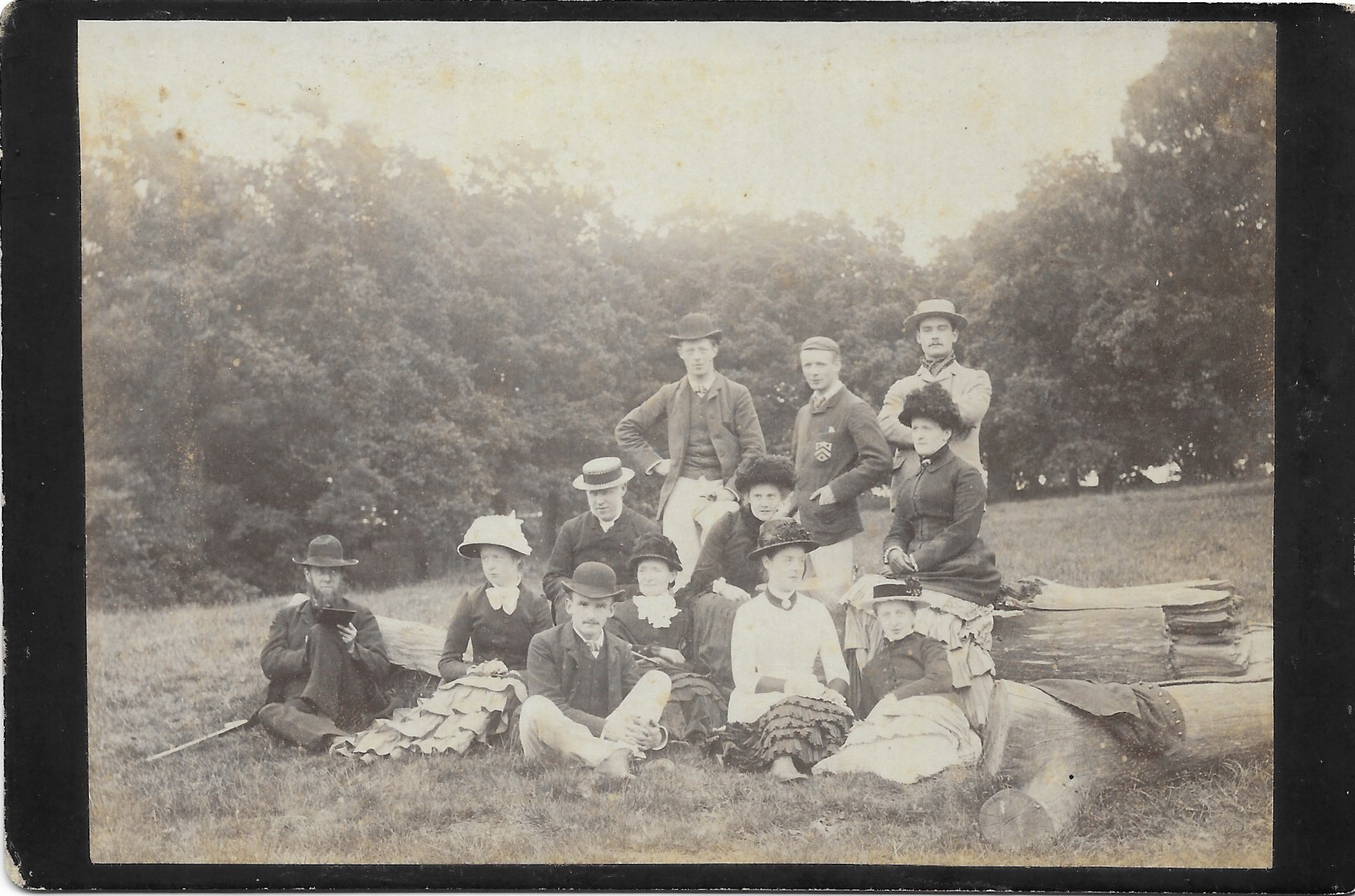
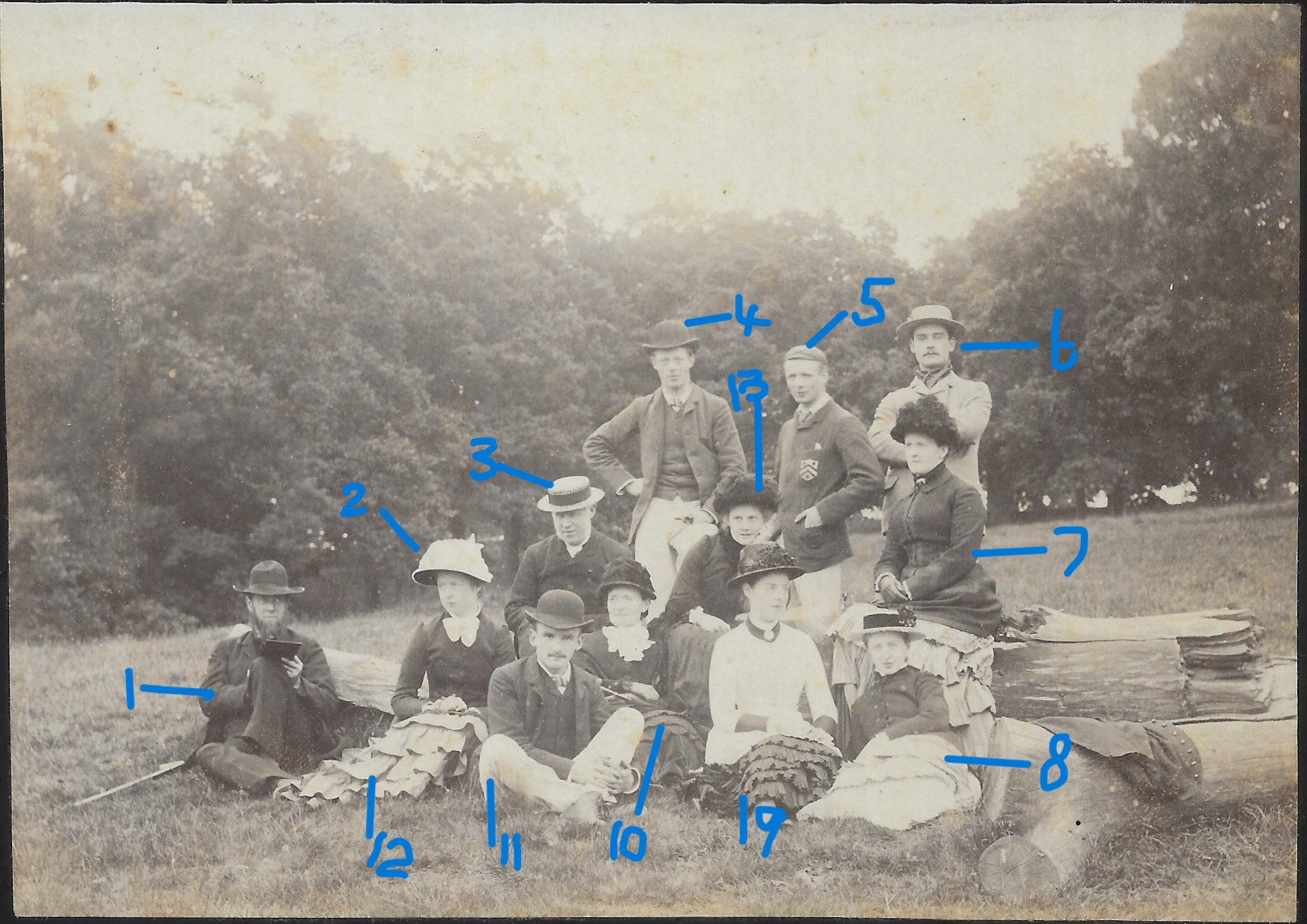
I love Victorian era group photos, especially ones like this, when they’d all met up to have a picnic, and the amateur photographer of the family captures that moment in time when they are all together. They could never have imagined that almost 140 years later, I would be sharing this moment with you.
A descendant who was also the family archivist, and very likely an amateur photographer himself, added the label on the back with all the information that he had been told. Just an absolute gem in every way!
FROM
C. E. T. COOPER
34 BELLE WALK,
MOSELEY,
BIRMINGHAM, 13. 4/8/54 (Date of writing)
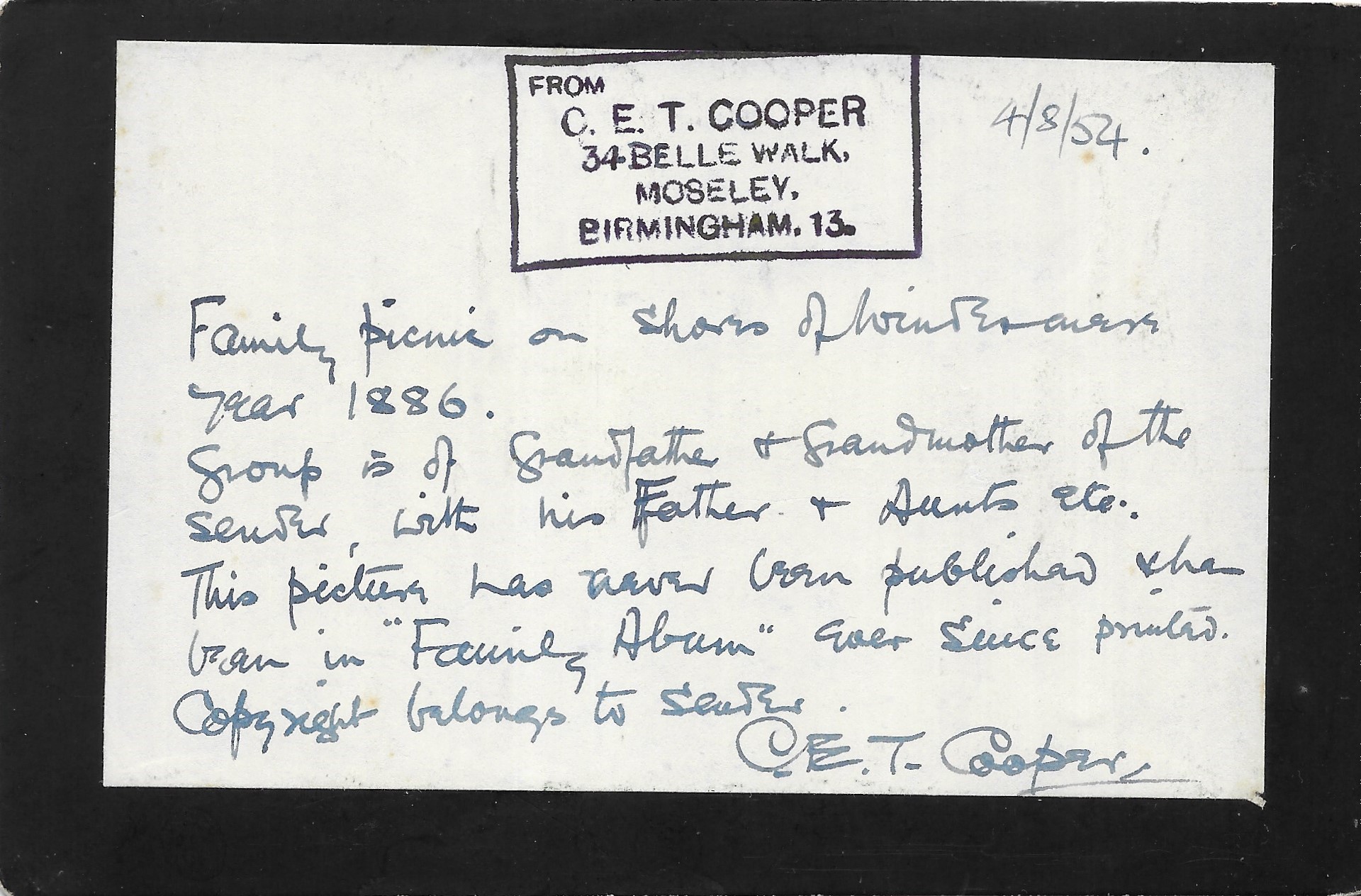
“Family picnic on shores of Windermere
year 1886.
Group is of Grandfather & Grandmother of the sender, with his Father & Aunts etc.
This picture has never been published other
than in “Family Album” ever since printed.
Copyright belongs to sender. C.E.T. Cooper”.
This information was from the seller in his description: The sender of the card was Charles Elliot Thomas Cooper, and he refers to the photo as including his father, grandparents, and aunts.
His father was Vicar Thomas Cooper, born at Windermere in 1864, and his Grandparents were Thomas Cooper and Anne Arkwright.
This photo was taken before Charles was born and before his parents were married.
I began a tree on Ancestry for the family with this information. Charles’s Grandfather was Rev Thomas John Cooper, 1837-1911, and Grandmother was Anne Eliza Arkwright, 1838-1902. Once again, the British Newspaper Archives on Find My Past were invaluable for family history information about the couple. They were married on 26 June 1861.

Thomas John Cooper, MA (Oxon), was educated at the University of Oxford and held several clerical titles. He served as an honorary canon of Carlisle Cathedral and later as the vicar of St Paul’s Church in Grange-over-Sands. He was the vicar from 1888 until his retirement in 1907. In addition to his role as vicar, he also served as the rural dean of Cartmel and acted as a surrogate, a church officer with delegated legal responsibilities. The previous vicar (incumbent) of St Paul’s, Grange-over-Sands was Rev Canon Henry Robert Smith, who served 1858–1888.
Thomas and Anne.
On 26 May 1837, in the Suffolk village of Brantham, Thomas John Cooper was born into a farming family, the son of Thomas and Margaret Frances, who lived at Braham Hall,
Brantham Hill, Brantham, Manningtree.
Just one year later, on 15 June 1838, Anne Eliza Arkwright was born in Preston, Lancashire, to Richard Arkwright and Elizabeth Smith. Though they began life in different counties, Thomas in the fields of Suffolk and Anne in the growing town of Preston, their lives would one day become deeply intertwined.
Anne’s early years were marked by loss. When she was just four years old, her mother Elizabeth died in 1842, leaving a lasting shadow over her childhood. By 1851, Anne was living in Lytham, growing up in Lancashire, shaped by both resilience and family support. Meanwhile, Thomas was raised in a more rural stability, his upbringing grounded in faith, which would later guide his path into the church.
Their story truly began in 1861. Anne, aged 23, and Thomas, 24, were married on 26 June that year in Ulverston, near Cartmel, in Lancashire. It was the beginning of a partnership that would span four decades and form the heart of a large, lively Victorian family.
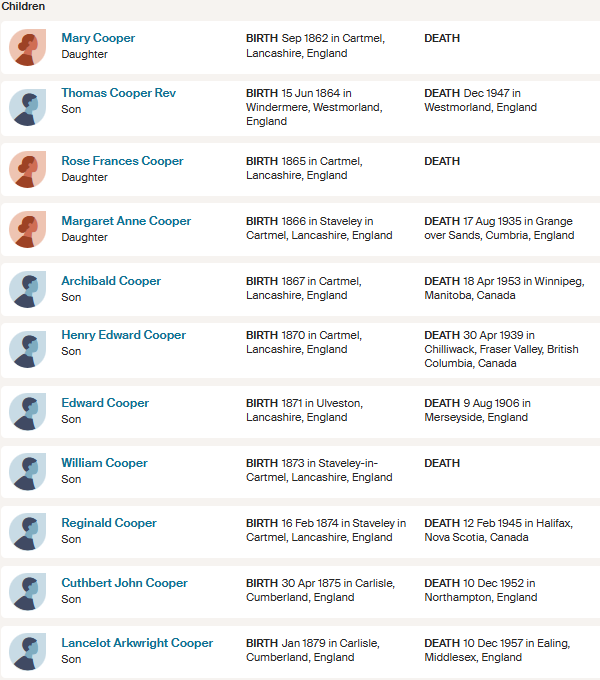
They settled in the Cartmel area, where their first child, Mary, was born in September 1862. Over the next sixteen years, Anne gave birth to ten more children: Thomas, Rose Frances, Margaret Anne, Archibald, Henry Edward, Edward, William, Reginald, Cuthbert John, and Lancelot Arkwright. Eleven children in all, their household must have been filled with constant activity, children’s voices, daily routines, and the steady work of family life.
As Thomas pursued his vocation in the Church, becoming Vicar of St Cuthbert’s in Cumberland, Anne took on the equally demanding role of a vicar’s wife. Together, they moved where duty called, Cartmel, Staveley, Ulverston, and Carlisle, before later returning to Lancashire. Anne managed the home through every move, raising their children and supporting Thomas’s work in the parish.
By 1881, they were living in Cumberland, where Thomas served his parish, and Anne was recorded simply as “Vicar’s Wife”, a title that understated the immense work she carried daily. By 1891, Anne spent time back in Suffolk at Crowfield, perhaps reconnecting with extended family, while still very much the centre of her growing family network.
Their later years brought both reflection and sorrow. In 1899, Thomas lost his sister. Then, in 1902, after 41 years of marriage, Anne passed away in Ulverston at the age of 64. Her death marked the end of an era, the heart of the household gone after a lifetime of devotion to her husband and children.
Thomas lived on for several more years, but not without further loss. In 1906, their son Edward died at just 35. For a man who had once presided over a home of thirteen, these later years must have felt quieter, marked by memory as much as presence.
On 25 January 1911, Thomas John Cooper died in Lancashire at the age of 73. Probate was granted later that year in London, closing the chapter on a life of service, faith, and family.
Together, Thomas and Anne’s story is one of endurance and partnership. Their legacy lived on not only in records and dates but in the generations that followed, a testament to a Victorian family shaped by love, duty, and resilience.
Here are their eleven children.
Rev Thomas Cooper, and Lucy Mary Elliot.
Thomas Cooper was born on 15 June 1864 in Windermere, Westmorland, into a large and growing family.
He grew up surrounded by siblings, in a household that seemed to welcome a new child almost every year. From Cartmel to Staveley-in-Cartmel and later Carlisle, the family moved through the landscapes of Lancashire and Cumberland. Thomas was the eldest of eleven children
By 1871, the family was settled in Staveley-in-Cartmel, and Thomas was recorded simply as “son,” one among many, but already part of a deeply rooted clerical family tradition.
At 17, on the 1881 census, Thomas’s path had begun to take shape as he was a student at Marlborough College in Wiltshire. This was a significant step, suggesting ambition, education, and the expectations placed upon the son of a clergyman.
My photograph taken of the family in 1886 in Windermere captures him just before adulthood fully took hold, a young man on the brink of building a life of his own.
Lucy Mary Elliot was born in July 1862 in Carlisle, the daughter of Dr Robert Elliot and Eliza Dobinson. Her early years were marked by both comfort and loss. Her father was already 51 when she was born, and she experienced the fragility of life early, losing a young brother in childhood.
By 1881, Lucy had moved to Kensington, London, where she lived as a scholar, an indication of education and independence. But tragedy followed her into adulthood: her father died in 1882, leaving her without him at just 20 years old.
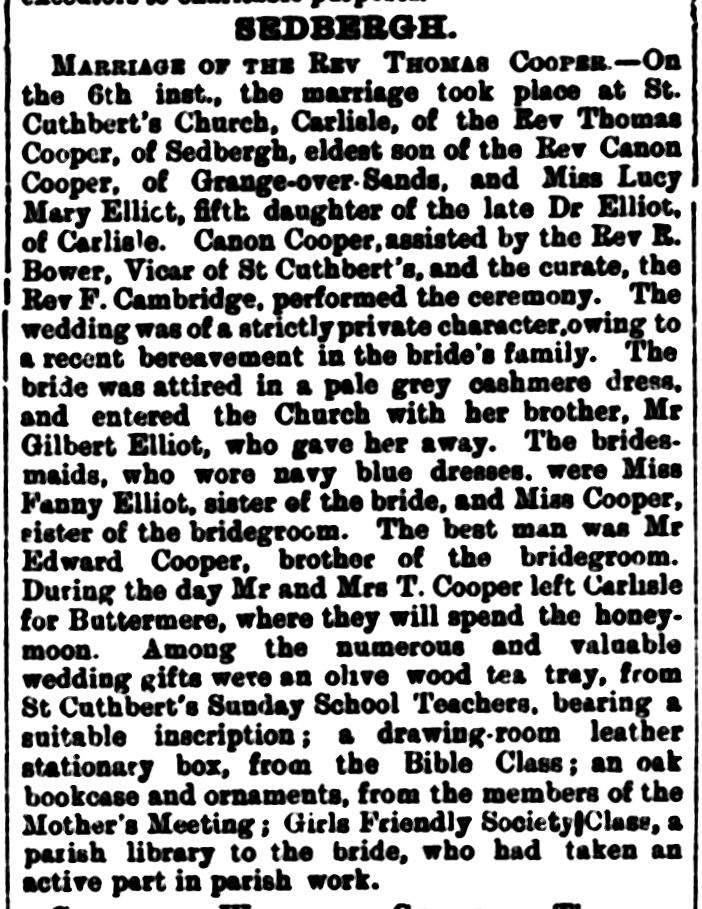
On 6 August 1889, in her hometown of Carlisle, Lucy married Thomas Cooper. He was 25; she was 27. Had she already met Thomas by the time of my photo in 1886? Their marriage marked the joining of two well-established northern families, one clerical, the other professional.
I found a report detailing their marriage in the newspaper archives:
Soon after, they began their own household.

Their first child, Dorothea Cooper, was born on 12 July 1891 in the quiet Suffolk village of Crowfield, the first child of the Reverend Thomas Cooper and Lucy Mary Elliot.
By 1911, she was a young woman of 20, living with her parents in Portland, her life still closely tied to family. But everything changed after the First World War.
In July 1919, Dorothea married Frederick William Lanchester, a man very different in background, yet equally shaped by determination and intellect. He was 51, more than twenty years her senior, and already a figure of remarkable achievement.
Frederick had been born in St John’s Wood, London, the son of an architect and a highly educated mother who taught Latin and mathematics. One of eight children, he grew up in a lively, intellectually curious household, his siblings including architects, engineers, and even a suffragette.
Though he did not shine at school in the conventional way, his mind worked differently. He later reflected that it seemed “Nature was conserving his energy.” Scholarships took him to study engineering in Southampton and London, though he never gained a formal qualification—something that mattered little compared to his natural genius.
By his early twenties, he was already inventing, patenting new ideas, and beginning the work that would make him one of Britain’s pioneering engineers. He helped found the Lanchester Motor Company, contributing to the earliest development of motor cars, and later became a leading thinker in aeronautics.
His brilliance was widely recognised:
Elected a Fellow of the Royal Society (1922)
Awarded a gold medal by the Royal Aeronautical Society (1926)
Later honoured by major engineering institutions in 1941 and 1945
After their marriage, Dorothea and Frederick first lived in Bedford Square, London, before settling into a more permanent home. In 1924, Frederick designed and built their house, Dyott End, in Moseley, Birmingham, a reflection of both his creativity and independence.
They would remain there for the rest of their lives together.
Dorothea’s role was quieter but no less important. With no children, she created a stable and supportive home, recorded in 1939 simply as carrying out “unpaid domestic duties.” Around them, however, life brought its share of sorrow. In 1928, Dorothea lost her brother Arkwright in India, and in 1935, her mother passed away.
Meanwhile, Frederick continued to work intensely, founding Lanchester Laboratories Ltd in 1925. But the strain of overwork, combined with the economic pressures of the Great Depression, led to the company’s failure in 1934. His health declined, and he was eventually diagnosed with Parkinson’s disease, along with failing eyesight, conditions that deeply frustrated a man whose life had been built on thought and invention.
Despite his struggles, Frederick was a man of many talents. He had a fine singing voice and even published poetry under a pseudonym, revealing a creative spirit beyond engineering. (The above information about Frederick, from Wikipedia).
Lucy Mary Elliot. That same year, in 1891, brought sorrow as Lucy lost her mother in Carlisle, a reminder of how closely joy and grief often lived side by side.
The family soon returned north, settling in Kendal, Westmorland, where two sons were born:
Charles Elliot Thomas in 1893, more later.
Then lastly, Arkwright Richard Cooper was born on 10 August 1895 in Kendal, Westmorland, the youngest child of the Reverend Thomas Cooper and Lucy Mary Elliot.
His early childhood was spent in Wetheral, Cumberland, where he was recorded in 1901 as a young son in the family home. By 1911, he was living with his parents in Portland, Dorset, a 16-year-old student, standing on the threshold of adulthood.
That adulthood arrived quickly. Arkwright entered military service at the outbreak of the First World War. He was serving in 1917, suggesting years shaped by the demands and hardships of war, experiences that would have marked him deeply, as they did so many of his generation.

Unlike many of his contemporaries, Arkwright never married and had no children. His life followed a quieter, more solitary path after the war, though it ultimately took him far from home.
In 1928, at the age of 33, he died in Bokahola, Titabar, Assam, India, while working for the Jorehaut Tea Company, a long way from the landscapes of Westmorland where he had been born. News of his death returned to England, and his affairs were settled later that year in Gloucester, closing the story of a life that had spanned continents but was, in years, all too brief.
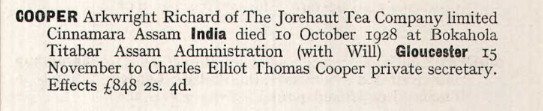
By 1901, the family was living in Wetheral, Cumberland, continuing a life that blended movement with stability, rooted always in the north of England.
The early 20th century brought both responsibility and loss. Thomas lost his mother in 1902 and his brother Edward in 1906. In 1911, his father, the Reverend, who had shaped so much of his life, also passed away.
That same year, Thomas was living in Portland, Dorset, working as a clerk. By 1921, however, he had fully stepped into his vocation, serving as a priest in the Church of England in Broughton, Lancashire.
Lucy, meanwhile, is recorded simply but meaningfully as carrying out “domestic duties,” sustaining the household that allowed Thomas to serve his parish.
The deepest sorrow of their lives came in 1928, when their son Arkwright Richard died in India at the age of 33. The distance must have made the loss even more painful, travelling slowly, grief arriving in fragments.
Lucy had already endured the deaths of siblings over the years, and now, together, they faced the unimaginable loss of a child.
By the 1930s, Thomas and Lucy had been married for over 45 years. They had lived across England, from Suffolk to Westmorland, Cumberland to Dorset, and had built a life marked by faith, family, and endurance.
Lucy died on 16 February 1935 in Stratford-upon-Avon, aged 72. At the time, Thomas was living in Birmingham, though his lifelong ties to Westmorland remained strong.
Her death marked the end of a long partnership that had weathered both quiet years and profound loss.

In his later years, Thomas saw the passing of more siblings, some as far away as Canada, a reminder of how widely the Cooper family had spread.
He died in October 1947 in Westmorland, aged 83 (not confirmed but most likely), returning, in a sense, to the county where his life had begun. (I am unable to order the digital death certificate for Thomas to confirm, despite asking the GRO why; reported on 3 Feb 2026, still awaiting investigation.)
Their legacy lived on through their surviving children, and in the many places across England that still echo with their story.
The family archivist Charles Elliot Thomas Cooper was born on 19 November 1893 in Kendal, Westmorland, the middle child of the Reverend Thomas Cooper and Lucy Mary Elliot.
By 1901, Charles was living in Wetheral, Cumberland, and by 1911 he was a student of 18, living with his parents in Portland, Dorset, standing at the beginning of adult life.
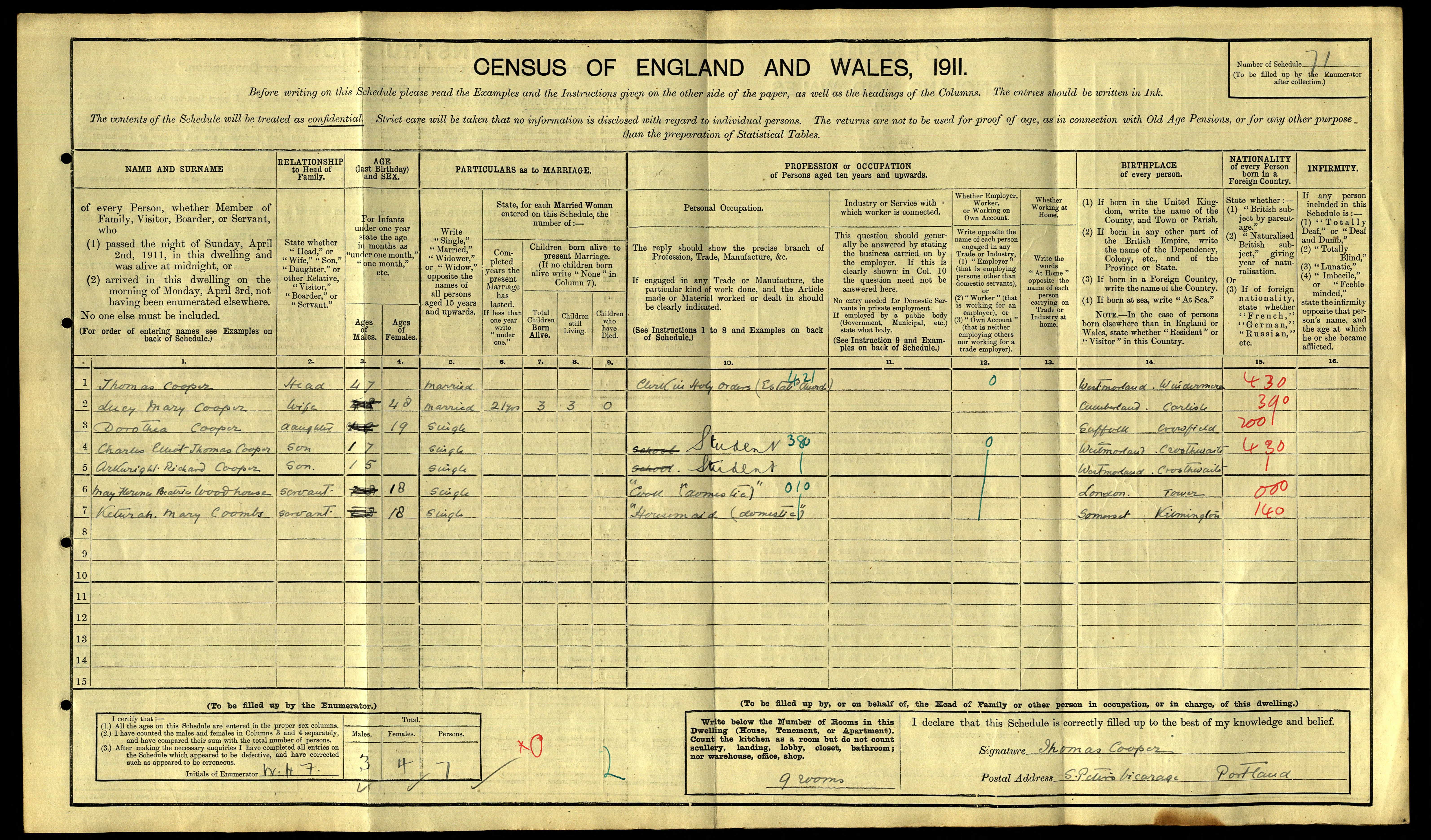
The years that followed brought both change and sorrow. In 1928, Charles lost his younger brother Arkwright; this loss came just before a new chapter in Charles’s own life.
On 9 February 1929, at the age of 35, he married Elsie Thomson Douglas Robson in Birmingham. It records that he was a Private Secretary and his wife Elsie was a Physician, later a General Practitioner.
Together they made their home in Warwickshire, beginning married life in the same region where his sister Dorothea also lived. They had no children, but shared nearly three decades together.
Family losses continued over the years. Charles’s mother died in 1935, followed by his father in 1947. In 1958, after 29 years of marriage, he lost his wife, Elsie, another profound personal loss that left him widowed in later life.
Of course, in 1954, Charles was looking through the family album and wrote on the back of this wonderful old photo of his ancestors.
Here’s the public family tree I have compiled on Ancestry for the Coopers: Cooper Family Tree
Charles lived on into the 1960s, witnessing a world very different from the Victorian England into which he had been born. He died on 8 December 1968 in Solihull, Birmingham, Warwickshire, aged 75.
Family Photos Discovery.
I was extremely lucky to find several family photographs of the same Cooper family on a public tree on Ancestry.
So, using those public photos, I tried to match up and identify as many of the people as I could in my own photo of the family.
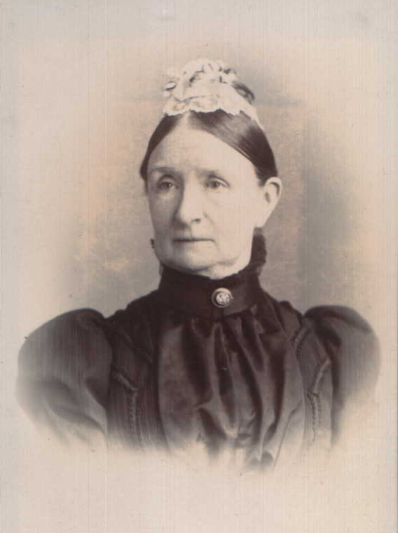
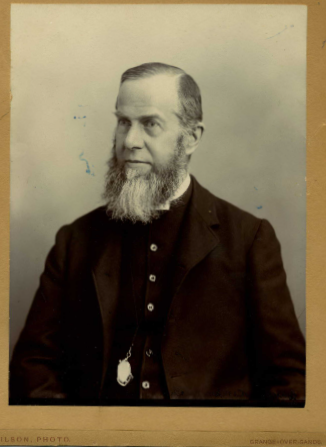
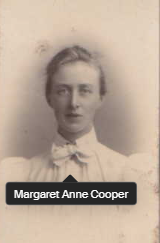
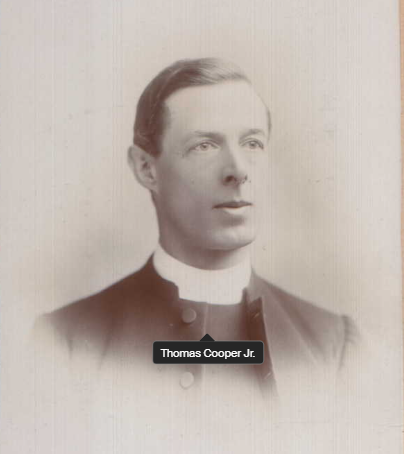
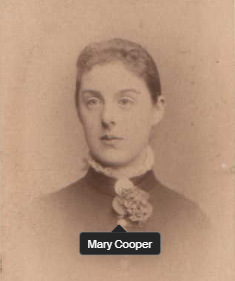
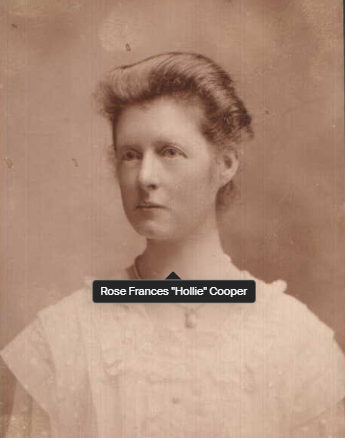
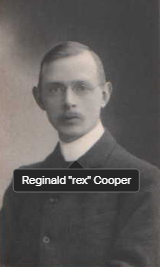
Number 1? 2. Rose Francis Cooper 3. Grandfather Thomas John Cooper Snr 4. Rev Thomas Cooper Jnr. 5. Lancelot Cooper 6. Edward Cooper 7. ? 8. Margaret Anne Cooper? 9. Mary Cooper? 10. Grandmother Anne Eliza Arkwright 1838-1902. 11. Reginald Cooper 12. ? 13. ?
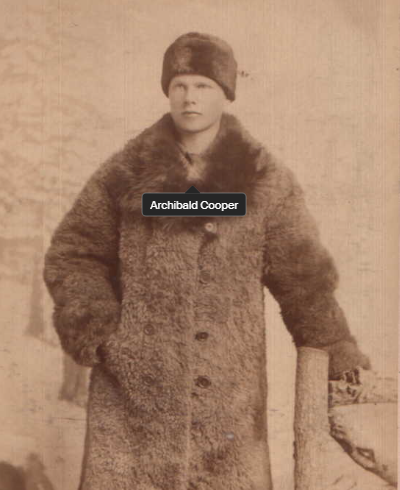
The following photos are from the public family tree of the Cooper’s on Ancestry.
These I used to compare faces in my photo.
Rose Francis. William(Seated).Lucy(Mrs Thomas Cooper Snr). Archie. Rev Thomas Cooper. Margaret Elizabeth(Peggy). Lancelot A.(Tim).
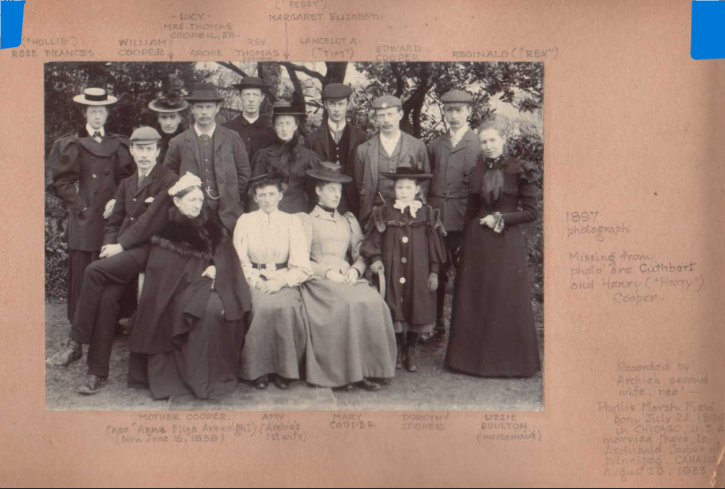
Mother Cooper.(nee Anne Eliza Arkwright.b June 15.1838). Amy (Archie’s 1st wife). Mary Cooper. Dorothy Cooper. Lizzie Doulton (nursemaid)
1897 Photograph. Missing from photo are Cuthbert and Henry (Harry) Cooper.
Recorded by Archie’s 2nd wife, nee Phyllis Marsh Field b July 22.1894 in Chicago.USA. Married there to Archibald Cooper of Winnipeg, Canada. August 20. 1933.
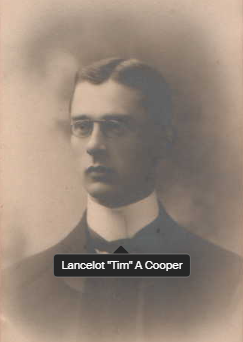
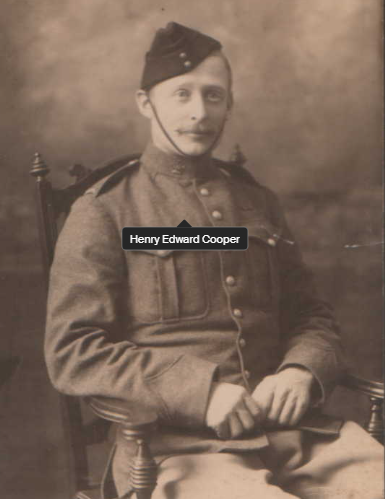
What a super lot of photos found on Ancestry trees!
Once again, a huge help in allowing me to identify people in my old photos.
You can contact me either by commenting here or via email at lynnswaffles@gmail.com.
Till next time then………
 lynnswaffles.com