Abraham Hale and Mary Dives.
I saw these two beautiful, hand-tinted, framed Ambrotypes back a few weeks ago for sale on eBay. Incorrectly described, I decided to make an offer, but it was declined. So I left them and put a watch on them. They were still for sale last week, and so I did a little research and identified the couple before I bought them.
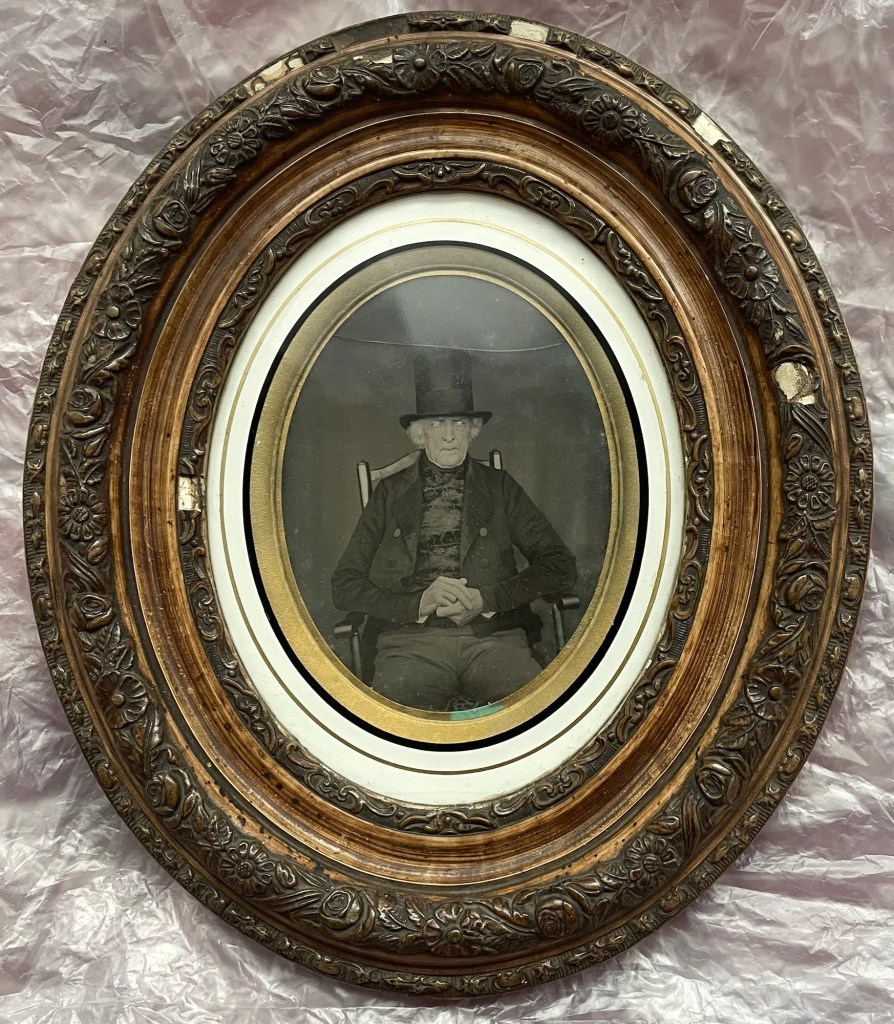
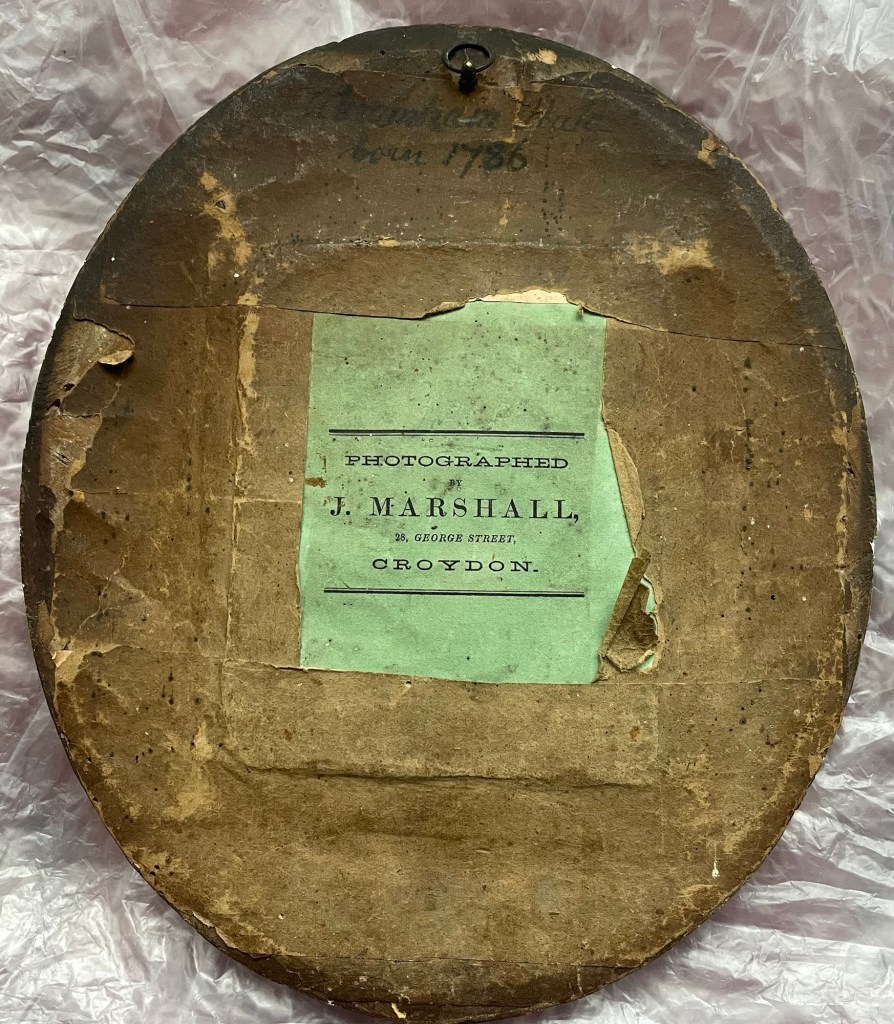
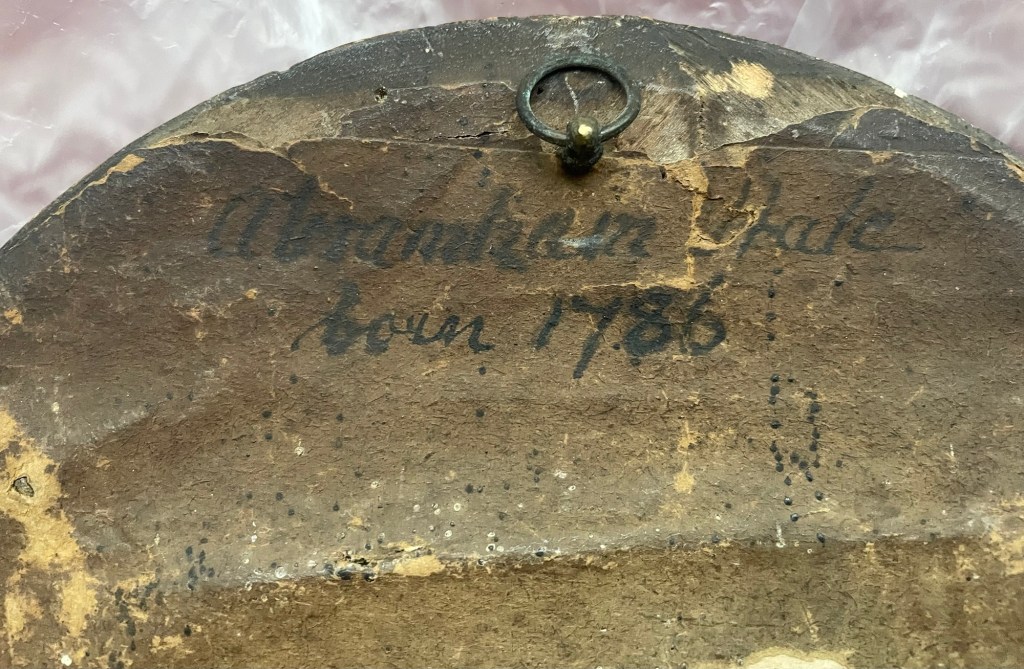
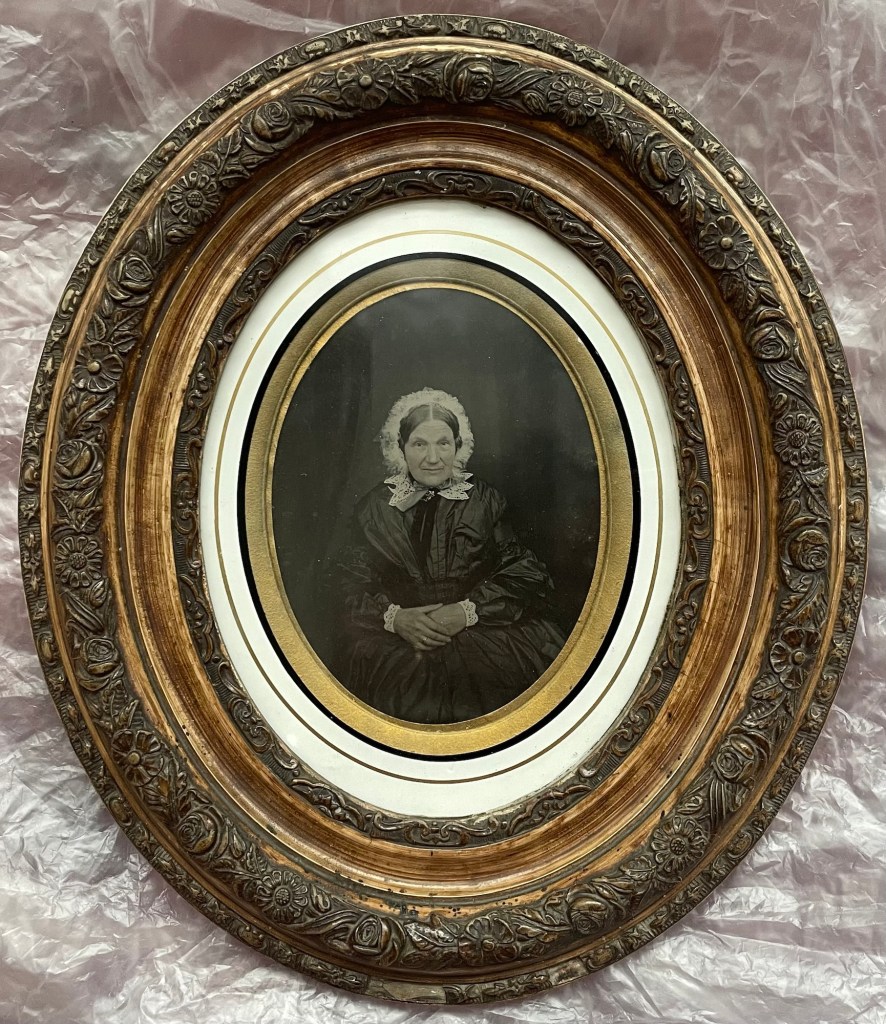
Dated 1858 and both named on the back, they are fabulous. Having the details of the Photographer and framer was a huge bonus too, as it’s rare to find an Ambrotype, especially from 1858, with the Photographer’s details.
My pictures don’t really show the beautiful detail in the photos; they are both hand-tinted, so a little blush to the faces and hands makes them look better, more real. They must have been taken by a very good photographer.
As you can see below, there is a small break on the actual ambrotype, under the glass frame, so it’s probably been dropped at some point, which is a shame, but thankfully not across the face.
I looked first for Abraham Hale, born 1786, somewhere not too far from Croydon, Surrey, where they were photographed and framed. This baptism record below came up first and was my best match for this Abraham.
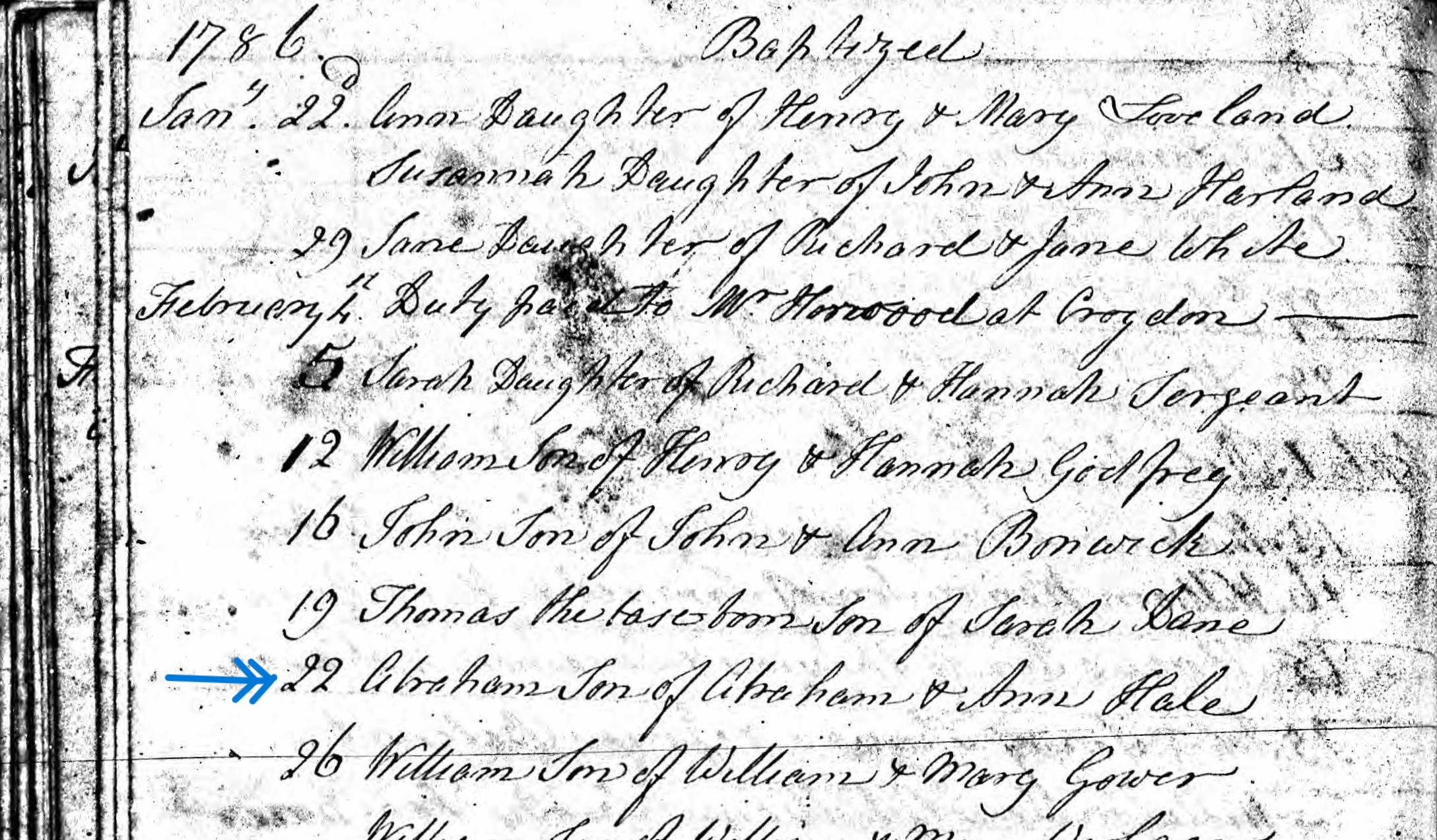
The baptism of Abraham was on 22 February 1786 at St Peter and St Paul, Lingfield, Surrey, about 20 miles from Croydon. I checked out other matches, but I was sure this was correct, and a good starting point, and by the time I found his wife, Mary Dives, I was even more sure.
So I started a tree for the couple and found that Mary’s birth matched what had been written on the back of her photo, 1790. She was born in Lingfield, Surrey.
Birth 22 February 1786 in Lingfield, Surrey, England
Death 14 November 1863 in Withyham, Sussex, England
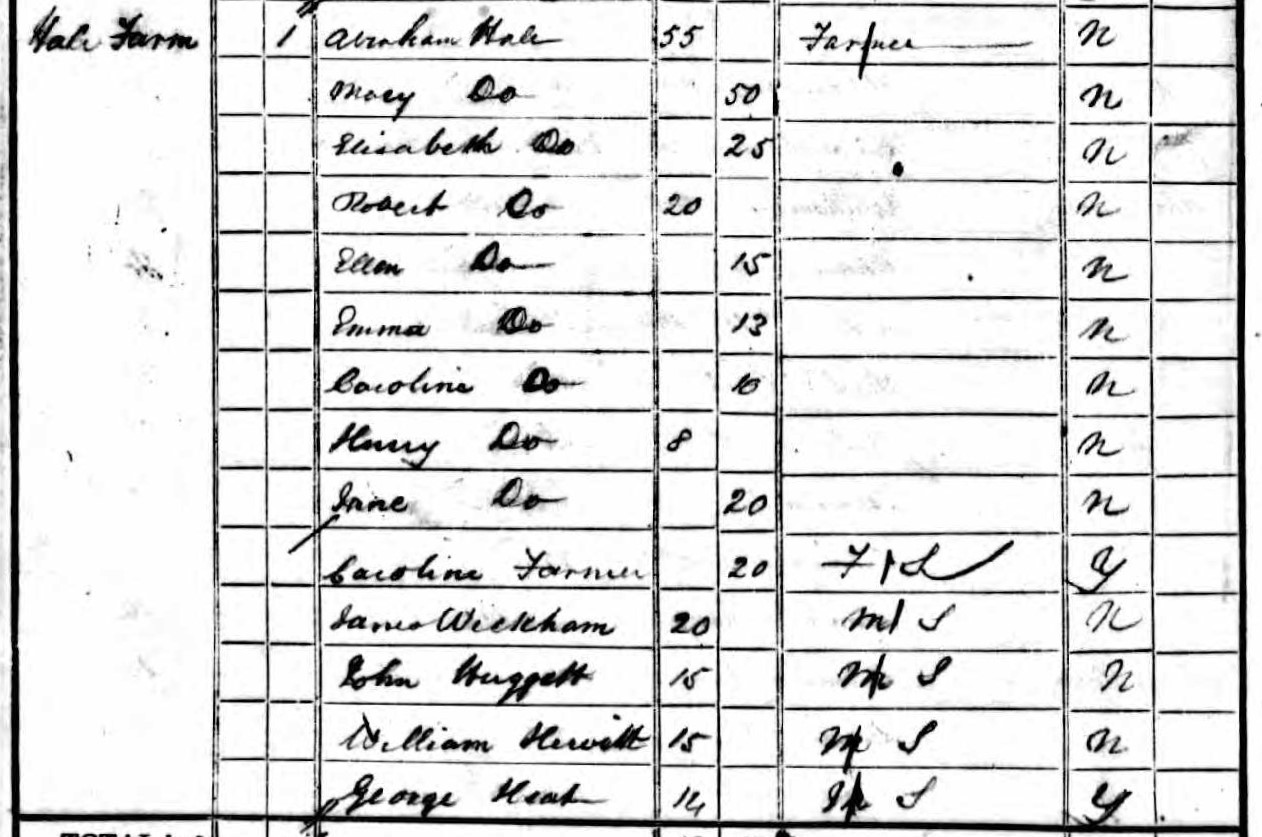
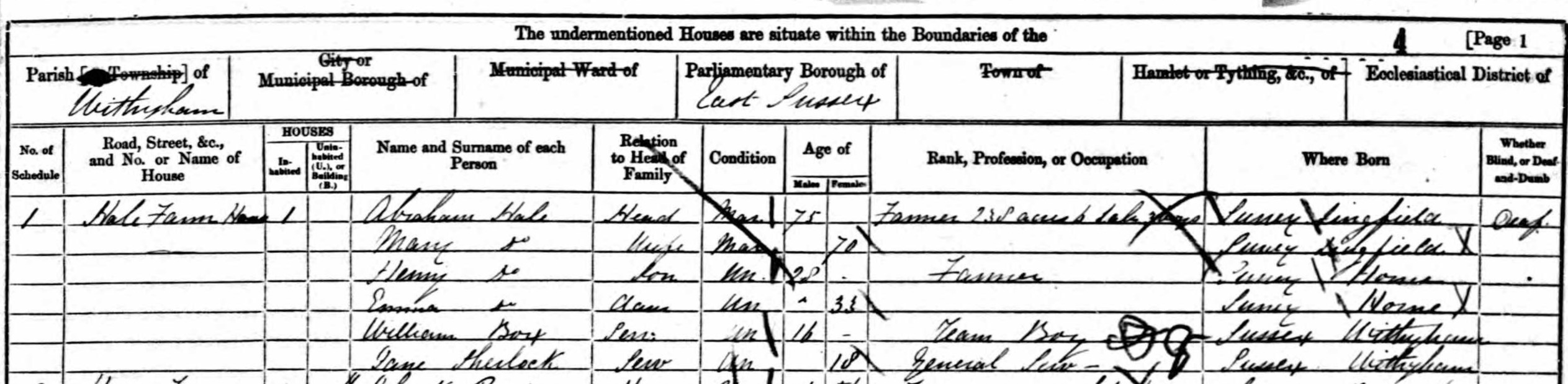
Most of the family carried on working in agricultural jobs
Astonishingly, both of these old photos have remained intact since 1858.
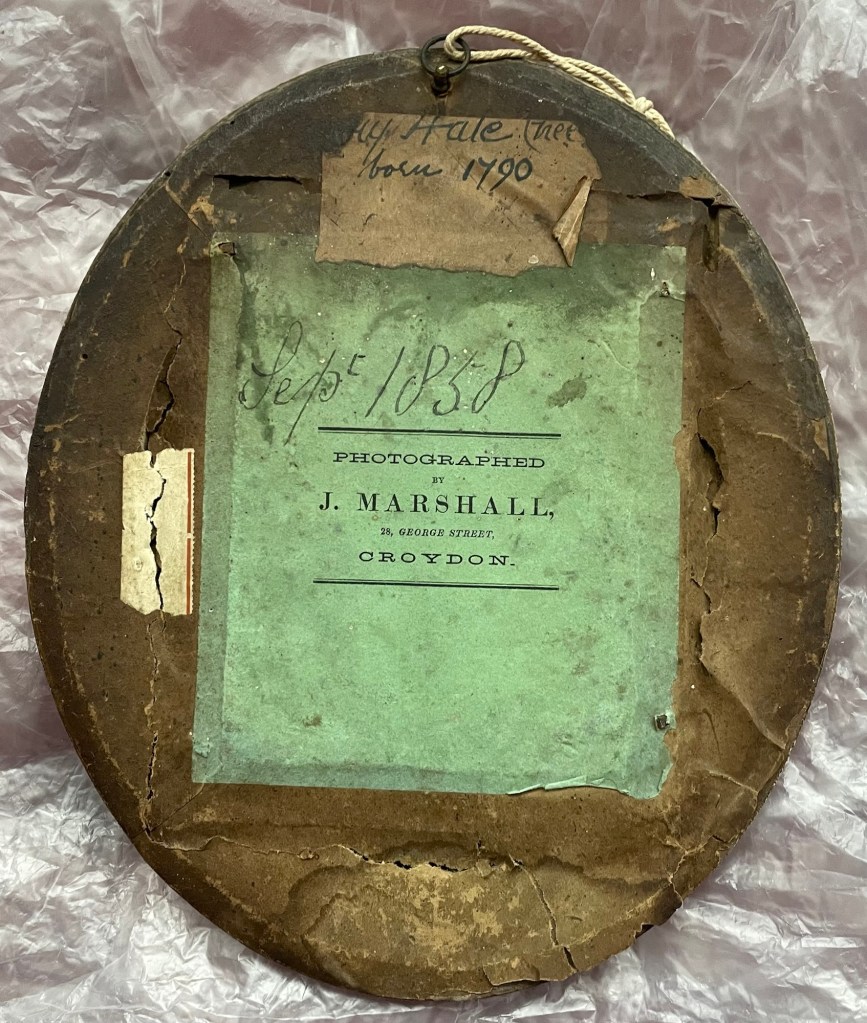
I wonder who it was that wrote on the back of these photos, one of their children most likely. The rest of Mary’s name, beginning and end, was written on separate paper that, as you can see, has been torn off over time.
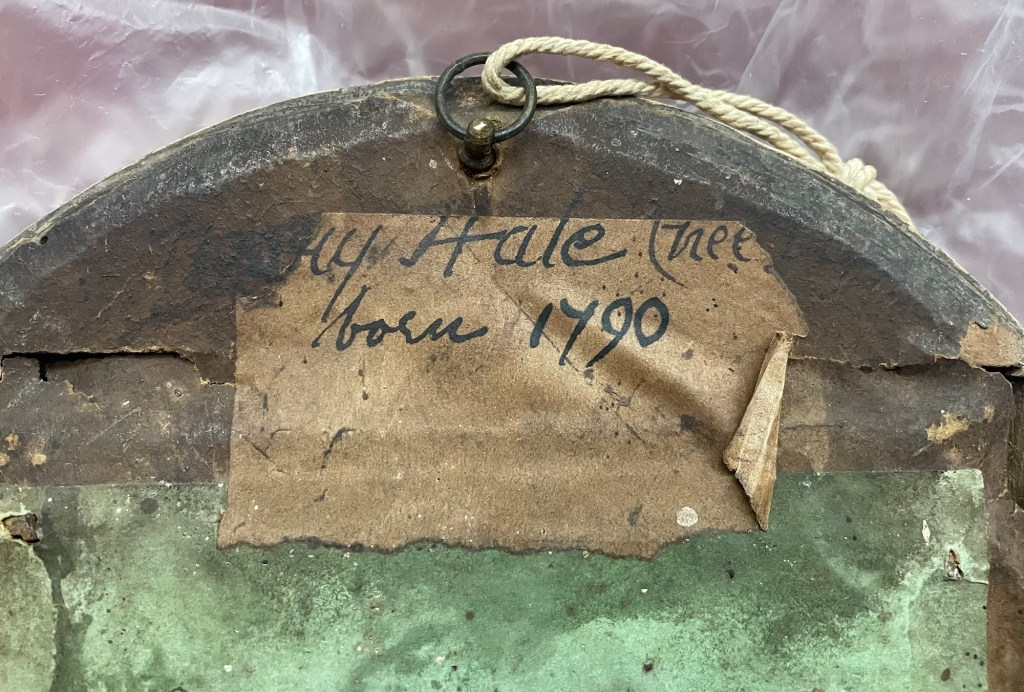
Born in 1790 in Lingfield, Surrey, England.
Died on 22 Dcember 1879 in Withyham, Sussex, England.
Here are the couple’s 14 children.
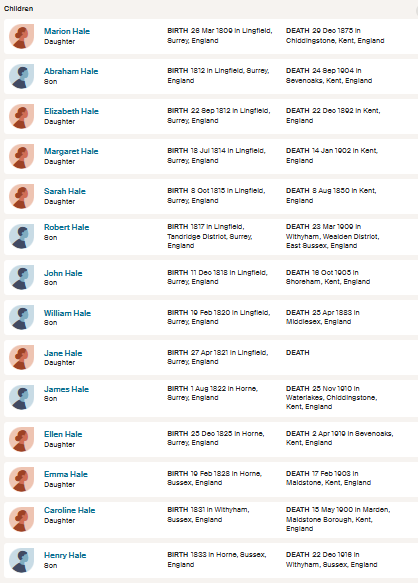
Marion married William Brook; she was his second wife and married him after her sister Sarah died.
Abraham married Sussanah Luck Patching. In 1851, he was the Bailiff to the Earl of Sheffield at Sheffield (This was George Holyroyd, the 2nd Earl)(1127 acres), living at Sheffield Farm House. He was also the Steward overseeing 2121 acres of Woodland, 53 labourers and 13 boys.
Elizabeth married William Searle. He was a Farmer of 400 acres employing 11 men and 4 boys.
Margaret married James Cowdrey. In 1861/71, He was a Farrier and Castrator. In 1881, he was a Veterinary Surgeon.
Sarah married William Brook on 1st April 1845, and when she died in 1850, leaving a young daughter, called Sarah Ann, William married her eldest sister, Marion/(Mary Ann), unmarried and 40 years old. She had gone to live with William after her sister Sarah died, presumably to look after little Sarah Ann, as he was a Shopkeeper, first a Grocer and then a Draper.
When young Sarah Ann herself married, she called her first daughter Marion Sarah after her two mothers.
Robert married Ann Hale, likely a cousin? He was a Gardener and a Farmer in different census records.
John married Mary Crawford. He was also a Farmer of 400 acres employing 8 labourers and 5 boys. In 1901, he had his brother Abraham living with him and his family.
William married Sarah Thorowgood. He moved to London away from the countryside. He first became a Bootmaker in Leonard Street, Shoreditch, then later a Grocer, still in London at 101 Drury Lane.
Jane, who was born in 1821. I haven’t found anything else conclusive about her after the 1841 census.
James married Mary Searle. James was also a Farmer of 316 acres at Waterlake, Chiddingstone, Kent. Strangely Mary Searle’s parents were William Searle and Elizabeth Jewell. Years ago I researched both those surnames, and both lots of old photos were sent back to the descendants. When I get a bit of time, I must have a look and see if they are connected to either of Mary’s parents.
Ellen married Abraham Hale, again likely to be a cousin. This Abraham was also a Farmer in Chiddingstone, Kent.
Emma married John Day, and guess what? He was also a Farmer in Kent.
Caroline Married George Day, and George was a Farmer too, and I suspect a brother to John Day above, more research on that needed.
Henry married Elizabeth Parris. You know what I’m going to say, don’t you? Henry was also a Farmer, of 239 acres employing 4 Men and 2 Boys.
The countryside and farming life were definitely in their bones.
John Marshall, Photographer.
These 1858 photographs come from one of Croydon’s earliest photographic studios: J. Marshall, 28 George Street. John Marshall was an artist who began his career as a portrait and animal painter before embracing the new medium of photography in the early 1850s. By 1851, he had established his studio on George Street, making him one of the first to bring professional portrait photography to a rapidly growing Croydon.
These photographs were taken in the very early years of the wet-plate collodion process, a demanding method that required great technical skill. Surviving examples from small provincial studios of this period are rare, making these photos a valuable remnant of early Victorian photography. Marshall’s artistic background likely informed the style and sensitivity of his portraits, blending traditional craftsmanship with a pioneering technological approach.
The Marshall family remained at 28 George Street for decades, and both John Marshall and his son, John Fitz Marshall, born only a year after these photographs were taken, later exhibited paintings at the Royal Academy. While their artwork is documented, almost none of John Marshall’s early photographic work survives in archives or museum collections. Apparently, this makes these two framed photographs quite significant: rare surviving examples of the work of an early Croydon photographer at the moment when photography was just beginning to transform everyday visual life.
You can contact me either by commenting here or via email at lynnswaffles@gmail.com.
Wishing all my lovely friends, followers and readers of my Blog a wonderful Christmas and a very Happy 2026.
Till next time then…………
 lynnswaffles.com
Sheffield is now known as Sheffield Park and Gardens and is National Trust Property. It is one of the most significant landscape gardens in England.
It is a beautiful place all year round; we visit frequently.
Happy Christmas Lynn and all fellow Waffle’s fans.
LikeLiked by 1 person
Yes I saw that when I was researching. It’s one we’ve never been to, it does look amazing though. Definitely on our list now, we were looking at pics online earlier.
LikeLike