Although I shared the transcription of Julia’s diary with you all, I didn’t show you the rest of the diary, the cash accounts at the back, and the beautiful secret the diary holds.
Inside this little pocket at the front of the diary is a piece of discoloured tissue wrapped around a lock of hair that has been tied so carefully with cotton.
Is it Julia’s hair? The Victorians sometimes kept their own hair in personal items, but more often from loved ones, as keepsakes, so we can’t be sure.
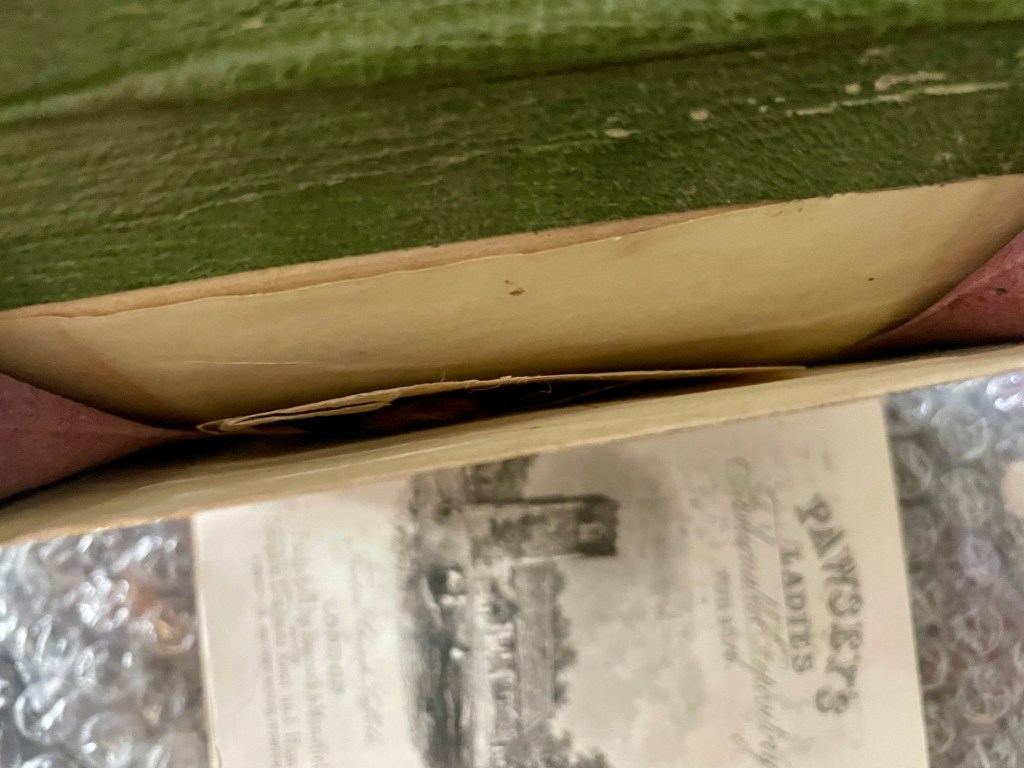
I was very careful opening up the paper with tweezers.
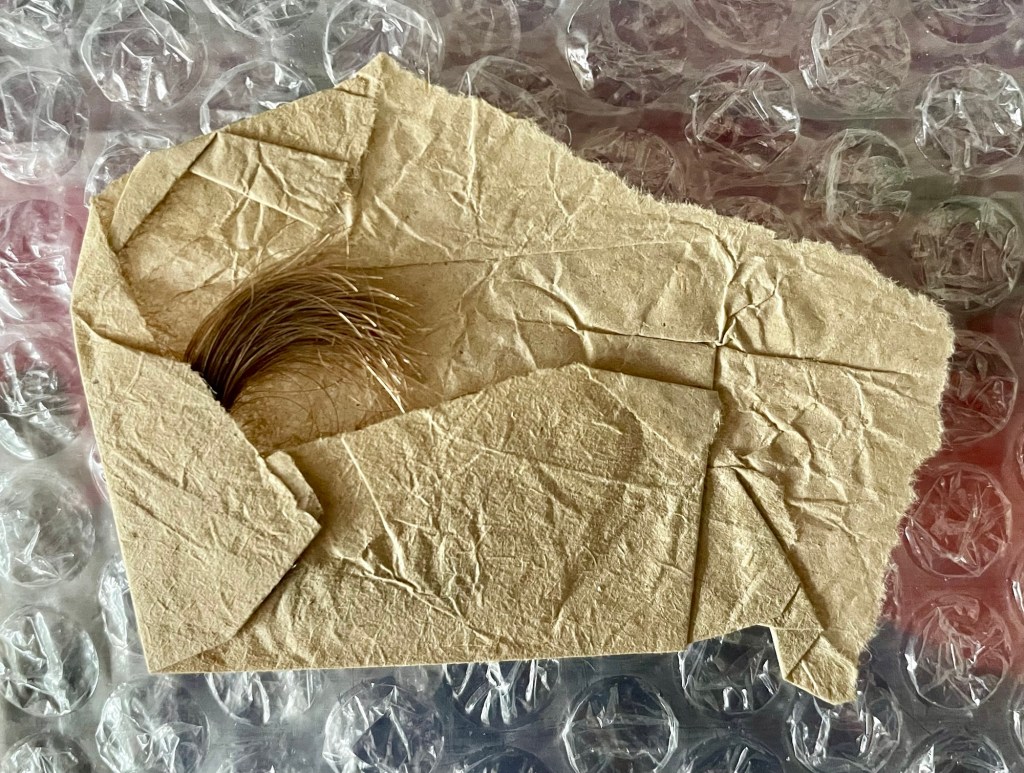
A lock of hair that’s been very carefully tied with cotton.
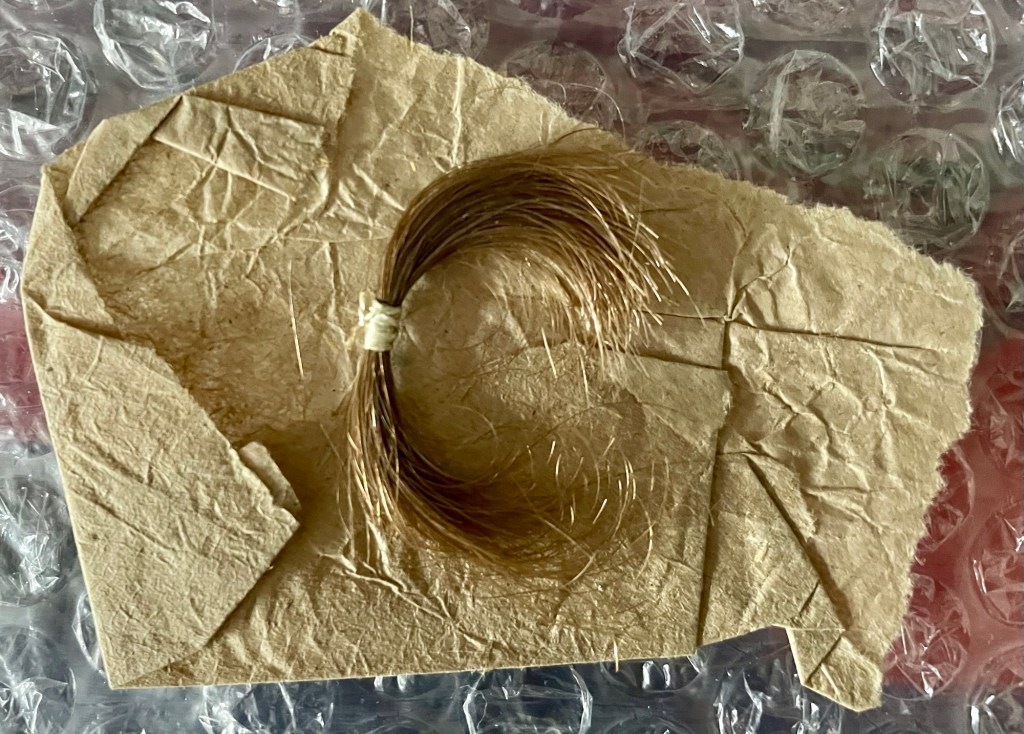
It’s now back in its little pocket in the diary.
Julia’s Death.
Back when I first started researching more about Julia at the beginning of August, I realised that although I found her death record on FreeBMD, I wasn’t able to get a digital copy of her death certificate from the GRO, as they didn’t have it listed among their records. So I filled in an error form on their website, and I was pleased to see that this last week it has been added to their records, and I can now see why she died at the age of 61.

Cause of death: Sarcoma of the uterus, 6 years. Operation 5 and 6 months. Cachexia.
‘Surgery, especially a hysterectomy, was the primary and most effective method for treating cancers of the uterus, including sarcomas, in 1902. This surgery would almost certainly have been performed through a large abdominal incision, a technique that was common at the time.’
Cachexia. ‘Cachexia is a complex change in the body, causing you to lose weight despite eating normally. A syndrome that happens when people have certain illnesses, causing muscle loss that cannot be fully reversed with improved nutrition. It is most common in diseases like cancer etc‘.
I felt quite sad to see how Julia had died and that she had obviously been very poorly for the last years of her life.
Her eldest brother, Eustace, was with her when she died at 22 Park Lane, Southwold, the home she moved to after her father died.
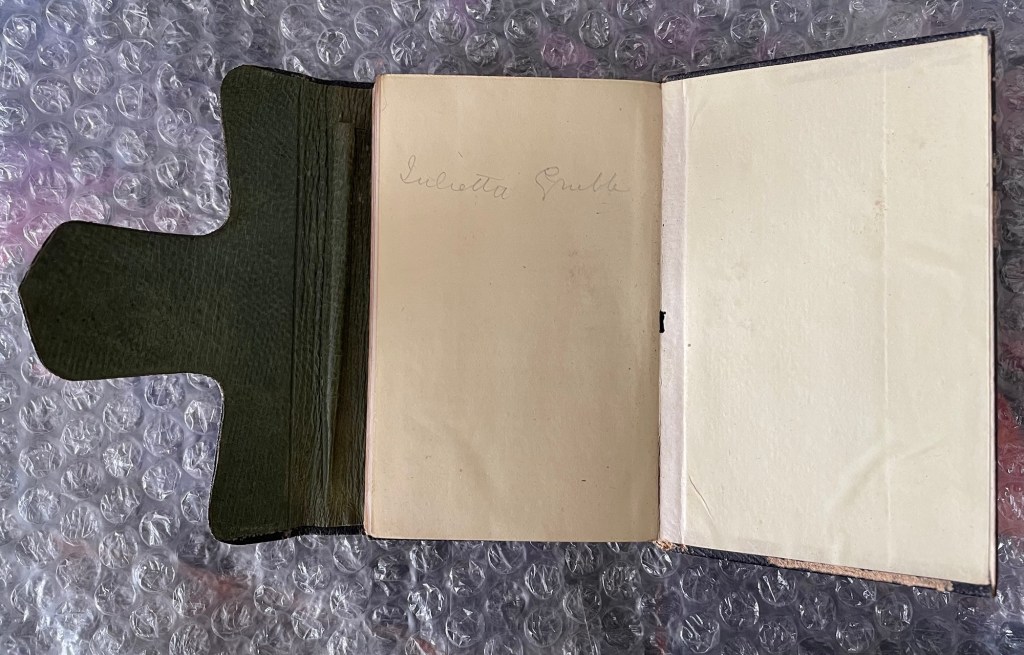
Julia has written Julietta Grubbe in the back. Her full name was Julia Harriett Grubbe; was she known as Julietta? A combination of both her names?
Cash Accounts.
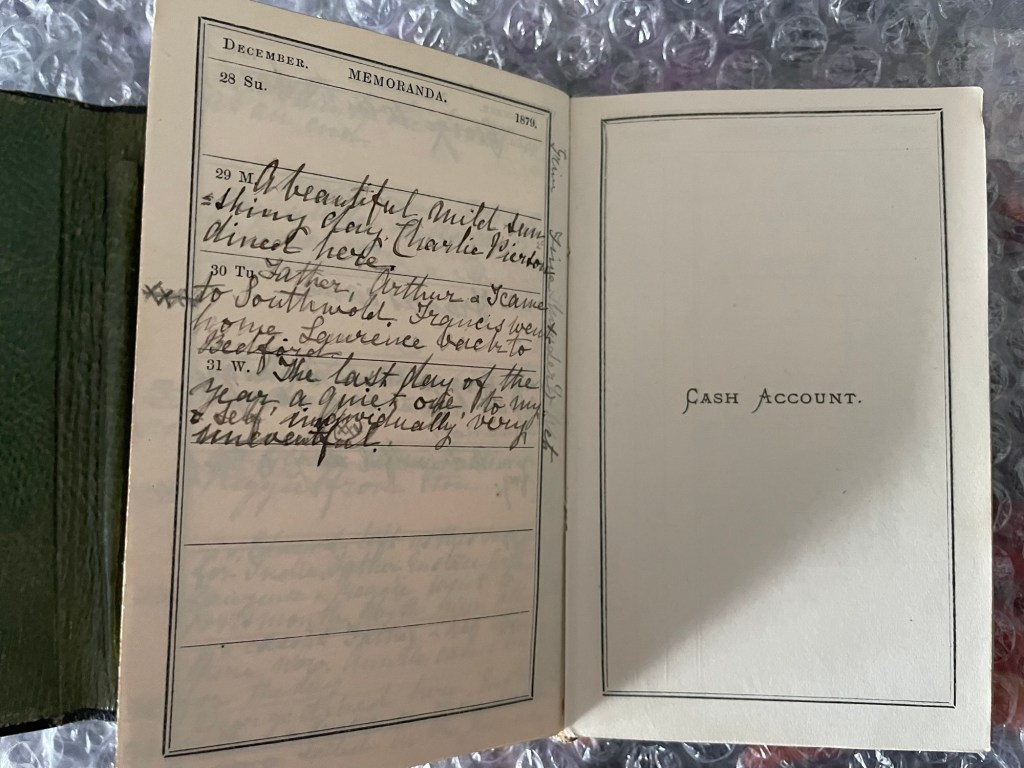
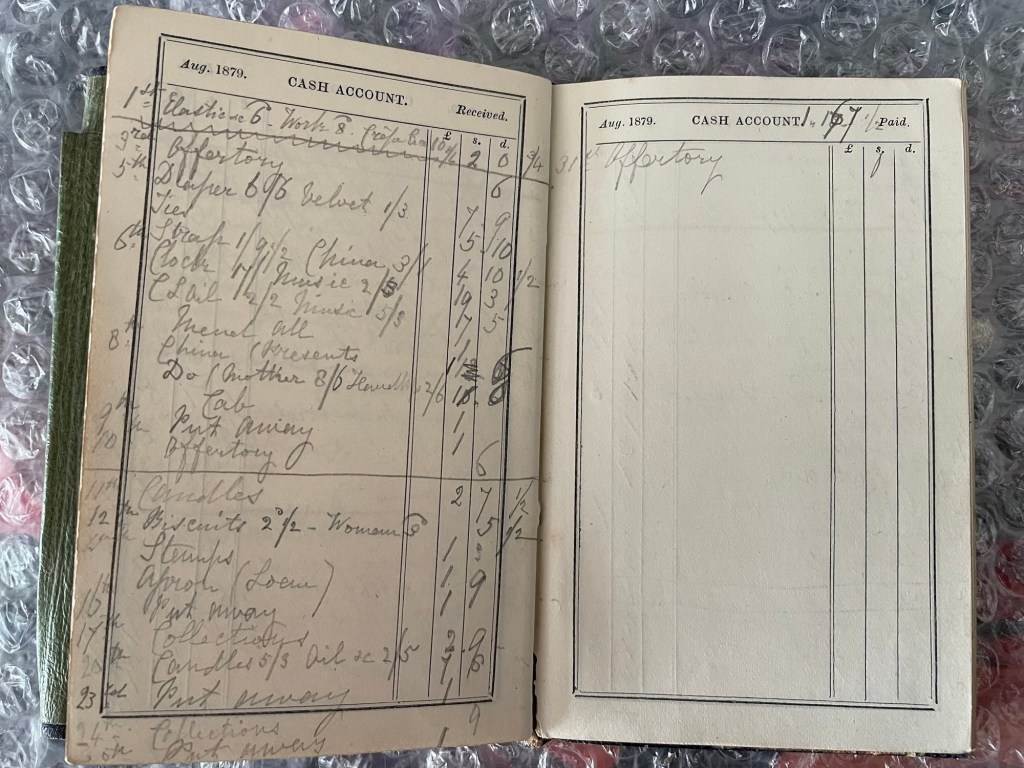
This is the last page and the title page of Cash Accounts. There were two pages for each month in the back of this little diary. I found it fascinating to see some of the items that Julia spent her allowance on. I’d love to know how much she got and when she got it, maybe yearly.
Julia, as she was still living with her parents, would have likely lived free of board, lodging, clothing, and with servants provided too. Plus an allowance of maybe £100–£300 per year (£100 in 1879 was equivalent to around £15.300 in today’s money), this was not unusual for unmarried daughters of wealthy parents; of course, sons usually received more.
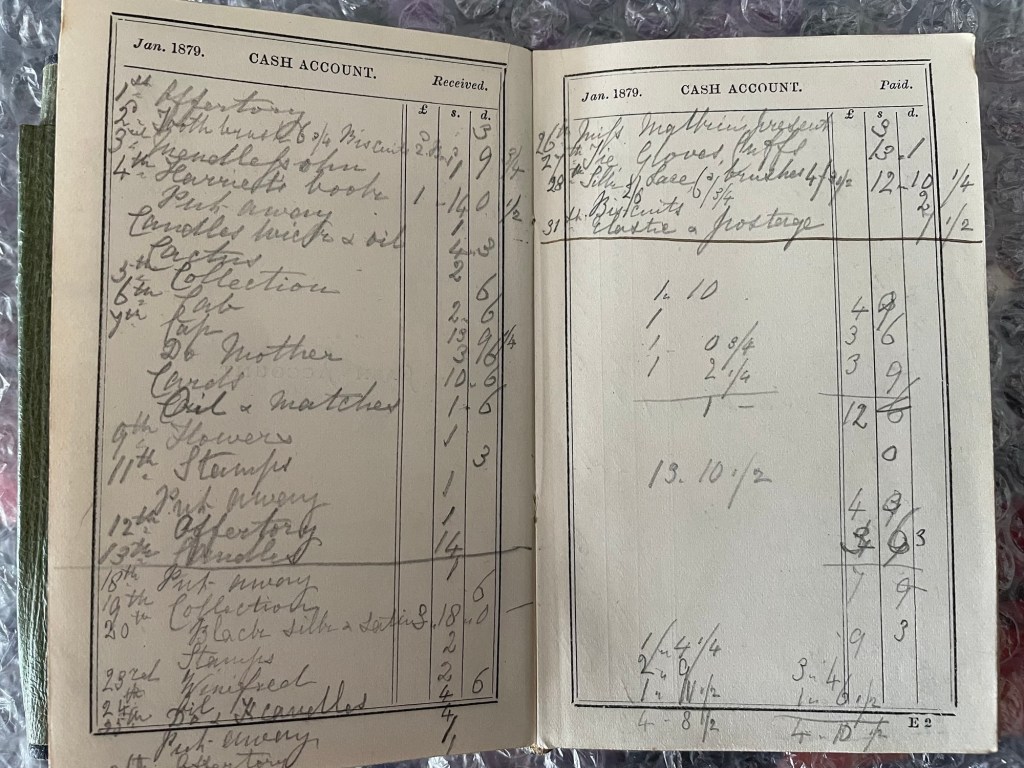
January
Julia put 6d into the collection when she went to Church. She paid for Stamps, Candles, Wicks, Oil and Matches. On her list were also Elastic, Tie, Gloves, Cuffs, Black Silk and Satin and Lace and Brushes. She bought flowers, gifts and cards for others. She went to a Mendelssohn concert.
She put away a shilling here and there and occasionally treated herself to Biscuits.
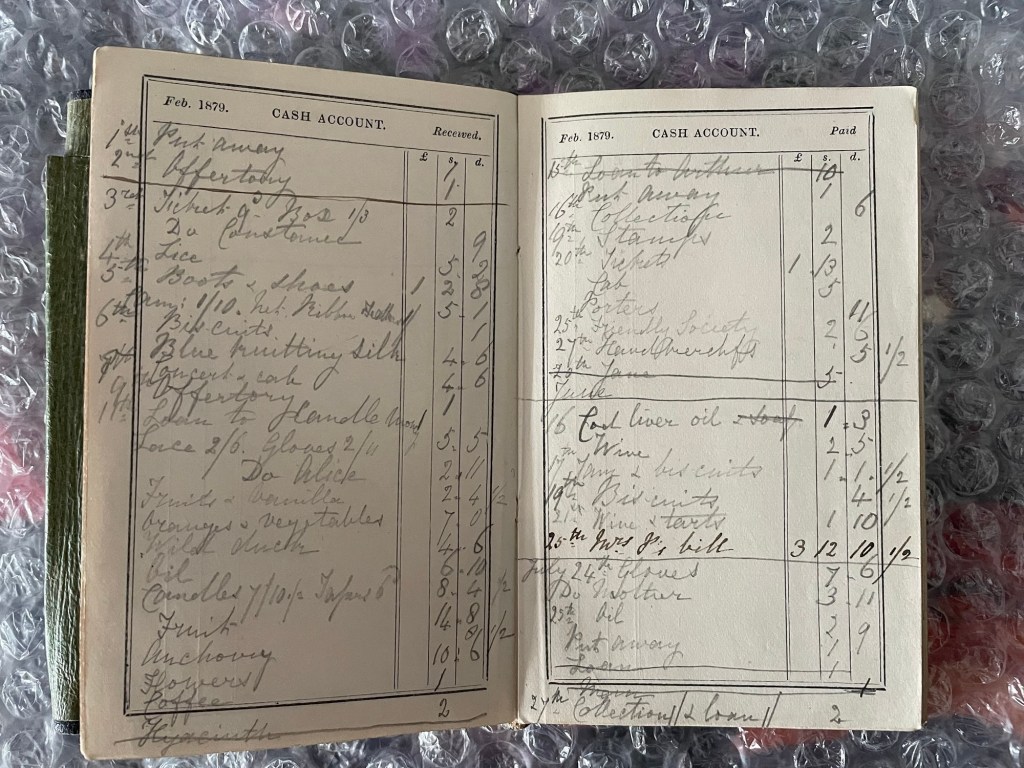
February
On the 4th February: Lice? 5 shillings and 2 pence.
Other purchases included Flowers, Boots and Shoes, Lace, and Gloves. Also, Blue Knitting Silk 4s 6d: Knitting silk was considered a fashionable, ladylike pastime for Victorian women. Hand knitting with silk was a popular, albeit time-consuming, activity for ladies during the Victorian era. This labour-intensive craft produced luxury items such as fine stockings and decorative lace. Silk, a prized and soft fibre, was often knitted using fine needles to create intricate, high-quality garments. The process involved using hand tools and following patterns from knitting books to craft well-fitting stockings. Features of these stockings included decreasing stitches for the calf and foot, a heel flap, and lace trims.
Julia paid for her own cabs and a tip for the porters at the train station 11d.
Julia also bought food, Fruits and Vanilla, Oranges and vegetables and Wild Duck. Anchovy and Coffee. Cod Liver Oil, Wine and Tarts and of course, the occasional Biscuits.
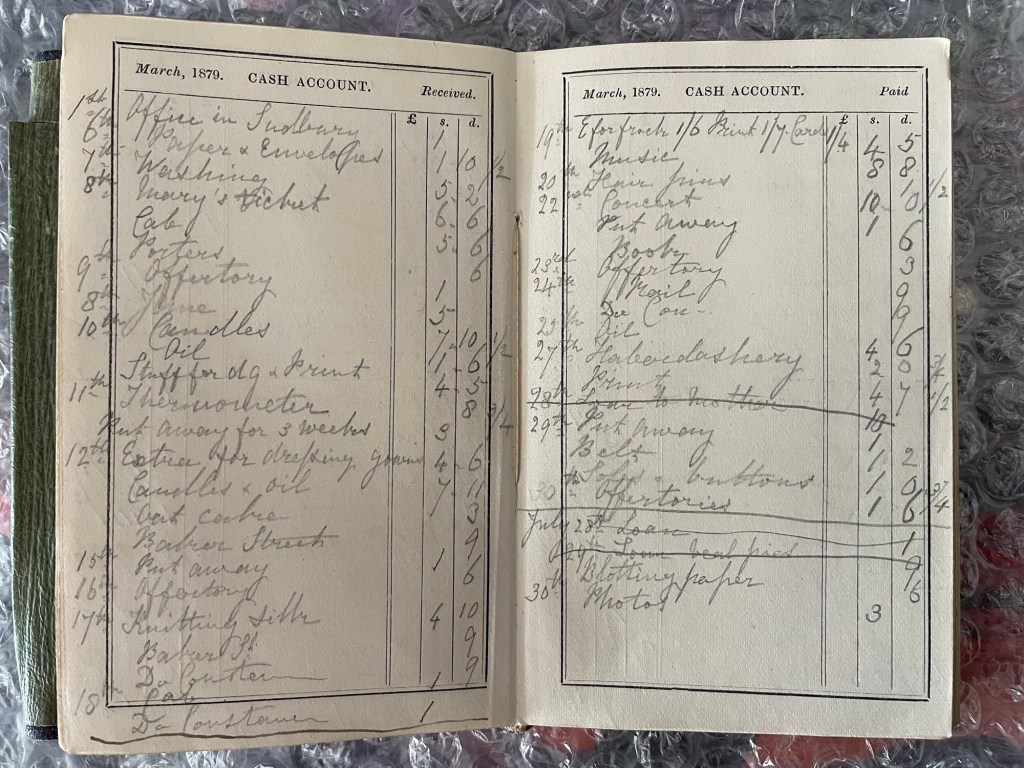
March
This month Julia bought Paper and Envelopes, Candles and Oil, a Thermometer, Hair Pins, Books, Blotting Paper, a belt, Soles and Buttons, general Haberdashery. Plus more Knitting Silk and Photos! She also continued to ‘put away’ money this month and spent 4s 6d ‘extra for dressing gown.’
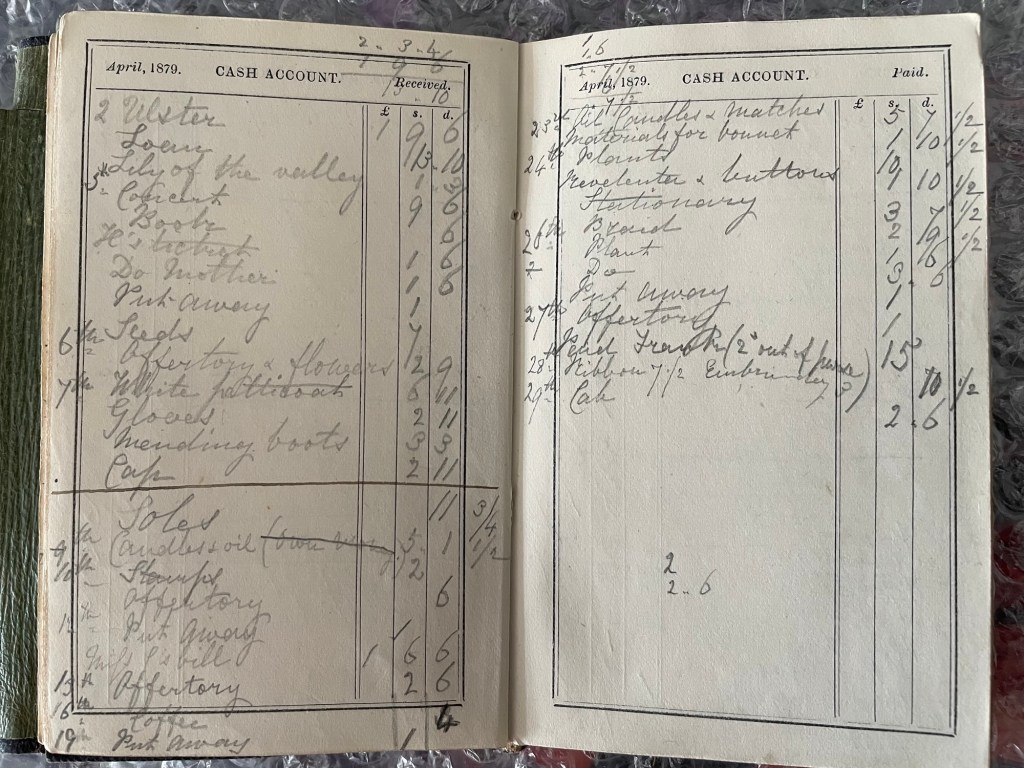
April
Julia bought some Lily of the Valley and other flowers, also two lots of plants and seeds this month, wonder what plants and seeds they were? White Petticoat, Material for a Bonnet, Braid, Buttons, Ribbon, Embroidery, Gloves, a cap, she paid for her Boots to be mended and bought Soles, Coffee and Stamps, Candles, Matches and Oil. She also continued to ‘put away’ some money.
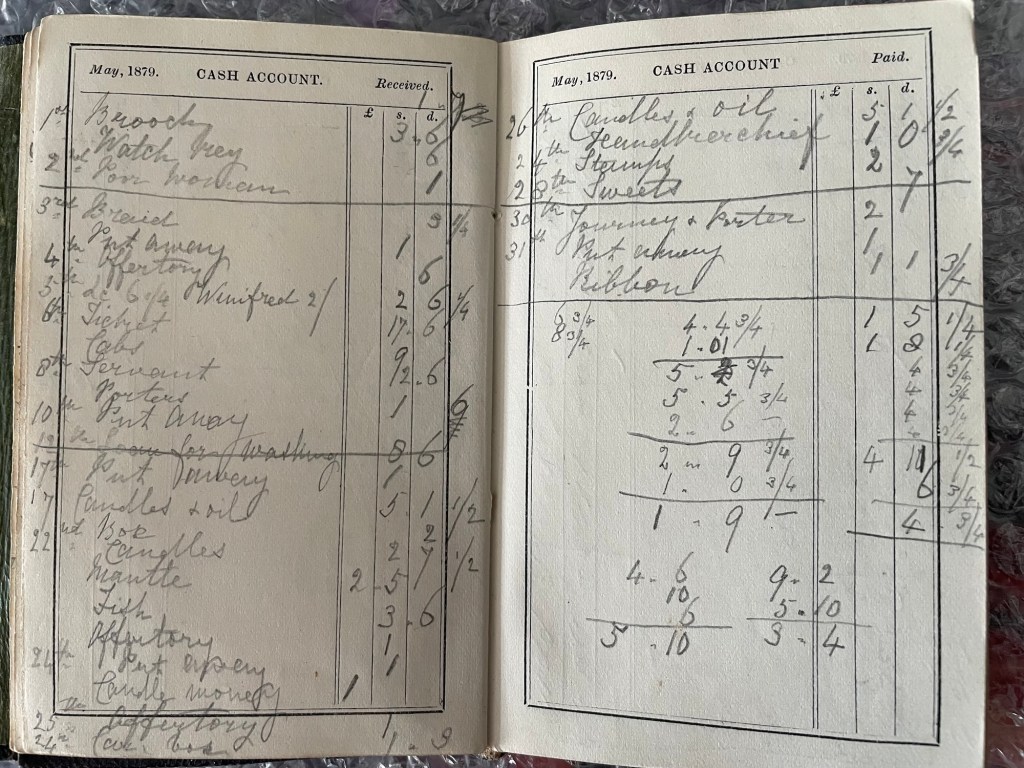
May
Julia bought a Brooch, Haberdashery, Stamps, and Ribbon. Candles and Oil, a new Mantle, it could have been a mesh cover for a lamp, but as she spent £2 5s on it, it has to be a new loose cloak or shawl. She bought some Fish and paid for Washing, Tickets, likely for a Music concert, Cabs, Porter tips and a Servant 12s 6d. Not enough for a yearly wage, so maybe she paid for a specific job to be done or a monthly wage?
Julia also bought Sweets. I wonder what type? Boiled sweets, Humbugs, Toffees, Liquorice, Rosewater jellies, candied fruits, and marzipan from abroad, which were fashionable in wealthier circles. It could even have been Chocolate! Fry’s Chocolate (Bristol) had created the first solid chocolate bar (1847) and Fry’s Chocolate Cream (1866). By the 1870s, Cadbury’s was producing cocoa and chocolate products, though chocolate bars were still more expensive than boiled sweets.
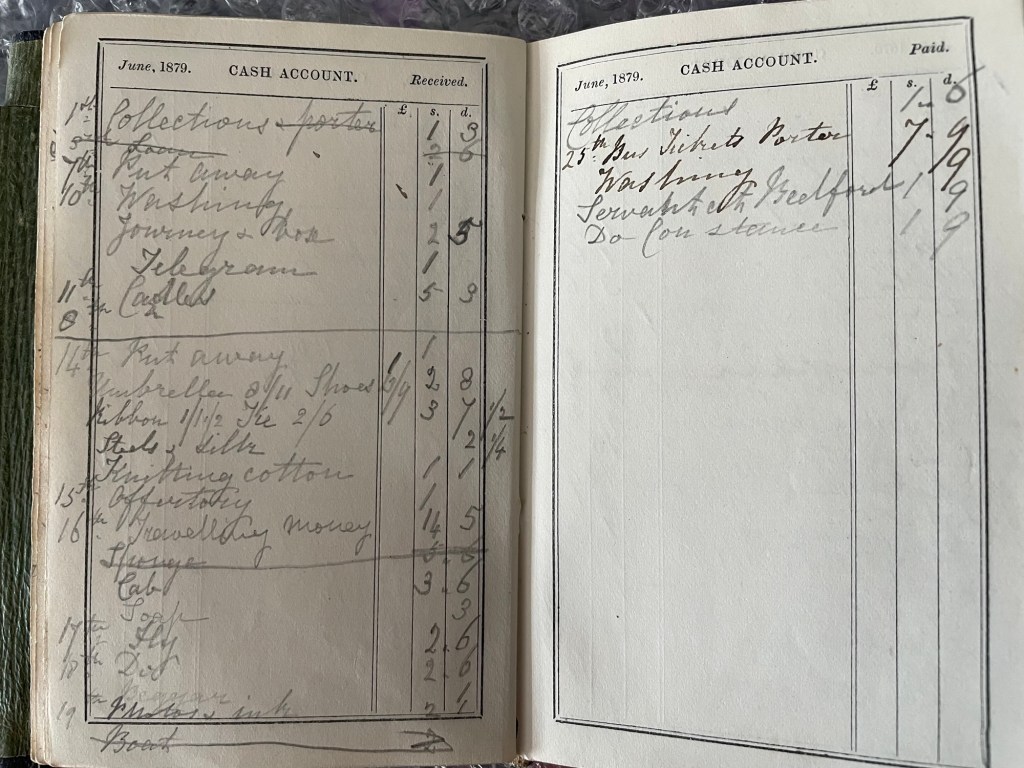
June
More for Washing, Candles, a new Umbrella this month and new Shoes. Stamps, Soap, Ribbon, Studs and Silk, more Knitting Cotton, new Handkerchiefs, Travelling Money, Cabs, Photos and Ink and more Sweets! Also a Servant at Bedford 1s 9d. Julia had gone to Bedford on the 16th of June: 16) Constance & I came to Bedford. Lawrence came to tea with us. On the 25th June, her Diary entry reads: 25) We left Bedford & came to Wing. This all ties in with her expenses at this time.
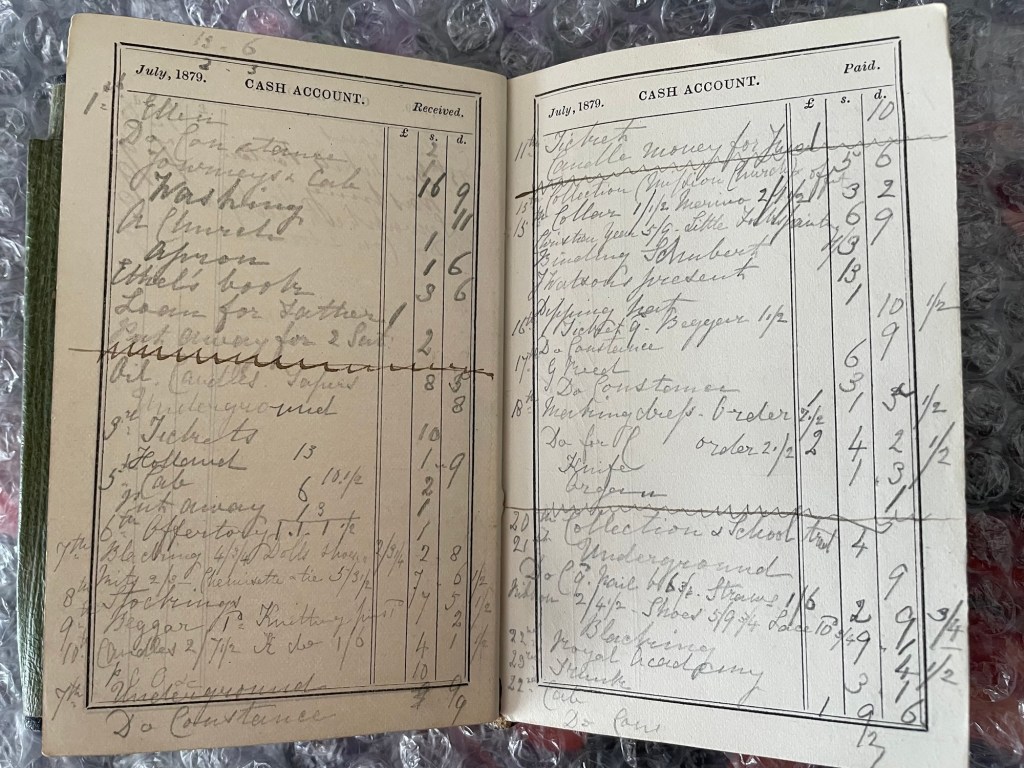
July
A loan for Father of £1, hope he paid her back! An interesting month of expenses. A Chemisette, Mary Brooks Picken, the author of The Fashion Dictionary (1973), writes that a chemisette is a: “Plain or ornamental sleeveless underbodice covering neck, shoulders and breast; usually made of muslin or lace. Worn by women in the late 19th century, generally to fill in the neckline of a dress.
Julia also bought a Tie, Stockings, Knitting Pins, the usual Candles, Nail, Straw, Shoes, and Lace. A collection at School, Tickets, the Royal Academy, the Underground, on the 9th, she also gave one penny to a ‘Beggar.’ On that date in her diary: 9) We went to a garden party at Acton. One penny back in 1879 would have bought a jug of milk, a loaf of bread, a pint of beer in a working man’s pub, or a hot meat pie.
August
This month we have expenses for Elastic, a Draper’s bill, Velvet, a Strap, China (Presents), a Clock, Music, Stamps and Candles, plus various collections. Biscuits are also back on the expenses.
September
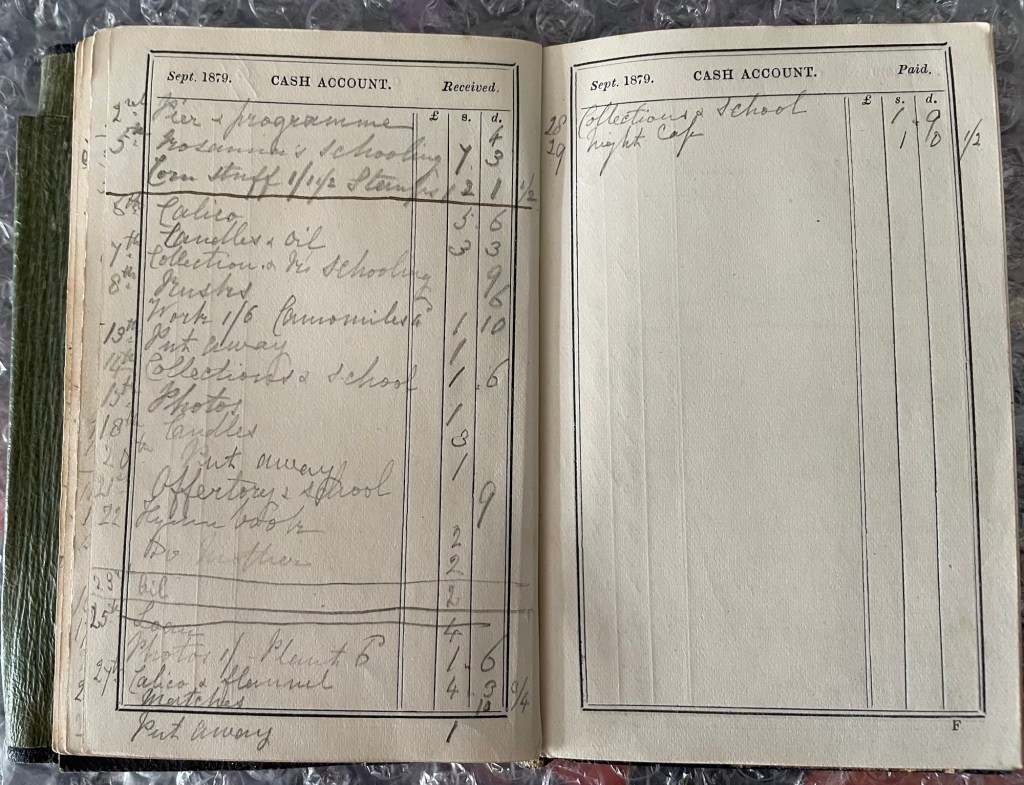
More Photos for Julia and her sister Constance. This month she also paid for a new Hymn Book, a programme on the Pier on the 2nd September, here’s the diary entry: 2) We drove to Lowestoft & called on the Miss Staff’s & walked on the pier. Julia would have walked on the South Pier at Lowestoft, as Claremont Pier wasn’t built until 1902/3.
Julia bought Calico, Flannel, Matches and Candles, and a Night Cap. Nightcaps or sleeping caps were worn while sleeping to keep the hair tangle-free and especially silk nightcaps, to make the hair glossy. From the ‘SewHistorically’ Website.
October
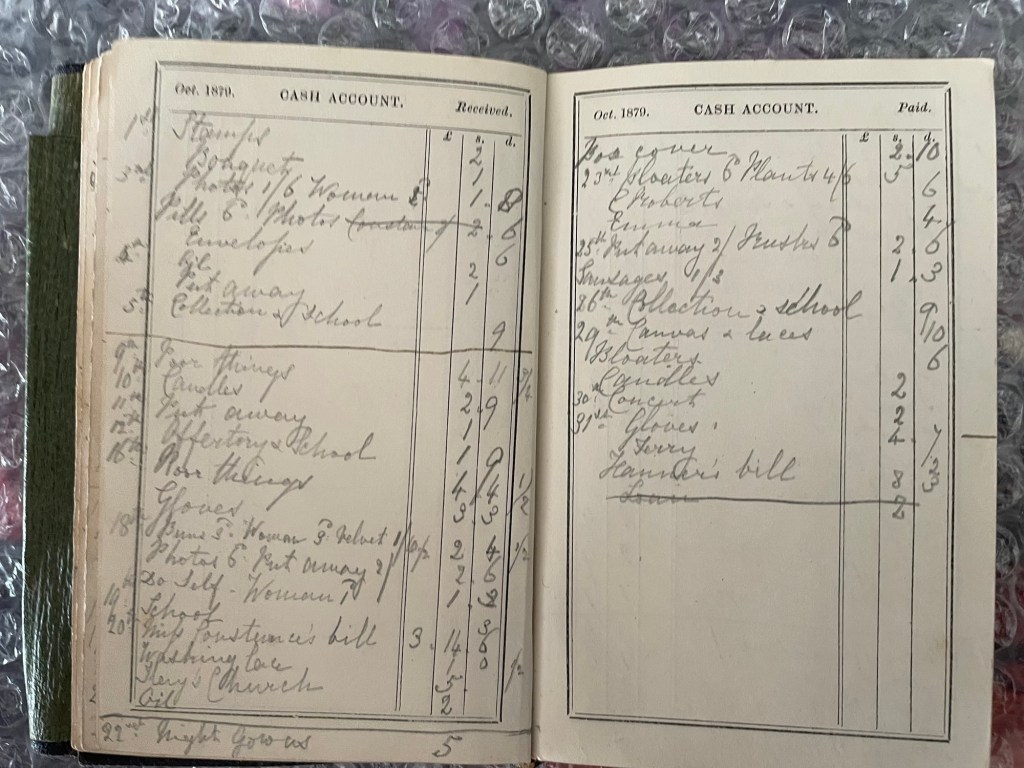
Julia had more Photos this month. She bought Pills, Stamps, envelopes, Gloves, Buns, Velvet and Nightgowns, paid for Washing, Candles, oil, and More Plants and a Bouquet. Went to another Concert but what was ‘Poor Things’ I wonder? She also paid ‘Miss Constance’s Bill’, her sister? She still continues to put money away every month and pays for the Offertory and School. Offertory is a church service term: the part of a Mass when offerings (bread, wine, or monetary gifts) are made.
November
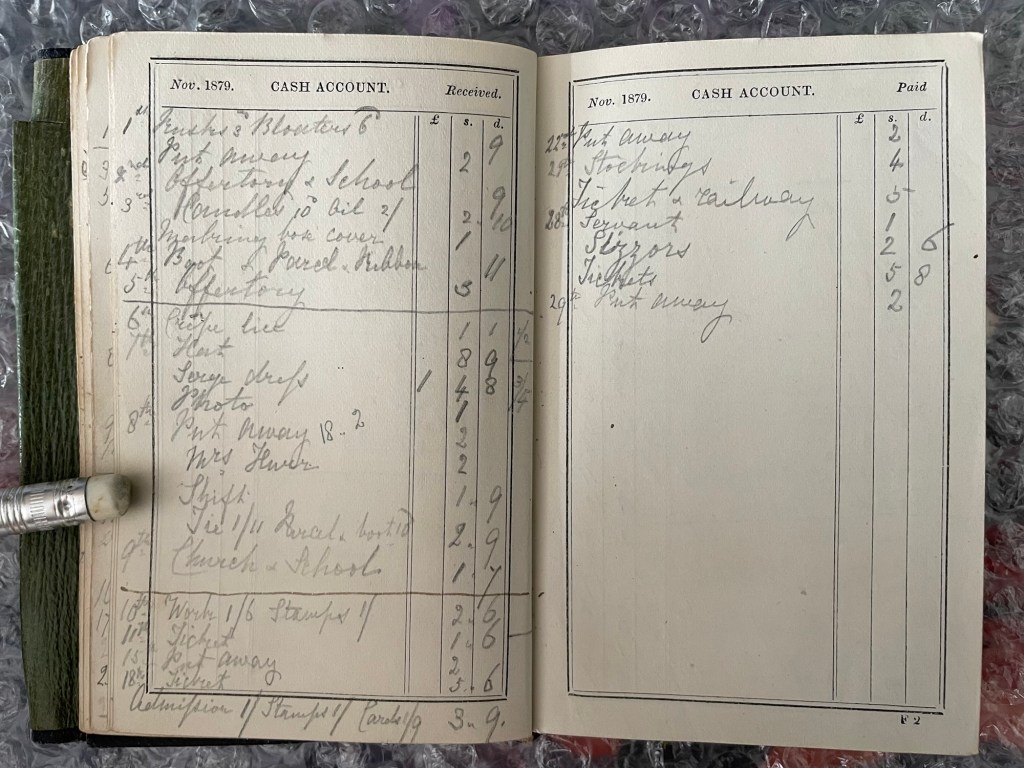
This month’s expenses are another Photo, a new Hat and a Serge Dress. Tickets, Stamps, Cards, Stocking and Scissors and another payment for a Servant, just one shilling this time.
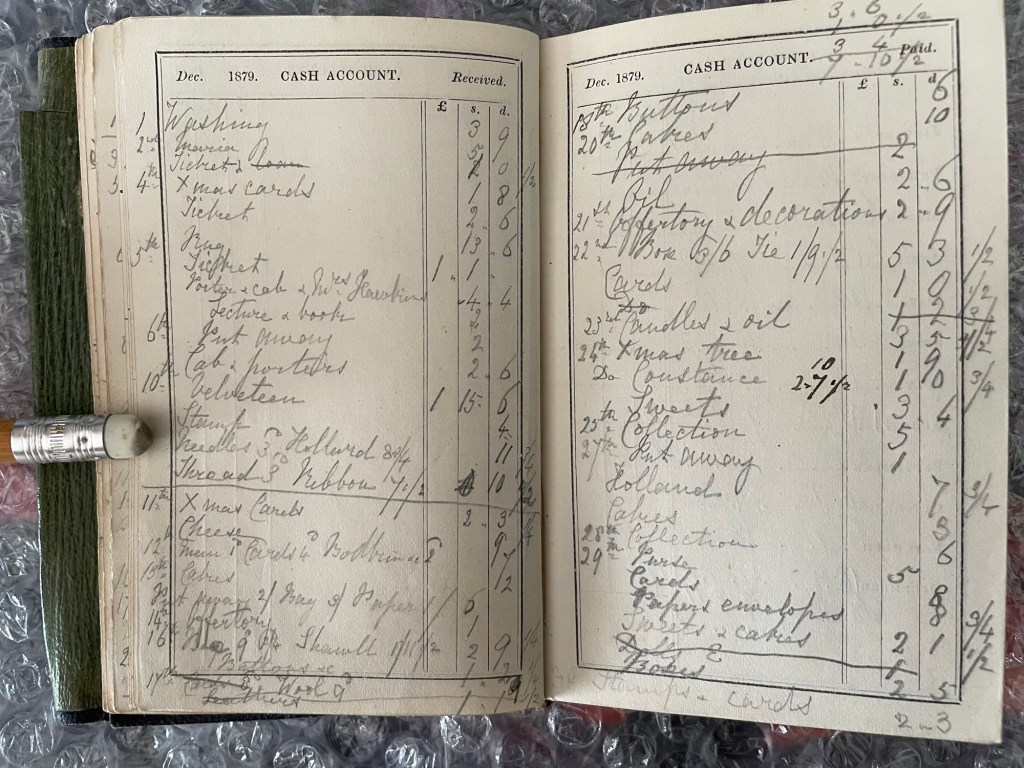
December
Lots of Tickets this month, and Xmas Cards on the 4th and 11th. Julia also bought Cheese, paid for Cabs and Porters, bought Velveteen, Buttons, Needles, Thread and Ribbon, a Bag of Paper, a Shawl, Offertory and Decorations, more Cards, Candles and Oil, and for one shilling and nine pence a Xmas Tree bought on Christmas Eve. After Christmas, Julia bought a new purse and more cards.
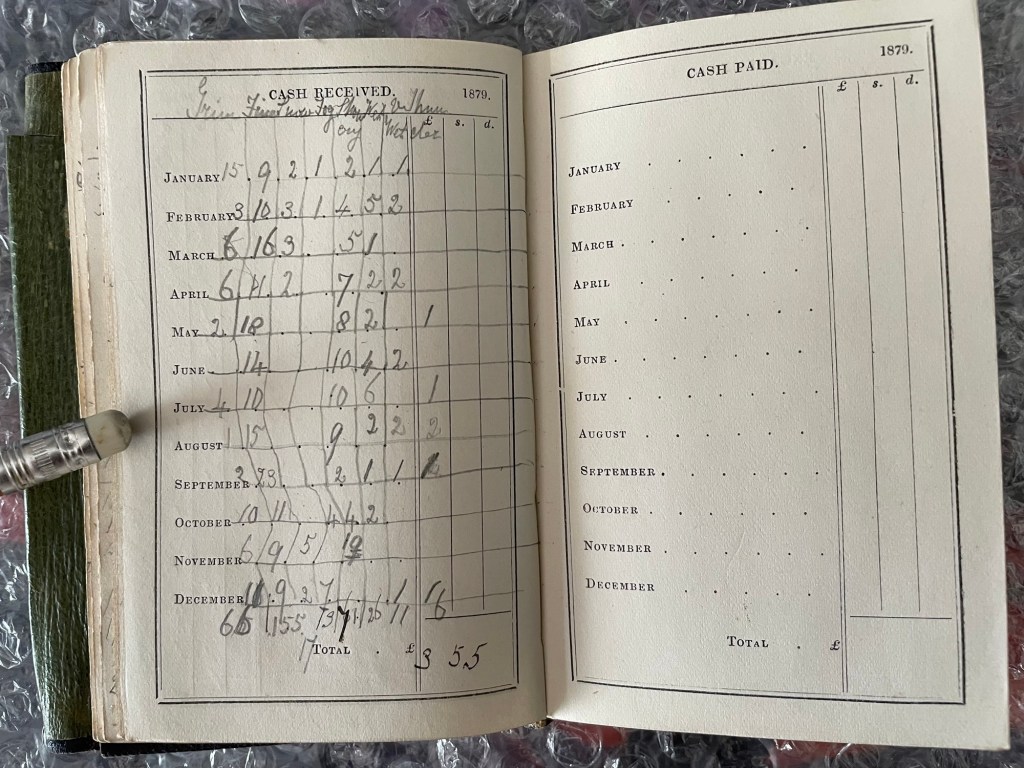
Yearly total is £355. So it looks like Julia had a very generous allowance.
Julia’s cash accounts of the general items she bought and paid for with her allowance, and the places she went to. This actually gives us so much more information about exactly what Julia was like.
She was careful with her money, but certainly not mean. She paid for things for her sister Constance, she loaned money to her Father and others. She bought gifts for people. She occupied her time with writing many letters and cards to family and friends, as she was always buying stamps. She also occupied her time with sewing, embroidery and other similar things.
She also must have loved Flowers, buying them for the house, other people and for the garden.
She liked clothes, but not to excess, more on a practical level, I think.
Julia enjoyed Music and played the Piano well; she loved to go to musical evenings and larger Concerts. She was also happy travelling on the trains and getting cabs.
Reading her Diary entries, you would think that she led a fairly boring life compared to a young woman in her 30s today, but reading her expenses we can see that she certainly kept herself busy with various activities.
It’s been great to have the opportunity to transcribe this Diary. I would love to have known Julia, and I hope she wouldn’t have been too horrified if she read these blogs about her.
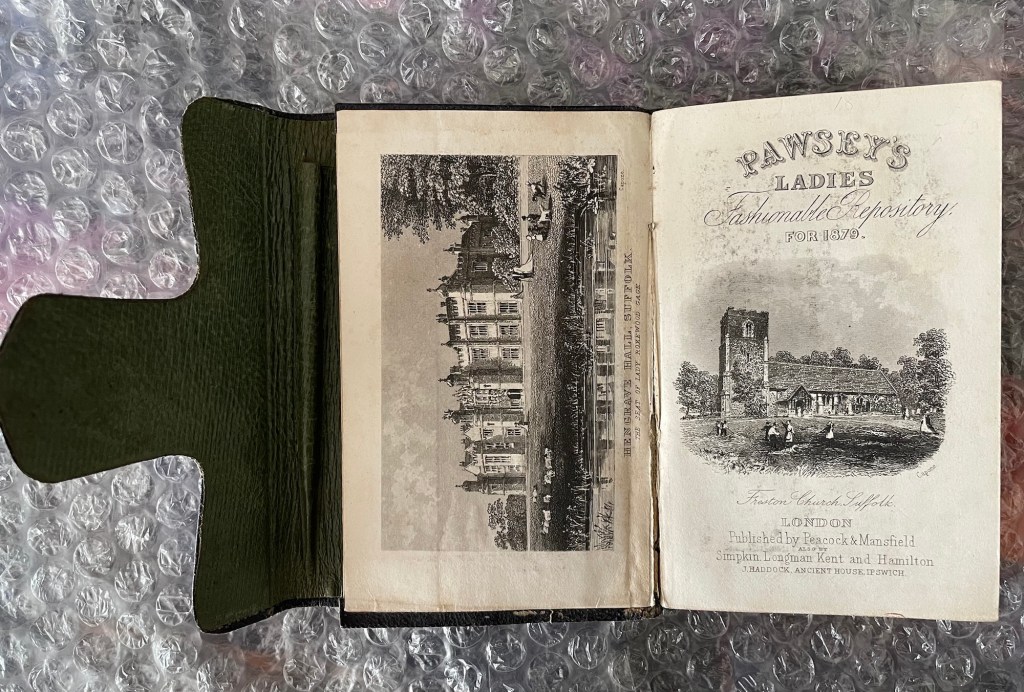
Pawsey’s Ladies’ Diary was actually called Pawsey’s Ladies Fashionable Repository. It was an annual publication, a kind of illustrated repository of arts, literature, commerce, manufactures, fashions, and politics, that ran under this name from approximately 1837 to 1905. It originated as the “Ladies’ Fashionable Repository” (c. 1809–1829), then continued as “Raw’s Ladies Fashionable Repository” (1829–1834) before becoming Pawsey’s. The publication format was a hardbound annual, often produced by publishers like Longman & Co. and Suttaby & Co. in London, and sold locally by F. Pawsey in Ipswich.

You can get in touch either with a comment on here or via email to lynnswaffles@gmail.com.
Till next time then……….
 lynnswaffles.com
Thank you so much for this Lynn. You have found all sorts of clues in these pages and followed them thoroughly and professionally, building up a very detailed picture of Julia, her life and her family. Even better, you then show us how her life fits into the social history of the times – the clothes, the carriages, the concerts and the current affairs. I love the way the cash accounts tie back to specific days. And what dreadful days many of them were – the worst weather for decades, as you point out. For me the most telling entry is the one where her father is voted Mayor and she writes ‘Alas! Father is Mayor again.’ It means she disliked being the Mayor’s dutiful daughter, perhaps generally, perhaps in some specific way or other. I wish she had written more here. I look forward to reading about other people you research in the future, and thanks again!
LikeLiked by 1 person
Thanks so much Jeremy, I’ve really enjoyed reading and researching & transcribing Julia’s diary. Thanks so very much again for letting me borrow it. Lynn x
LikeLike